
Black Sun (الشمس السوداء)
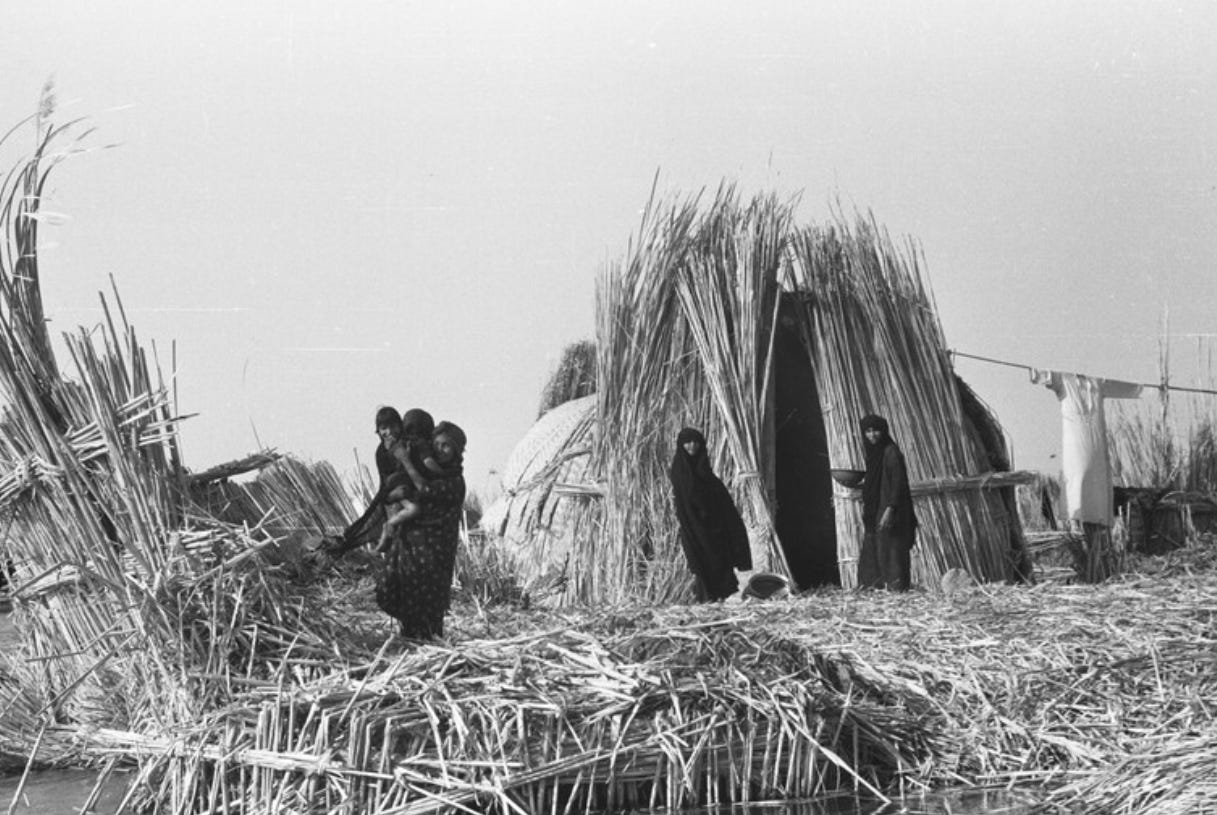
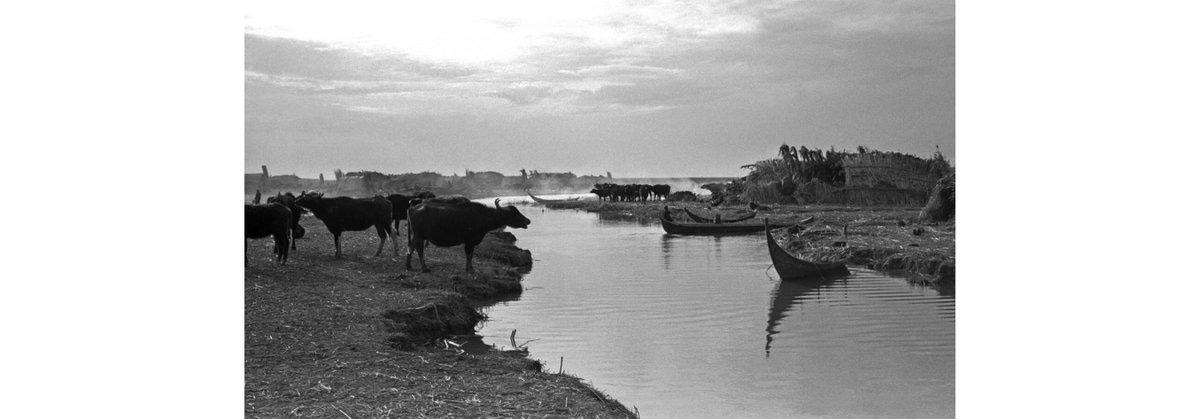
The mashḥūf cut low and silent through the water. The marshes of southern Iraq, the Ahwār (الأهوار), sprawled across the floodplain between the Tigris and the Euphrates- a spiraling knot of reed beds and floating islands and channels so narrow the reeds swallowed travelers whole.
A man standing in a mashḥūf in the early morning appears to be standing in the sky. The light so pale, and the water so still you can lose the horizon.
I had come from Basra with a guide named Ḥamīd. A colleague at University of Basrah had recommended him. “He knows where the ʿĀliya are. You’ll have to pay him well, but he’ll take you.”
We had been on the water for two hours, the mashḥūf propelled silently along by Ḥamīd- standing barefoot in the aft of the boat, pushing a long pole made of woven reed. The channel had opened into a broad shallow lake when Ḥamīd stopped poling, perhaps three hundred meters across, ringed by dense stands of qaṣab (القصب) the giant marsh reed-- phragmites australis-- which grows in the Ahwār to a height of six or seven meters and which the Ma’dan have been cutting and binding as far back as we have records.
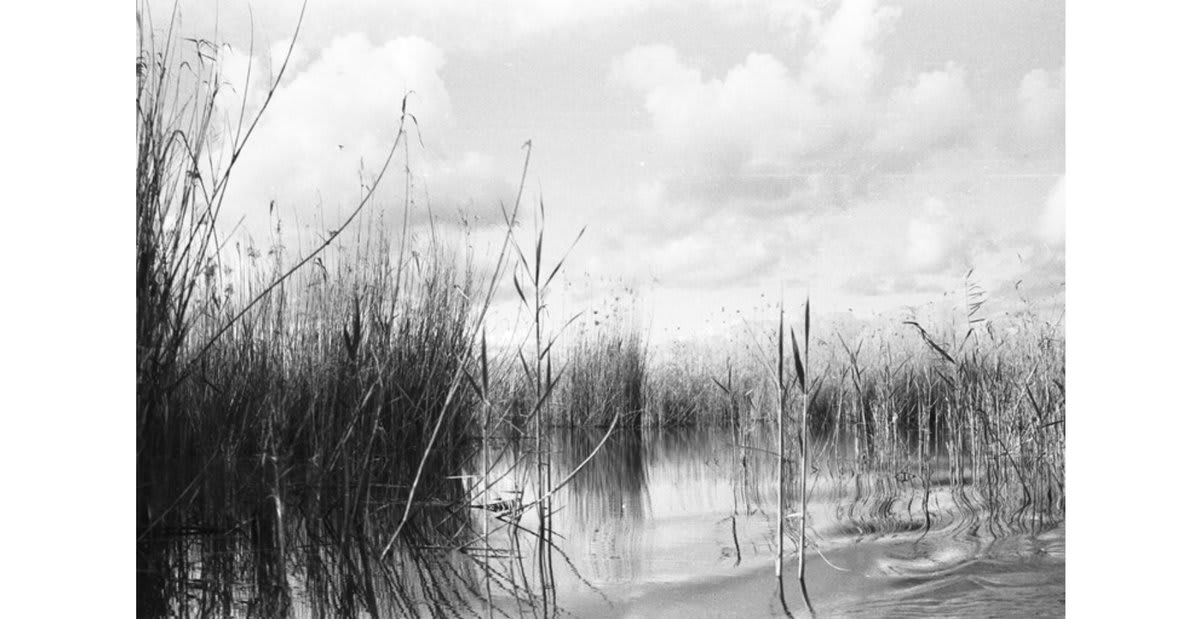
The reed beds encased the lake, pale green at the waterline and darkening as they rose, and through them the light came in slats and bands that shifted when the wind blew. The water inside the enclosure was flat and still and the color of pale pewter, and rising from the water in a pattern that resembled a birdshot burst were the stumps.
They were reed bundles driven into the marsh bed as foundation stakes. The stumps rose two or three meters above the waterline. They were black with age and calcified, the organic material of the reed having been replaced, over centuries of immersion, with calcium carbonate from the mineral-rich water, a process that the geologists at Basra call biomineralization. This process left the shape of the individual stalks, the cord bindings, even the texture of the cut ends.
The stumps were cut flat at the top, as though they had supported a platform, and on one of them, at the far end of the grid, a grey heron stood on one leg and watched us.
I asked Ḥamīd what they were.
هذولة العالية. ما يقربون منها الصيادين.
Those are the ʿĀliya. The fishermen don’t go near them.
“The high ones”.
عالية.
I asked him what that meant. He looked at me and then he looked at the stumps and said:
كانوا يبنون فوق. يبنون ويبنون. وما وقفوا.
They built above. Then higher. Then higher again.
Ḥamīd had spent his life in these swamps. I asked him whether he knew of a woman called Nūra Ḥasan. Yes. He said she was from a settlement not far from here, originally. He had known her. She had gone to Baghdad as a girl and then to Europe. She had come back to the marshes in the seventies to study the ʿĀliya and the water-readings. She had been the last person to pay him to take her to the stumps. He said she lived in Holland now but he had lost her contact. He said she was very old. He said she had not come back since the water returned.
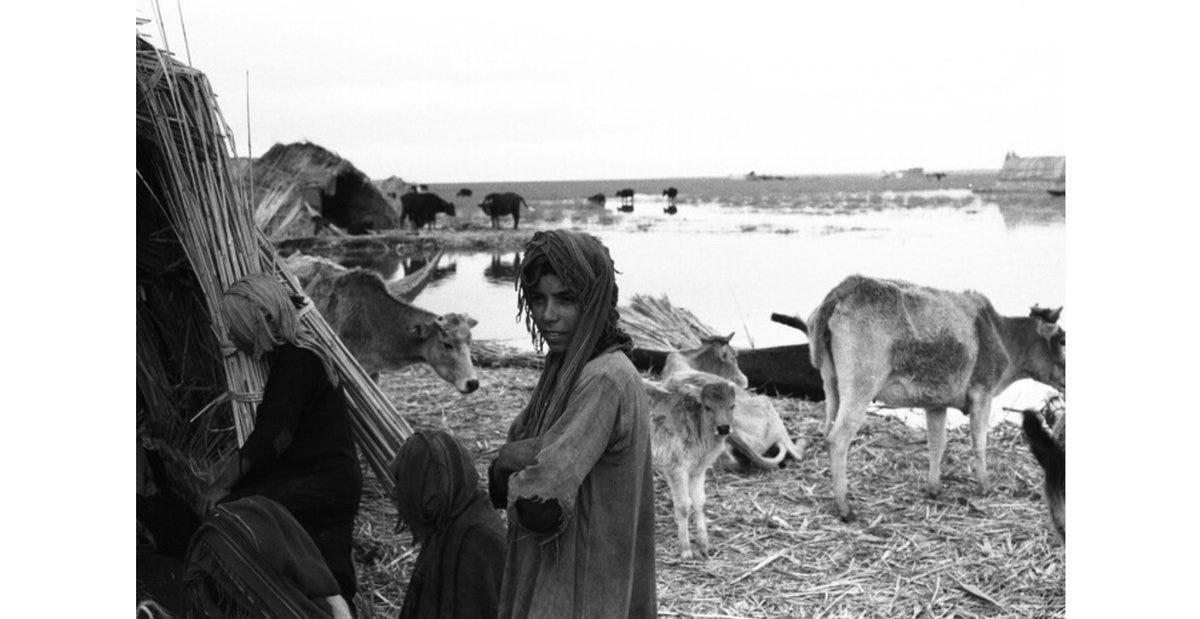
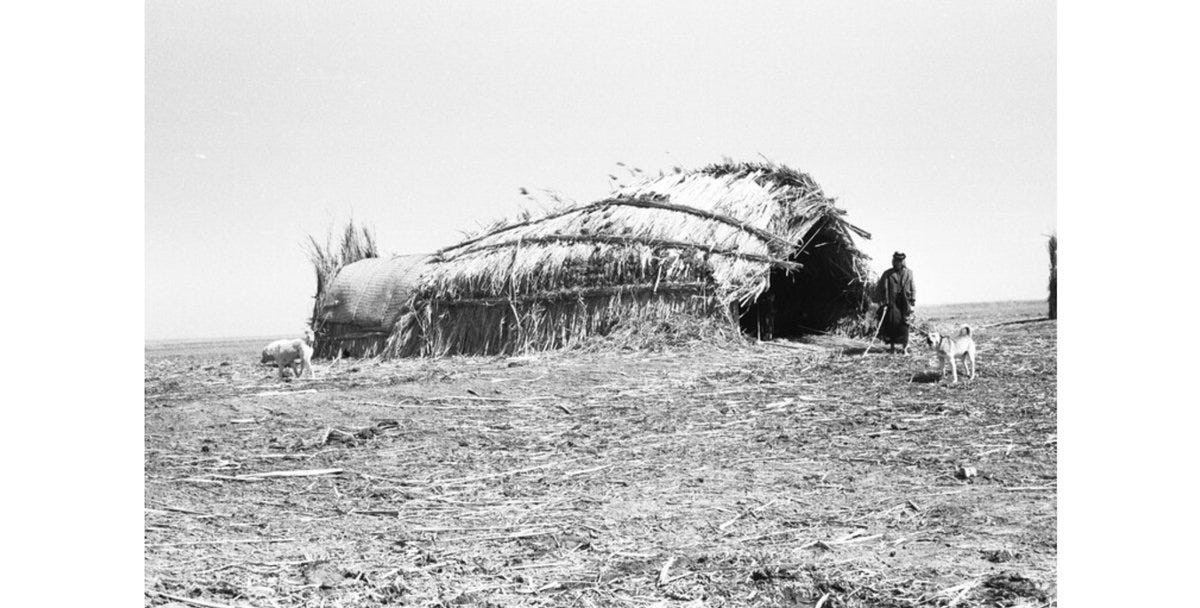
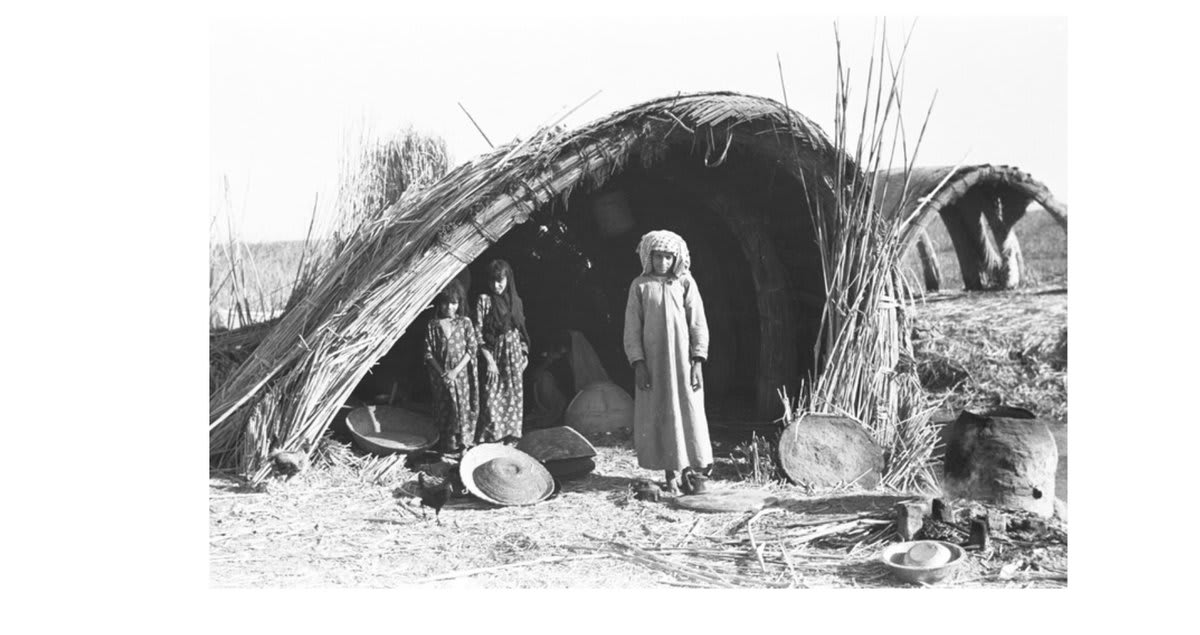
Nūra bint Ḥasan al-Maʿdāniyya was born in 1949 in a settlement in the central Ahwār, the second daughter of a fisherman who kept twelve water buffalo and whose family owned a muḍīf (المضيف) the great arched guest house made entirely of bundled reeds that had been rebuilt at least nine times in the living memory of the family, each time in the same place. The muḍīf was built by bundling the giant qaṣab into columns as thick as the waist of a strong man, planting them in two rows, and bending the tops together to form a vaulted arch that was ten meters high and twenty meters long.
The interior was cool and dim and smelled of water and reeds and mud, and the light cut through in bands through the gaps between the bundles. The building moved when the wind moved, it creaked and shifted on its foundations, and it would rot and be rebuilt and rot and be rebuilt again.
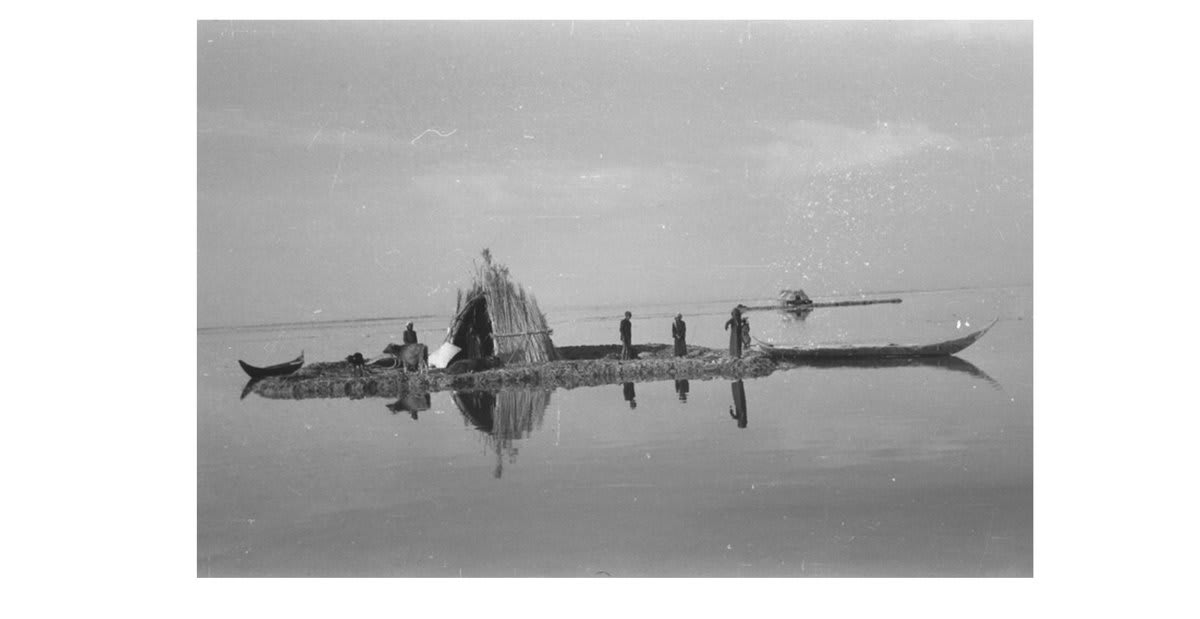
Nūra’s grandmother - her father’s mother, a small, hard woman whose name was Umm Ḥasan and whose face Nūra would describe, decades later, to the Dutch journalist who profiled her in 2004, as “the color of the reeds in autumn, a sickening dark gold” - had a word for the quiet days.
أيام السكتة.
Ayyām al-sakta. The hushed days. The days when the marsh was still and the water did not move and the reeds did not sway and the birds did not fly and you stayed in the house and waited for the marsh to start moving. Umm Ḥasan said the hush was the marsh thinking. She said the hush came before the flood. She said you could feel it in the soles of your feet if you stood in the water - a heaviness, a gathering.
Nūra left the marshes at fourteen- sent to Baghdad on a government scholarship for promising rural students, administered by a man from the Ministry of Education who arrived by motorboat. She studied history at Baghdad University.
She spent the first year sleeping draped with a damp cloth over her face because the air in Baghdad was so dry it cracked her skin until it bled. She told the Dutch journalist that the hardest thing about Baghdad was not the language or the classes or the loneliness but the absence of the sound of water. “In Baghdad, you can hear the traffic, the calls to prayer, the generators running all night-- but you cannot hear the water.”
She returned to the marshes in the mid seventies to begin doctoral fieldwork on a grant from a foundation in England. She was twenty-six and had been away for twelve years, nearly half her life now.
She arrived by motorboat from Basra and transferred to a mashḥūf at the edge of the reed beds and when the mashḥūf entered the first channel and the reeds closed over her head and the light turned green and the air changed - from the hot, dry, diesel-scented air of the road to the wet, cool air of the marsh, the air that smelled of water and cut reed and hung low above the reeds. She put her feet over the side of the mashḥūf and into the water and kept them there for the rest of the journey.
“I put my feet in and the water was cold and the mud was between my toes and I could feel the current pulling against my calves, a very slight pull, toward the southeast, and I knew that the water was moving from the Tigris overflow toward the lower marshes, and that the fish would be moving with it, and that the reeds on the south side of the channel would be thicker than the reeds on the north side because the current carries the seeds. And I had not stood in the water for twelve years.”
She said: “My grandmother could read the water. She said the water spoke if you listened long enough. I grew up listening. Then I went to Baghdad and the listening almost died in me. When I put my feet back in the water in 1975, it was like hearing a language of your childhood. You can understand. But the words won’t come as easilly.”
The Ma’dan (المعدان) - the Marsh Arabs - have inhabited these marshes for at least seven thousand years. The Sumerians built at the western edge of the marshes, and the ziggurat at Ur rises from a flat expanse of gravel and salt that was, five thousand years ago, the shore of a marsh that extended to the horizon.
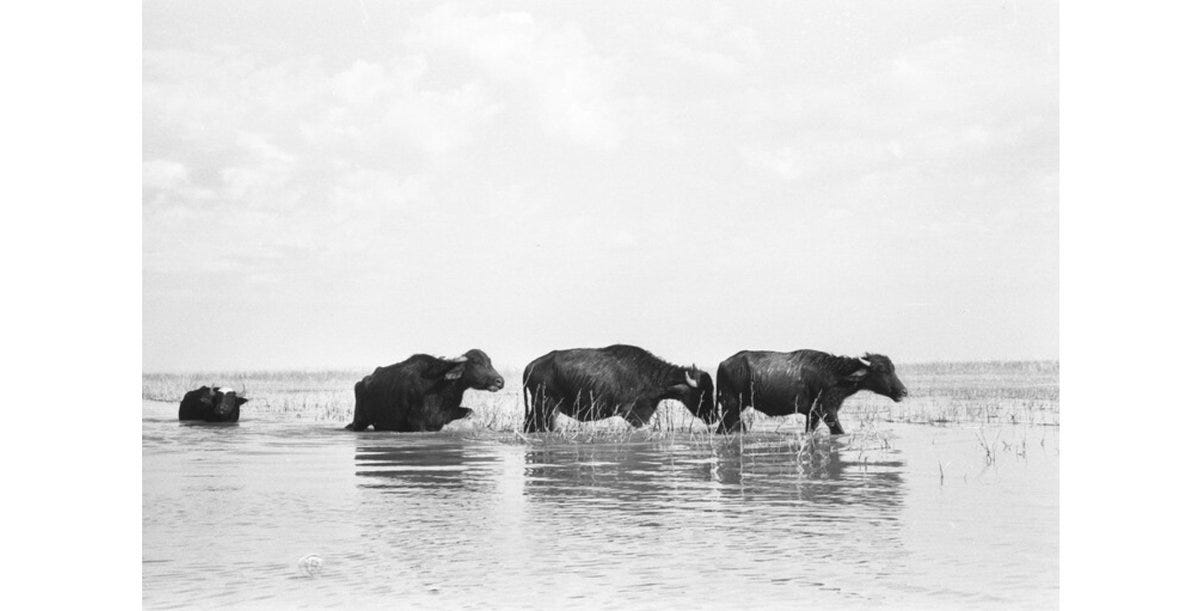
The Ma’dan’s origins are disputed. Some scholars trace them to the Sumerians, others still to Bedouin tribes who migrated into the marshes during the early Islamic period. The Ma’dan themselves believe they’ve always been here. The marsh is their world- and they build with reeds, they fish with nets and spears, they raise water buffalo - jāmūs, (جاموس ) - whose milk they drink and whose dung they burn for fuel, and they move on the water in the mashḥūf, the narrow bitumen-coated canoe that is the only way to travel between settlements.
They call the water-readers qāriʾ al-māʾ (قارئ الماء), one who reads the water. The practice was called qirāʾat al-māʾ (قراءة الماء), the reading of the water. It appears in at least six separate documents spanning approximately 1270 to 1325, always in the context of the marshes.
A water-reader could tell what the marsh was doing and what it would do next by standing in it, by standing in the water with his feet in the mud and his knees in the current and his eyes on the surface and his ears open to a set of sounds so faint that most people could not hear them at all - sounds made by water moving against mud and reed.
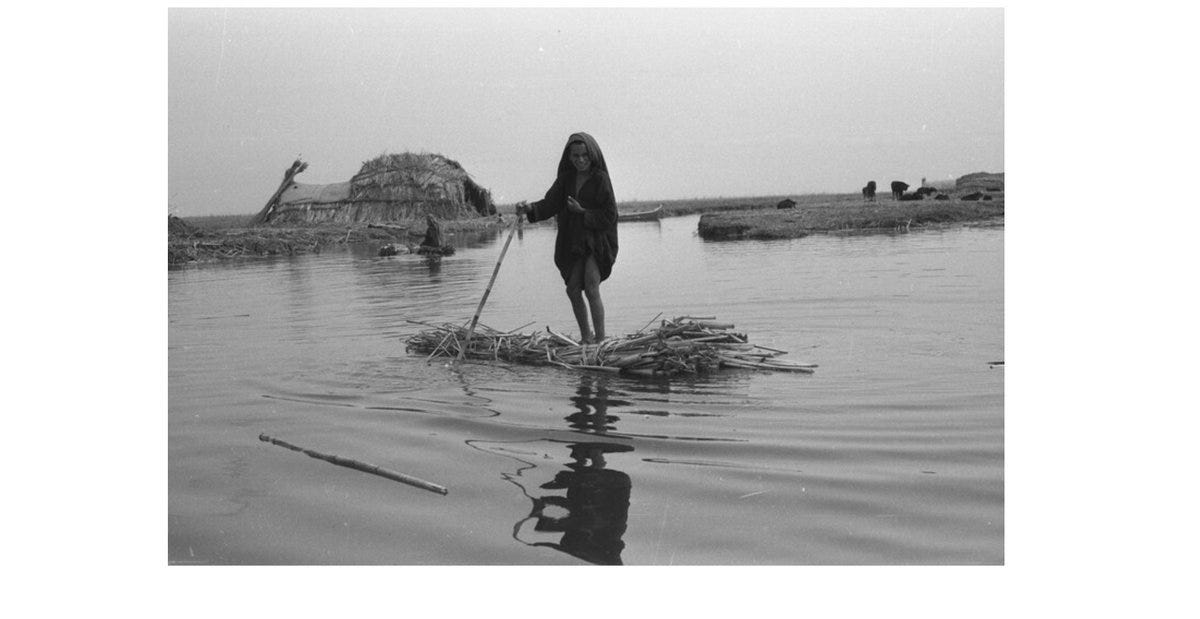
The fullest description comes from Badr al-Dīn, a Mamluk envoy traveling from Cairo to the Ilkhanid court in 1302, who passed through the marshes on the river route from Basra and who stayed for nearly three weeks. He was expected in Tabriz for a diplomatic mission. Something about the marshes held him - perhaps the water-reading itself, which he encountered on his second morning according to his travel logs.
His account survives at the Dār al-Kutub in Cairo, MS Adab 2471, and Nūra, who found it during a research visit in 1980:
وفي اليوم الثاني من مقامي رأيتُ رجلاً من أهل الماء يخرج من بيته قبل الفجر وينزل إلى الماء ويقف فيه والماء إلى ركبتيه. ووقف هكذا ساكناً لا يتحرّك ولا يتكلّم حتى طلعت الشمس وغيّرت لون الماء من الأسود إلى الرمادي إلى لون لا اسم له بين الفضة والذهب. ثمّ رفع يده وأشار إلى الغرب وقال كلاماً لم أفهمه فأخبرني مرافقي أنّه قال إنّ الماء قادم من الجهة الغربية وأنّه سيصل بعد أربعة أيام وأنّ السمك سيتحرّك شرقاً قبل وصوله بيومين وأنّ البلشون سيغيّر رجله اليوم.
ومكثتُ أربعة أيام وارتفع الماء كما قال. وتحرّك السمك شرقاً كما قال. والبلشون الذي كان يقف على رجل واحدة وقف على رجلين قبل الغروب.
On my second day, I saw a man of the water people leave his house before dawn and descend into the water and stand with the water to his knees. He stood still, not moving, silent, until the sun rose and changed the color of the water from black to grey to a color between silver and gold in total stillness. Then he raised his hand and pointed west and said words I could not make out, and my companion told me he said the water is coming from the west and will arrive in four days and the fish will move east two days before it arrives and the heron will change its leg today. I stayed four days and the water rose as he said. And the fish moved east as he said. And the heron that had been standing on one leg stood on two before sunset.
Badr al-Dīn asked the man - his name was ʿAbbūd - how he knew. ʿAbbūd took him to the water and told him to stand.
فوقفتُ والماء إلى ركبتيّ وكان بارداً، بارداً برداً يصعد من الأسفل كأنّ البرد يأتي من قاع الهور لا من الهواء. والطين كان ناعماً تحت قدميّ ناعماً كالحرير وأحسستُ بين أصابعي أشياء صغيرة تتحرّك، ربّما ديدان أو يرقات، وأحسستُ بشيء يسحب ساقيّ سحباً خفيفاً نحو الجنوب وهو التيار. لكنّي لم أشعر في كلّ هذا إلّا بالبرد وبالغرابة. والسطح أمامي كان ماء. لم أرَ فيه إلّا الماء وانعكاس السماء والقصب المنعكس رأساً على عقب كأنّ هناك هوراً آخر تحت الهور.
فقال لي عبّود: أنتَ تحسّ البرد. أنا أحسّ أنّ البرد تغيّر عن أمس. أمس كان البرد ثابتاً من الأعلى إلى الأسفل. اليوم البرد أشدّ عند القدمين منه عند الركبتين. وهذا يعني أنّ ماءً بارداً يدخل من الأسفل، من النهر، من الشمال. أنتَ تحسّ الطين. أنا أحسّ أنّ الطين اليوم أنعم من طين أمس لأنّه يحمل تراباً ناعماً من الجبال وهذا يعني أنّ الثلج يذوب في الشمال وأنّ الماء قادم. أنتَ تحسّ التيار يشدّك. أنا أحسّ أنّ التيار يتردّد، يشدّ ثمّ يتوقّف ثمّ يشدّ، كأنّ الهور يأخذ نفساً ثمّ يخرجه ثمّ يأخذ نفساً، وهذا يعني أنّ ماءً كثيراً يجيء من بعيد وأنّ الهور يتنفّس قبل أن يبتلع.
I stood with the water to my knees and it was cold. The mud was soft under my feet, soft as silk, and I felt between my toes small things moving, perhaps worms or larvae, and I felt something pulling my legs gently south, which was the current. But I felt nothing in all this except the cold and the strangeness. The surface before me was water. I saw nothing but water and the reflection of the sky and the reeds reflected upside down. ʿAbbūd said to me: you feel the cold. I feel that the cold has changed since yesterday. Yesterday the cold was even from top to bottom. Today the cold is sharper at the feet than at the knees. This means cold water is entering from below, from the river, from the north. You feel the mud. I feel that the mud today is more fine than yesterday’s mud because it carries fine soil from the mountains, and this means the snow is melting in the north and the water is coming. You feel the current pulling you. I feel that the current hesitates - it pulls, then stops, then pulls - as though the marsh is breathing, and this means a great deal of water is coming from far away and the marsh is breathing before it rises.
أنتَ تحسّ البرد. أنا أحسّ أنّ البرد تغيّر عن أمس.
ʿAbbūd told Badr al-Dīn:
نحن لا نعلّم أولادنا بالكلام. نضعهم في الماء.
We cannot teach our children with words. They can only learn in the water.
Badr al-Dīn stayed three weeks and he returned to the water each morning and stood beside ʿAbbūd in the dark before dawn and tried to feel what ʿAbbūd felt and could not. On the fifth morning he felt the temperature change that ʿAbbūd had described - colder at the feet - but he could not tell whether the cold had changed since the previous day.
On the ninth morning he thought he felt the current hesitate, the pulling-stopping-pulling that ʿAbbūd called the marsh breathing, but ʿAbbūd told him the marsh was not breathing that day, the current was steady, and what Badr al-Dīn had felt was his own pulse in his calves.
He writes:
ووقفتُ ثلاثة أسابيع في الماء ولم أتعلّم شيئاً إلّا أنّي لن أتعلّم. فالماء يتكلّم لغةً لا يتعلّمها الكبار. وعبّود بدأ يسمعها وهو رضيع. وأنا بدأتُ وأنا رجل في الأربعين. وأذناي صمّاء. لا أذناي اللتان على رأسي بل الأذنان اللتان في باطن قدميّ وهما الأذنان اللتان ما فتحهما أحد لأنّ أبي لم يضعني في الماء.
I stood three weeks in the water and learned nothing except that I would not learn. The water speaks in a way that adults cannot learn. ʿAbbūd began hearing it as an infant. I began as a man of nearly forty years. My ears are deaf- not the ears on my head but the ears in the soles of my feet, the ears that never opened because my father did not put me in the water.
Near the end of his stay, Badr al-Dīn describes watching ʿAbbūd carve marks on the inner wall of the muḍīf at Chībāyish:
وفي آخر أيامي رأيتُ عبّوداً يقف في الماء كعادته ثمّ يخرج ويذهب إلى المضيف ويحفر في القصب علامات بسكين صغيرة. فسألته ماذا تفعل فقال أكتب ما قاله الماء. فقلتُ ولكنّك كنت تعرف ما قاله الماء دون أن تكتبه. فقال نعم ولكنّ القصب يحفظ ما أنسى.
In my last days I saw ʿAbbūd stand in the water then go to the muḍīf and carve marks in the reeds with a small knife. I asked what he was doing and he said I am writing what the water said. I said you knew what the water said without writing it. He said yes, but the reed remembers what I forget.
القصب يحفظ ما أنسى.
The knife entering the green reed, the marks appearing on the muḍīf wall.
Ḥamīd had a thermos of brewed tea in the bottom of the mashḥūf. He produced two small tulip-shaped glasses from his bag wrapped in a pale blue cloth, and we sat among the stumps and drank tea and the heron watched us from its perch.
I asked him about the word his grandmother used. أيام السكتة. The hushed days.
He said his grandmother and Nūra’s grandmother had been friends and had sat together in the muḍīf in the evenings and that Nūra’s grandmother had known a water-reader, the last one anyone remembered, a man whose name Ḥamīd did not know. The water-reader had been asked, near the end of his life, to teach the younger men the notation - to carve the readings on the muḍīf wall so that the readings could be consulted without standing in the water and he had refused.
الجدار ما عنده أرجل. الجدار ما يحسّ الطين. الجدار ما يسمع الماء يتنفّس. الجدار يحفظ ما قاله الماء أمس. بس الماء يقول شي جديد اليوم والجدار ما يسمعه لأنّ الجدار ما عنده أذان.
The wall has no feet and thus the wall does not feel the mud. The wall does not hear the water breathing. Sure, the wall remembers what the water said yesterday-- but the water says something new today.
Ḥamīd said they forced him. He said the young men insisted the wall spared them the mornings in the cold water- they could mend the nets, move the buffalo. The water-reader went to live alone at the edge of the settlement, close to the water, and stood in the marsh every morning until he died, and no one came to learn from him.
Nūra spent four months studying the notation system, cross-referencing Badr al-Dīn’s descriptions with a reed bundle she examined at the Iraq Museum in Baghdad - IM 77541, one meter long, bound with palm-fiber cord in a decorative double helix, incised with hundreds of marks.
She decoded a little more than half. The vertical lines represented water level - clusters indicating predicted rises above the dry-season baseline. The curved reed-shapes indicated current direction and strength. The circles indicated fish concentration.
The horizontal lines crossing the verticals she could not translate.
They appeared in increasing density as the readings progressed from older to newer, and they corresponded to no variable Nūra could identify. She mapped them to Tigris flood levels, drought data, fish population estimates, agricultural calendars. Nothing fit. But whatever it tracked, Nūra could not find it in the marsh.
In the later sections, the horizontal lines were no longer merely crossing the verticals. They were crossing each other.
In her working notes - which survive in a cardboard box in the basement of the International Institute of Social History in Amsterdam, where her papers were deposited after her retirement- she wrote:
Verticals: water. Horizontals: verticals?
The marriage of Zaynab bint Ḥusayn al-Maʿdāniyya to Jāsim ibn Salīm, a fisherman in a settlement eight kilometers south of Chībāyish, is recorded in a contract fragment that Nūra found at the Iraq National Museum archives in the sweltering summer of 1978, filed between a Sassanid seal impression and a bag of unprovenanced pottery sherds.
The contract is written on the tanned hide of a water buffalo in the dark cuttlefish ink that the Ma’dan made by crushing the ink sac of the marsh cuttlefish and mixing it with gum arabic and water. The ink is nearly black, blacker than the oak-gall ink of the cities, and it has a faint iridescence when the light catches it at an angle, a sheen like oil on water. There was no such light in the archives.
The mahr, the dowry, is specified: twenty jāmūs - twelve milking females, three young females not yet calved, four males for transport, and one old male whose purpose the contract describes as li-l-ṣuḥba (للصحبة), for companionship. The witnesses are named- six men, three from each settlement. The date is 1305. A clause at the end reads:
واتّفق الزوجان على أن لا يسافر أحدهما بالمشحوف إلى الآخر في يوم قالت القراءات فيه إنّ الماء غير مأمون. ويكون ترتيب الزيارات وفق ما يُقرّره قارئ الماء في الچبايش.
The two parties have agreed that neither shall travel by mashḥūf to the other on a day when the readings say the water is not safe. The arrangement of visits shall conform to what the water-reader at Chībāyish determines.
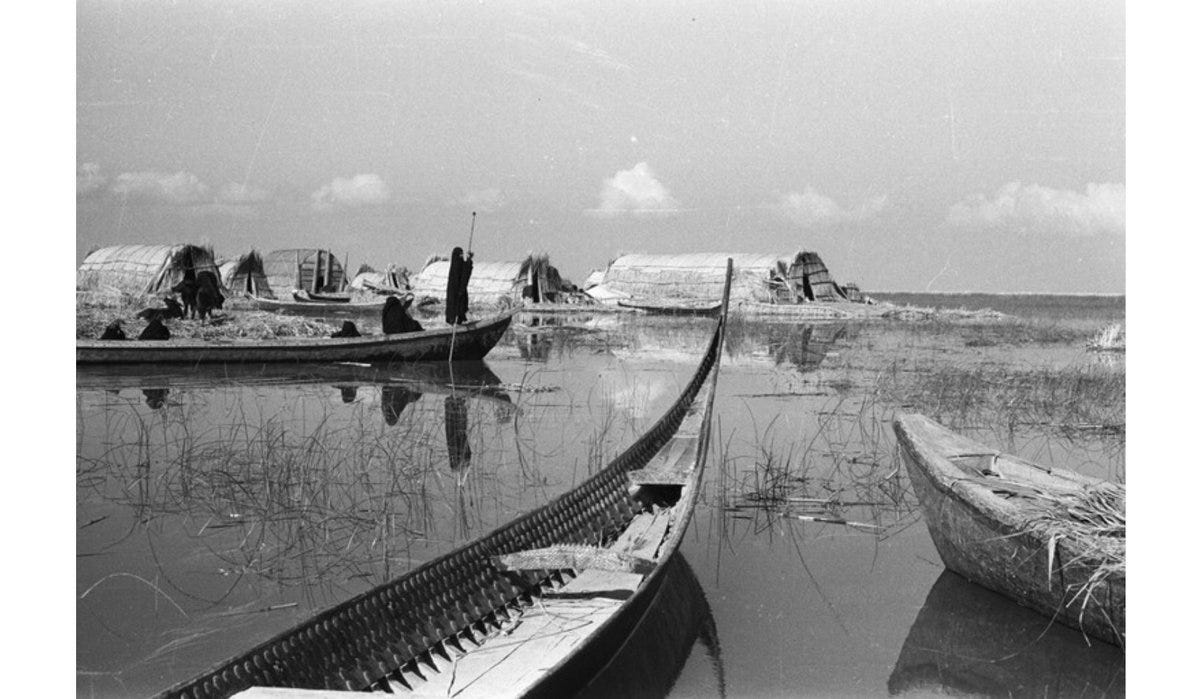
Zaynab’s settlement was separated from Jāsim’s by eight kilometers of open water and reed channels and narrow passages between floating islands, two hours by mashḥūf in calm water, longer if the wind was up or the channels had shifted.
A petition filed with the Basra qāḍī’s court in 1313, eight years after the marriage, requests that Jāsim ibn Salīm be compelled to visit his wife, or alternatively that Zaynab be permitted to travel to Jāsim’s settlement despite the readings. The petition is written on buffalo leather in cuttlefish ink by a professional petition-writer in Basra - Zaynab or her family had traveled to the city to file it, a journey of two or three days from the central marshes.
The stated grounds:
وقد صارت الأيام التي تُجيز القراءات فيها السفر على الماء بين القريتين أقلّ من أيام المنع. والزوج لم يزر زوجته منذ عيد الأضحى الماضي وذلك ثمانية أشهر. والماء بين القريتين هو نفسه الماء الذي كان لم يتغيّر ولم يرتفع ولم تعصف عليه ريح ولم يتحرّك فيه تيار غريب ولكنّ القراءات تقول إنّه غير مأمون. والزوجة تقول إنّها تنظر من بيتها إلى ماء ساكن لا موج فيه ولا ريح ولا تيار ومع ذلك يُقال لها إنّ الماء خطر. وهي تعرف هذا الماء لأنّها ولدت فيه وسبحت فيه وهي طفلة ولا ترى فيه خطراً.
The days on which the readings permit travel on the water between the two villages have become fewer than the days of prohibition. The husband has not visited his wife since the last Eid al-Adha. The water between the two villages is the same water it has always been - it has not changed, has not risen, no wind has blown upon it, no strange current has moved through it - but the readings say it is not safe. The wife says she looks from her house at still water with no waves, no wind, no current, and yet she is told the water is dangerous. She knows this water because she was born in it and swam in it as a child and she sees no danger in it.
وهي تعرف هذا الماء لأنّها ولدت فيه وسبحت فيه وهي طفلة.
The qāḍī ruled that the husband was not compelled to defy the readings if the readings were issued by those with knowledge but he was compelled to visit on the permitted days, however few.
In the same archive in a hand that Nūra describes as “small, unpracticed, pressing hard on the hide as though the stylus were unfamiliar”
والماء بيننا هو الماء. ما تغيّر. لكنّ الجدران تقول إنّه تغيّر. والجدران ما تعرف الماء. الماء يعرف الماء. وأنا أعرف الماء لأنّي ولدتُ فيه. بس ما يسمعون لي. يسمعون للجدران.
The water between us is the water. It hasn’t changed. But the walls say it has changed. The walls don’t know the water- the water knows the water. And I know the water because I was born in it. But they don’t listen to me. They listen to the walls.
Nūra’s grease penciled note on the archival folder: Zaynab?
The raising began around 1310.
A Basra customs record notes a tripling of bitumen shipments to the marshes without any increase in boats or dwellings nor population. The merchants say the water people are raising their houses. يرفعون بيوتهم. The Ma’dan had always built on the water but their floating islands sat at the surface, rising and falling with the seasonal floods. The water rose, the island rose with it. The water fell, the island settled.
Additional layers of reed and mud were added. Bitumen was applied between the layers. Stakes were driven deeper. The platforms rose. One meter above the waterline. Then two. Then three. Then four.
A fish merchant from Basra, whose letter Nūra found in the Cairo Geniza, describes a visit to the marshes in 1314:
ذهبتُ إلى الأهوار لشراء البنّي والشبّوط كعادتي في كلّ ربيع. والبنّي سمكة نهريّة كبيرة لحمها أبيض وجلدها فضيّ ويُباع في سوق البصرة بدرهمين المنّ أمّا من الصيّادين فبدرهم واحد. والشبّوط أصغر ولحمه أحمر يضرب إلى البرتقاليّ وهو أقلّ رغبة عند أهل البصرة لكنّه يُملّح ويُجفّف ويُباع في الأسواق البعيدة. وكنتُ أنتظر أن أشتري من قرية جاسم بن سليم خمسين منّاً من البنّي وثلاثين منّاً من الشبّوط كما أشتري كلّ عام منذ عشر سنين.
والطريق من البصرة إلى القرية يستغرق يومين بالمشحوف، يوماً في القناة الكبيرة ثمّ يوماً في القنوات الصغيرة بين القصب. وكنتُ أعرف الطريق كما أعرف شوارع البصرة. لكنّ بعض القنوات كانت قد تغيّرت — بعضها ضاق وبعضها اتّسع وبعضها اختفى — وهذا عادة الهور فإنّ ممرّاته تتحرّك كما تتحرّك أحلام النائم.
فلمّا وصلتُ وجدتُ القرية قد ارتفعت عن الماء ارتفاعاً لم أرَ مثله في حياتي. والبيوت التي كانت على سطح الماء صارت في الأعلى على منصّات من القصب والقير والطين، ولا تصعد إليها إلّا بسلالم من القصب طول الواحد منها أربعة أذرع أو أكثر. والسلالم رطبة وزلقة من القير والطحلب. والجواميس تقف في الأسفل عند الماء تنظر إلى فوق والنساء ينزلن لحلبها ثمّ يصعدن بالحليب في أوعية من الجلد. والأطفال الذين كانوا يسبحون حول المشحوف في كلّ زيارة سابقة ويتعلّقون بحافته ويغوصون تحت الماء ويظهرون وهم يضحكون — لم أرَ واحداً منهم في الماء. سألتُ أين الأطفال فقالوا في الأعلى.
وسألتُ لماذا يبنون هكذا فقالوا إنّ القراءات تقول إنّ الماء سيرتفع ارتفاعاً عظيماً. فقلتُ ومتى فقالوا لا يعلم أحد ولكنّ القراءات لا تخطئ. فقلتُ وما هذا الارتفاع العظيم فنظروا إليّ كأنّي سألتُ سؤالاً لا يُسأل وقال أحدهم بصوت خافت: الشمس السوداء. فقلتُ وما الشمس السوداء فلم يجبني أحد. ونظروا إلى الماء ثمّ نظروا إلى السماء ثمّ دخلوا بيوتهم.
I went to the Ahwār to buy bunnī and shabbūṭ as is my practice every spring. The bunnī is a large river fish with soft white flesh and silver skin that sells in the Basra market at two dirhams the mann, though from the fishermen at one dirham. The shabbūṭ is smaller with reddish-orange flesh, less favored by the people of Basra but salted and dried and sold in the markets. I expected to buy from the village of Jāsim ibn Salīm fifty mann of bunnī and thirty mann of shabbūṭ as I have bought every year for many years. The journey from Basra to the village takes two days by mashḥūf - one day in the main channel, one day in the small channels between the reeds. I knew the way as I know the streets of Basra. But some of the channels had changed - some had narrowed, some widened, some disappeared - and this is the nature of the marsh, whose passages shift between seasons and sometimes between weeks. When I arrived I found the village raised above the water to a height I have never seen in my life. The houses that had been at the water’s surface were now above, on platforms of reed and bitumen and mud, and you cannot climb to them except by reed ladders four cubits long or more. The ladders are damp and slippery with bitumen and algae. The buffalo stand below at the water looking upward and the women descend to milk them and climb back up with the milk in leather vessels. The children who used to swim around the mashḥūf on every previous visit, hanging from its edge and diving under the water and surfacing laughing - I did not see a single one of them in the water. I asked where the children were and they said above. I asked why they build like this and they said the readings say the water will rise greatly. I said when. They said no one knows but the readings do not err. I said what is this great rising and they did not answer. One of them said in a low voice: the Black Sun. I said what is the Black Sun and no one answered me. They looked at the water and then at the sky and then went into their houses.
The children were above. والأطفال في الأعلى. Between the children and the water were four meters of dry air and bundled reed, and through this the sound of the marsh, if it reached them at all, reached them muffled and distant.
A tax survey conducted in 1317 by an Ilkhanid official from Tabriz named Nūr al-Dīn recalls:
وأحصيتُ في القرى المرتفعة سبعاً وأربعين بيتاً وثلاثمئة واثني عشر رأساً من الجاموس وأربعة عشر مشحوفاً وثلاث عشرة شبكة صيد وسبع منصّات لتجفيف السمك لا يُستخدم منها شيء لأنّ السمك ما عاد يُصطاد بالقدر القديم. وفي ثلاثة من البيوت وجدتُ حزماً من القصب المقطوع عليها علامات لم أعرف غرضها فقدّرتها تحت بند بضائع مجهولة الغرض وقدّرتُ خراجها بدرهم عن كلّ حزمة.
والبيوت في الأعلى فارغة من كثير من الأثاث لأنّ الحمل إلى ذلك الارتفاع شاقّ. والنار لا تُشعل في الأعلى خوفاً من حريق القصب فالطعام يُطبخ في الأسفل على الماء ويُحمل إلى الأعلى في أوعية. والهواء في الأعلى أجفّ من الهواء عند الماء والبيوت تفوح منها رائحة القصب الجاف لا رائحة الماء. والجواميس تبقى في الأسفل عند الماء والناس في الأعلى وبينهم فراغ. والأطفال لا ينزلون إلى الماء. والماء الذي تحت البيوت ساكن ومظلم ولا يراه أحد من الأعلى لأنّ القصب يحجبه.
I counted in the raised villages forty-seven houses, three hundred and twelve buffalo, fourteen mashḥūfs, thirteen fishing nets, and seven fish-drying platforms, none of which are in use because the fish is no longer caught in the old quantities. In three of the houses I found bundles of cut reed bearing marks whose purpose I did not know, so I assessed them as goods of unknown purpose at one dirham per bundle. The houses above are empty of much furniture because carrying things to that height is difficult. Fire is not lit above for fear of the reeds burning, so food is cooked below at the water and carried up in vessels. The air above is drier than the air at the water and the houses smell of dry reed, not of water. The buffalo remain below at the water. The children do not go down to the water. The water beneath the houses is still and dark and you cannot see it from above because the reeds obscure it.
والماء الذي تحت البيوت ساكن ومظلم ولا يراه أحد من الأعلى.
The black sun.
A fragment of a muḍīf wall, recovered from the mud of the drained marshes in 1994 by an archaeological survey team from the University of Baghdad, working in the brief window between the draining of the marshes and the complete desiccation of the marsh bed. The fragment is a section of bundled reed, one meter square, calcified in the manner of the ʿĀliya stumps. On its inner surface are the standard water-reading marks- verticals, curves, circles, crossings. But at the bottom, in a space that had been cleared, previous marks scraped away to make room, there is an inscription in the colloquial Arabic of the marshes, in cuttlefish ink:
يوم الشمس السوداء. ارتفع الماء أو لم يرتفع. نحن في العالي ولا نرى.
The day of the Black Sun. The water rose or did not rise. We are in the high place and we cannot see.
ارتفع الماء أو لم يرتفع.
The water rose or did not rise.
نحن في العالي ولا نرى.
We are in the high place and we cannot see.
The Basra harbor records which tracked the Shatt al-Arab water level daily, maintained by the harbor administration survive in fragmentary form at the Bodleian Library in Oxford. Nūra cross-referenced every candidate date in the period 1315-1325. She found no anomalous flood. The water level in Basra, sixty kilometers downstream, was normal throughout. Whatever the readings had predicted, whatever the Black Sun was, the water did not rise. Or if it rose, it rose only in the marshes, in the dark space beneath the platforms where no one was standing and no one could see.
In 1991, the government of Saddam Hussein began draining the marshes.
The Ma’dan had supported the Shia uprising against Saddam after the Gulf War. The draining was a military operation conducted with bulldozers and dams and diversion canals that rerouted the Tigris and the Euphrates away from the Ahwār and into evaporation channels in the desert. The destruction took months.
The small channels dried first- these narrowed to mud paths and then to cracked earth and then to dust. The fish moved to the deeper pools at the centers of the lakes, and for a few weeks the fishing was extraordinary and the Ma’dan were rich - the fish were concentrated, packed into shrinking water, frantic, easy to catch. The fishermen of Jāsim’s village - the village the fish merchant had visited, the village Zaynab had married into, the village that Nūra had photographed and measured and catalogued during her fieldwork in the seventies - caught more fish in those weeks than they had caught in years. And then the pools shrank further. And the fish died in the shallows, their bodies drying to firm husks that curled and cracked shattered into the dust on the flat dry mud.
The water between Zaynab’s village and Jāsim’s - the eight kilometers the readings had forbidden her to cross - was gone.
The buffalo stood at the edges of the remaining water and would not move. They stood with their legs in the last inch of water and their heads down and their ears back and they would not move, and the men had to drive them out with sticks, and the buffalo went.
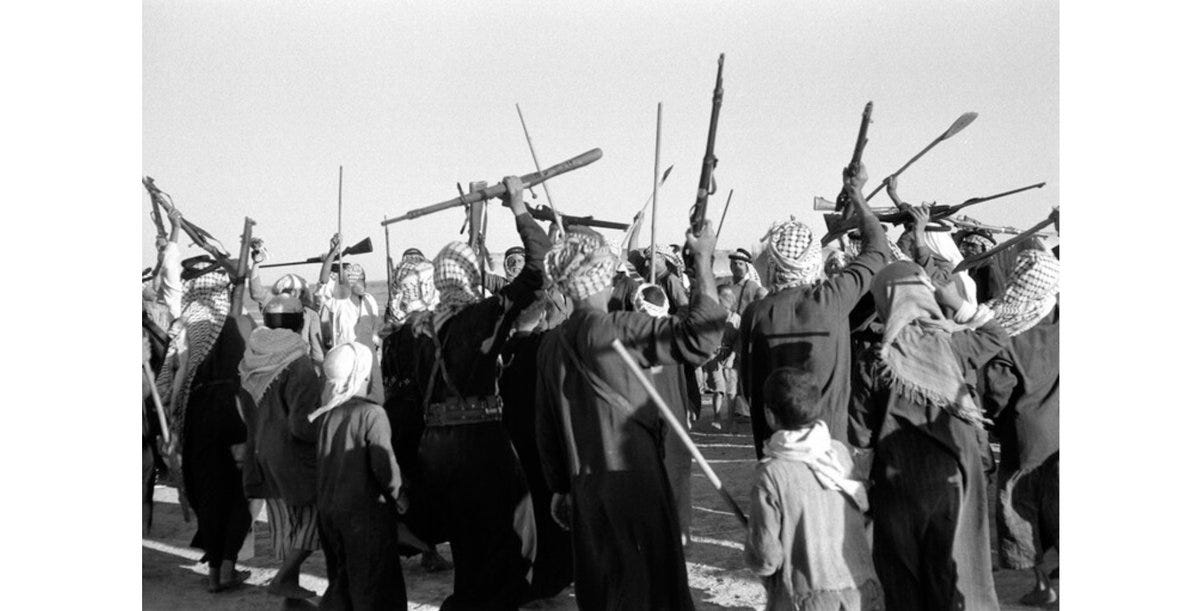
The reeds turned yellow in the first weeks. Then brown. Then the brown went grey and the grey went dry and the dry went to dust and the dust blew into the air and settled on everything - on the muḍīfs, whose arched roofs were designed to shed rain but welcomed dust, on the mashḥūfs beached in the mud, their bitumen hulls cracking in the heat, on the tuhūl that had settled onto the marsh bed and split under their own weight.
The drying marsh smelled of rot and salt and exposed sediment -- a sharp mineral smell that burned the nostrils and that the Ma’dan, according to Nūra’s interviews with survivors, called rīḥat al-mawt, the smell of death.
And through all of this the ʿĀliya stood at their elevation. Four meters above a surface of cracked mud baked to the color of bone. The ladders descended to dry ground. The platforms hung in the air, the careful layers of reed and bitumen drying and splitting. The flood the readings predicted had not come. The water had gone the other direction entirely. It had all been for the wrong apocalypse.
Nūra was in Amsterdam. She had left Baghdad in 1988 and was given a position at the University of Amsterdam’s department of Middle Eastern studies, a small department in a building on the Nieuwe Prinsengracht, a canal. Her office overlooked the water.
The Nieuwe Prinsengracht is clean and dark and contained in stone walls and it moves only when the boats move it and without them stands entirely still. Nūra could see the canal from her window and could hear the boats and the bicycles and the tourists but could not hear the water.
She heard about the draining by telephone. A colleague in Baghdad called. She did not go back. In her papers at the IISH - the International Institute of Social History in Amsterdam- in a folder she labeled marshes - personal, there is a sheet of paper on which she wrote, in Arabic:
يجفّفون الماء. الماء الذي علّمنا كلّ شيء. الماء الذي وضعتنا فيه أمّهاتنا ونحن رضّع فتعلّمنا أن نسمعه قبل أن نتعلّم أن نتكلّم. والعالية تقف في التراب مثل عظام. والحزم التي في المتحف تقرأ ماءً غير موجود. وأنا هنا على قناة في هولندا والماء تحت شبّاكي ساكت. الماء هنا ما يتكلّم. بنوا له جدران من حجر وقالوا له وين يروح. الماء هنا مطيع. والماء المطيع ما يتكلّم.
They are drying the water. The water that taught us everything. The water our mothers put us in as infants so that we learned to hear it before we learned to speak. The ʿĀliya stand in the dust. The bundles at the museum still give readings for a marsh that has been emptied. And I am here on a canal in Holland and the water beneath my window is silent. The water here does not speak.
والماء المطيع ما يتكلّم.
In the years after, in the quiet of the office on the Nieuwe Prinsengracht: her four months with the notation, her cross-referencing, her folders and catalogue numbers and penciled notes. She had come to the marshes to find the water-readers and had spent her time at the Iraq Museum, at the Dār al-Kutub, in archives. The last people who could still read the water had been standing in it every morning, and she had gone to the shelves instead.
After 2003, the dams were breached and the water returned. The marshes reflooded, partially - forty percent of the original area. The reeds are growing again. Some of the Ma’dan have come back. They build muḍīfs again, smaller than the old ones. They fish and raise buffalo. The water is shallower than it was and the channels are different and the fish are fewer and the sacred ibis has not returned. But the marsh is alive.
The ʿĀliya are underwater again. The stumps rise from the surface.
There is a phrase in Persian, used by the Sufis of Khorasan, that Nūra pinned above her desk in the office on the Nieuwe Prinsengracht without translation:
آفتابِ سیاه بر همه میتابد، و هیچکس سایه ندارد.
The black sun shines on everyone, and no one casts a shadow.
Nūra retired from the University of Amsterdam in 2012. She never returned to the marshes after the water came back. The Dutch journalist asked her, in 2004, whether she planned to go back. She said: “I am not the same woman who put her feet in the water in 1975”
Her papers are in the basement of the IISH, in a cardboard box labeled HASAN N. - AHWĀR / MA’DAN / WATER-READINGS, 1975-1991. The reed bundle at the Iraq Museum - IM 77541, one meter long, bound with palm-fiber cord in a decorative double helix, marks unidentified, possibly ritual - may or may not have survived the 2003 looting. Its catalogue entry has not been updated. The muḍīf wall fragment - IM 94-217, the inscription the water rose or did not rise, we are in the high place and we cannot see - is in storage, behind a locked door, in a room that is climate-controlled when the electricity is working.
The last time I went to the marshes was in winter. The water was grey and cold and the sky was grey and the reeds were brown and the birds were thick - pelicans, cormorants, herons, the migratory flocks that use the Ahwār as a waypoint between far Siberia and East Africa - and Ḥamīd poled the mashḥūf slowly between the stumps and the heron stood on its flat-topped post and watched us.
I asked Ḥamīd what his grandmother’s water-reader would have said about the ʿĀliya.
He was quiet for a long time. The pole entered the water and came out and entered and came out and the mashḥūf moved forward between the stumps and the heron watched and did not fly. The water was still. The reeds knocked against each other in a light wind. The marsh smelled of mud and cold water and dead reeds.
Then he said:
كان يقول إنّ الماء يتكلّم لمن يعرف أن يسمع. بس هم ما سمعوا الماء. سمعوا الجدران.
He would say the water speaks to those who know how to listen. But they didn’t listen to the water, they only listened to the walls.
The heron lifted off the stump with a single beat of its wings and crossed the lake and landed on another stump and folded its wings and stood on one leg and watched the dark, still water.
This is gripping in a way I never expected. Thank you
Such a beautiful and moving post. Thank you for writing it.
As Eid al-Adha approaches, it reminds me how many older societies existed within nature, not apart from it — where water readers and moon readers were accorded an integral place within rural life, reading the rhythms of nature and measuring time through its signs.
Even today in Sri Lanka, reports of the new moon from coastal locations help determine the beginning of the Hijri months, while in Buddhist tradition the lunar phases too have long shaped religious observance — both lingering memories of an older intimacy with the rhythms of nature.