
Reflections on Norway
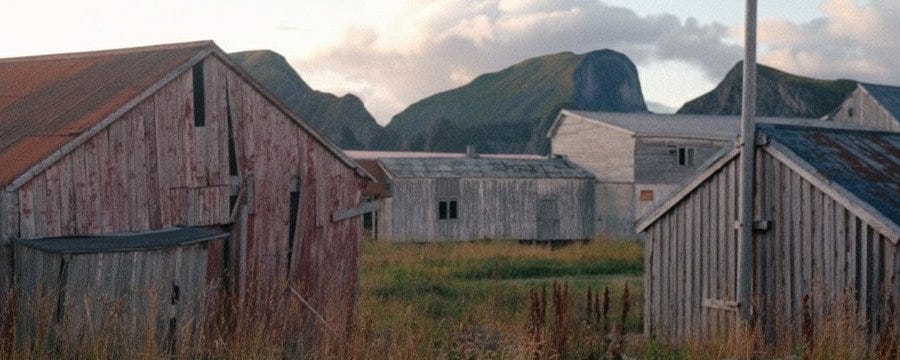
I spent a month in Norway last summer.
I’ve been trying to write about it ever since I got back and every week when I sit down the essay collapses. It’s not because I don’t know what to say, but because the thing I’m trying to describe resists language itself.
I spend most of my time writing about systems. I write about markets, their participants, about capital, about human mechanics, about how societies organize themselves around money and power and the stories they use to justify both. Norway sits outside the machinery of human explanation. Here’s my best attempt.
.
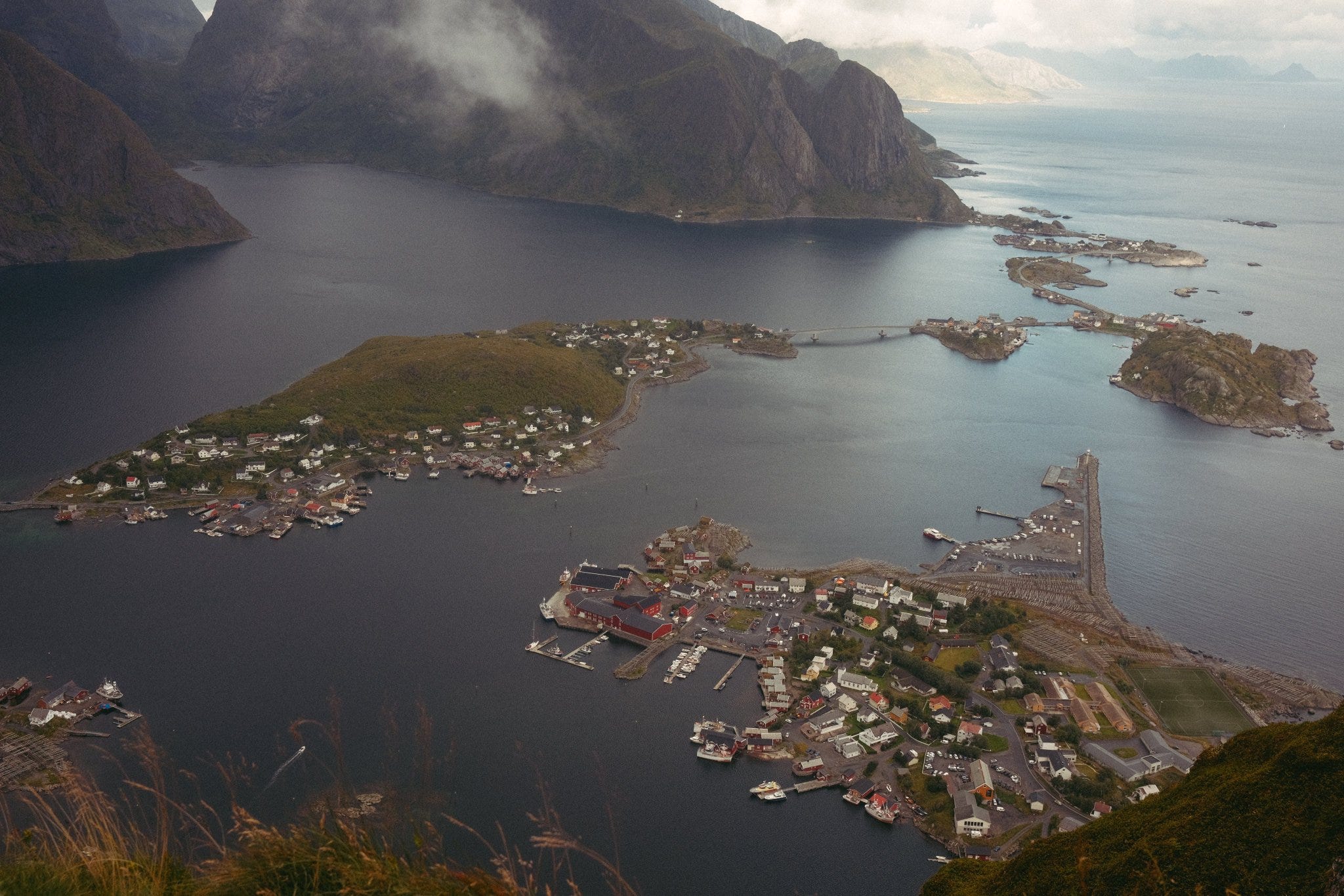
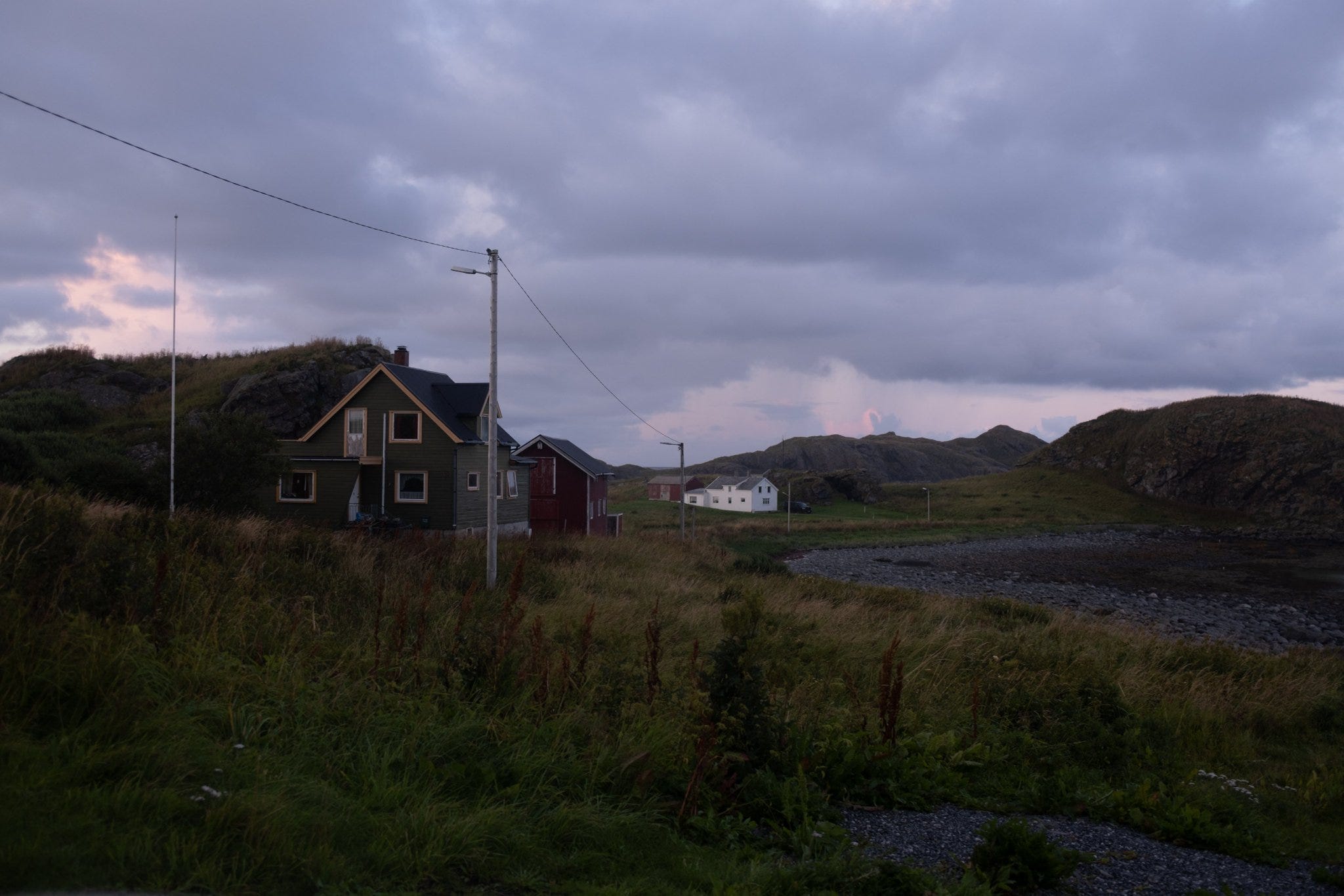
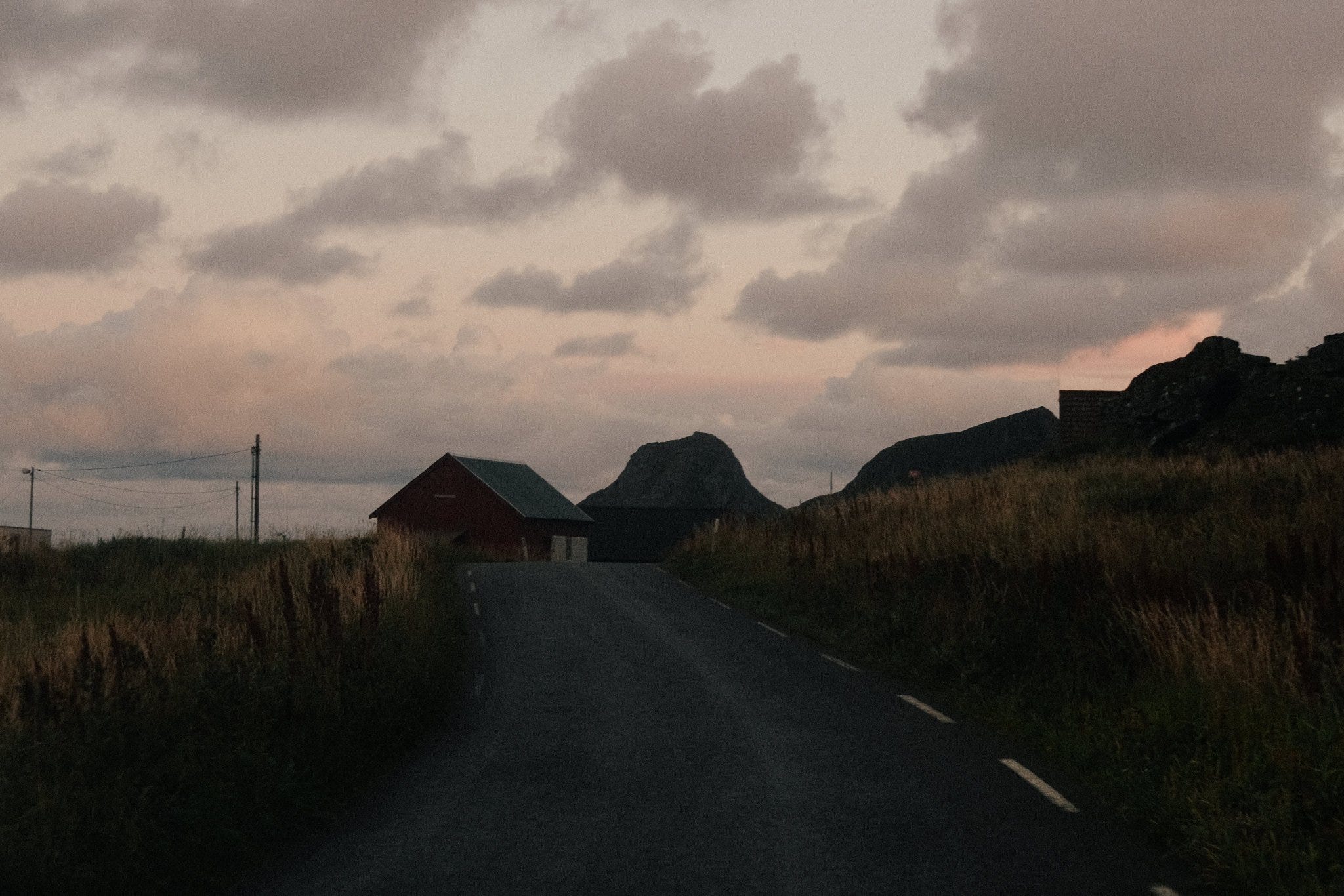
In my month there we drove the entire country from north to south. We started in Lofoten after a nearly 30 hour travel day and slowly worked our way through the fjord coast -- Stryn, Bergen -- and ended in Oslo, where glass towers reflected a different kind of light. The trip covered a few thousand miles, but the strange thing is in my memory, the thing does not cohere as a sequence of places. It organizes itself as variations on a single feeling. The feeling that every landscape we passed through was screaming with the same singular message, but that message was happening at a register just below one that we could hear.
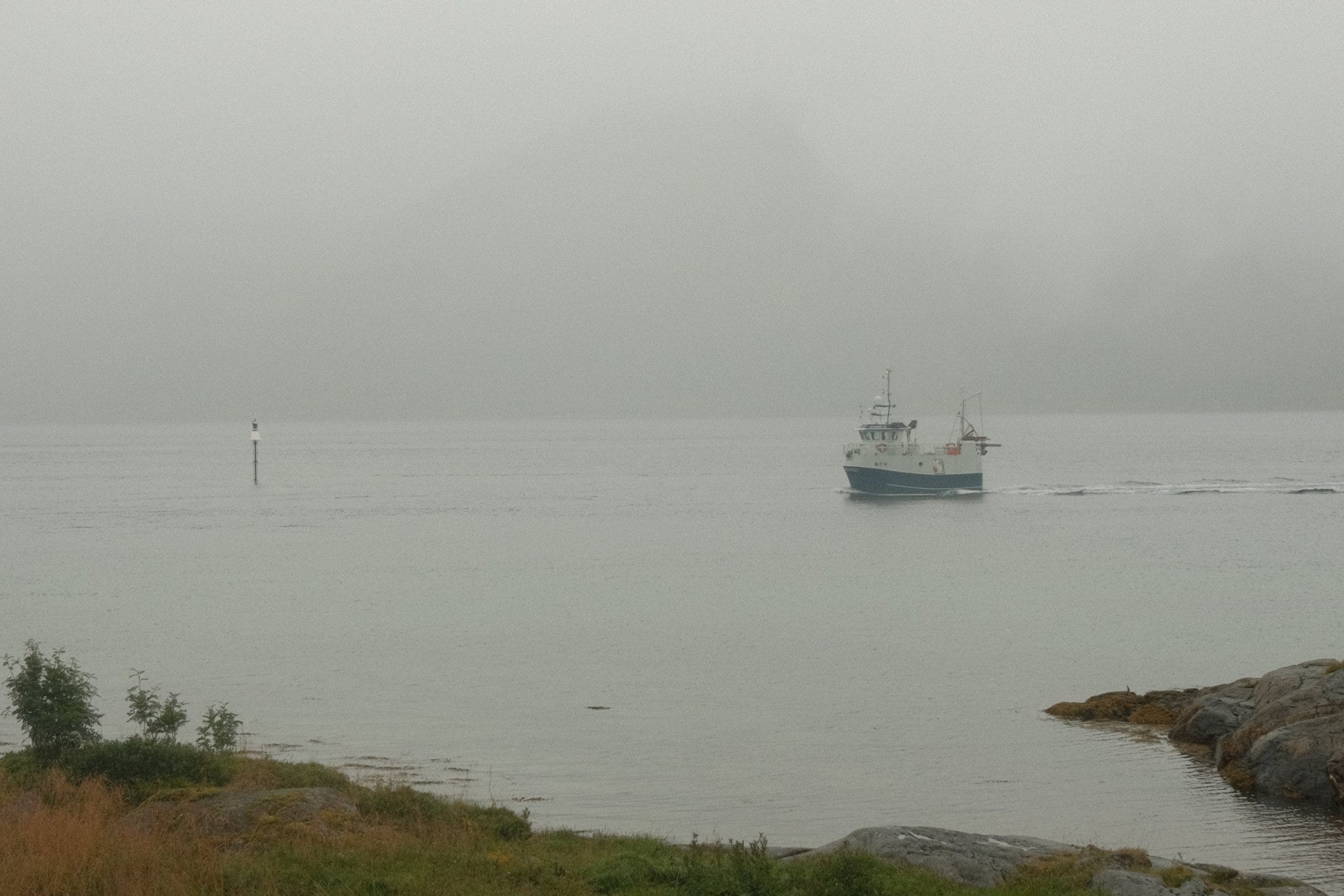
We start in Lofoten, which is a place that should hardly exist. The islands hang off the northwestern coast of Norway above the Arctic Circle, like a skeleton’s hand reaching into the Norwegian Sea. The mountains rise directly out of the water with no introduction, no foothills, no gradual approach. Granite walls a thousand meters high erupt from a flat ocean as though someone had driven them in from above. The water between them is so clear and so still that the mountains are mirrored perfectly in it on a still day. You can’t always tell which world is the real one. I’m told that the Vikings navigated these waters in open boats and I believe it because the place requires a certain degree of insanity to inhabit.
.
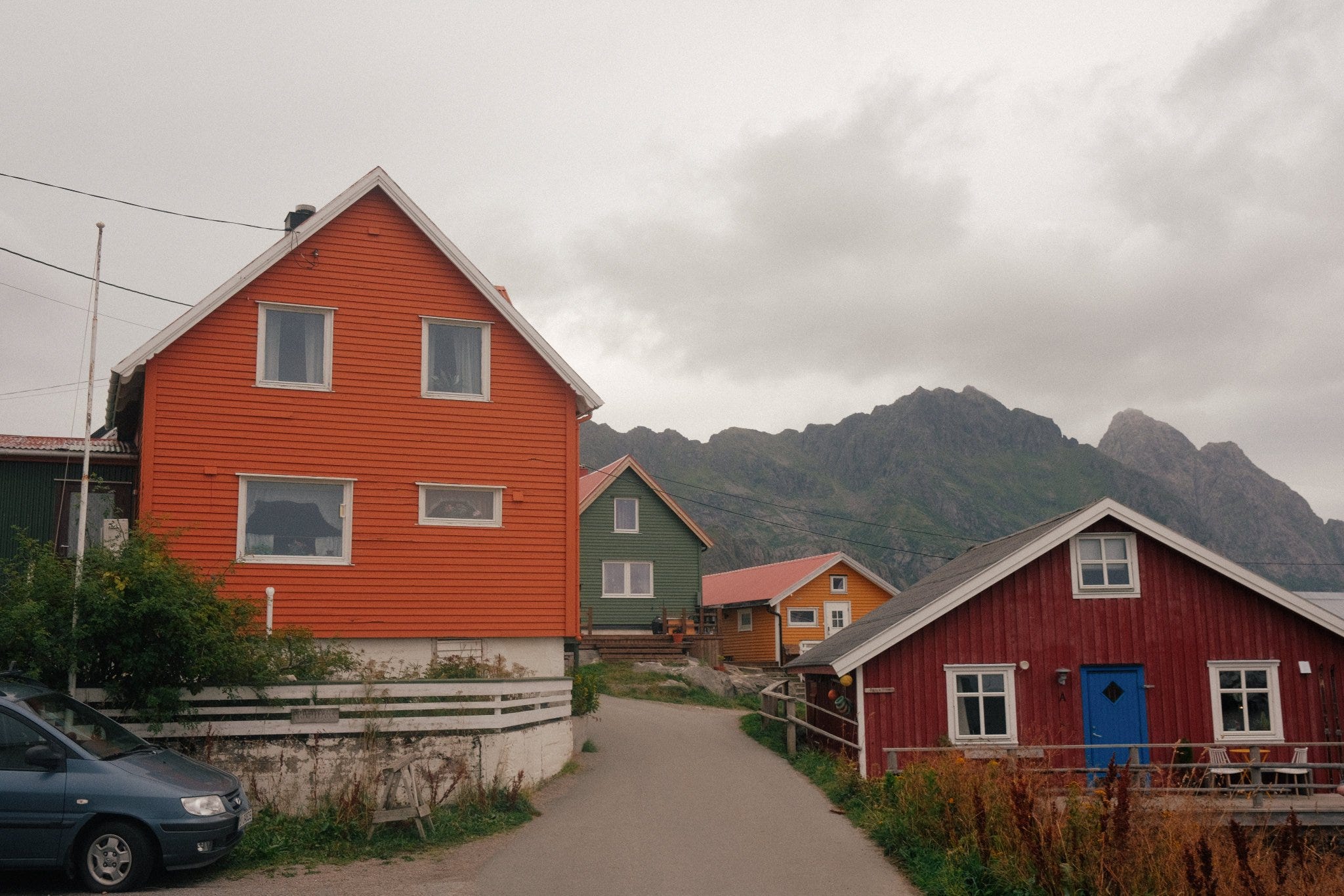
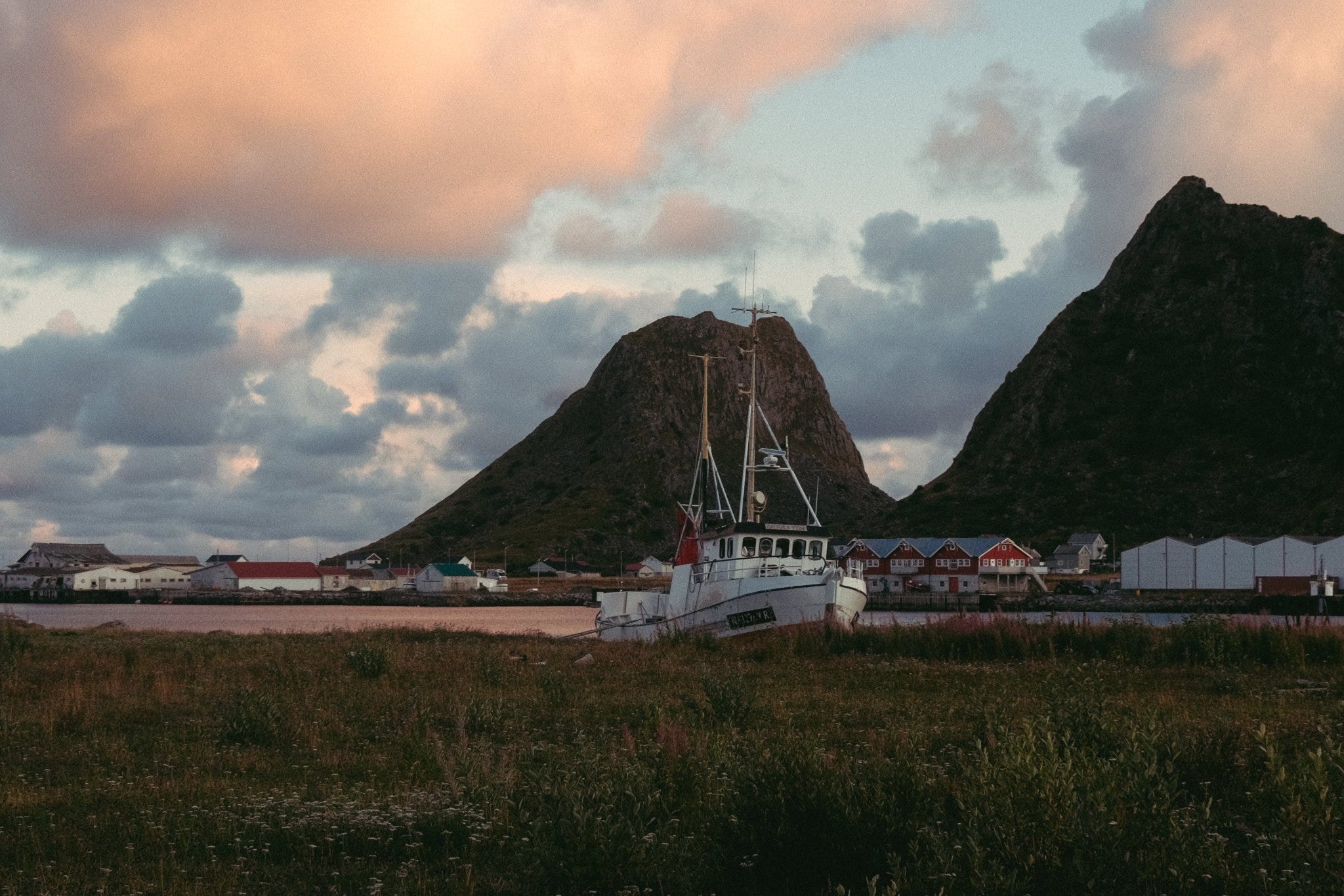
We move south through the islands through Stamsund, a fishing village where rorbuer, the old fisherman’s cabins, hang on stilts over the harbor at all kinds of angles like broken piano keys and the mountains behind them disappear into the clouds. There is almost no one there. This is a recurring theme. There is almost no one anywhere in the country. Norway has five and a half million people in a country the size of Germany. Most of them are in Oslo or Bergen and the rest are distributed across a landscape so vast and so vertical that the distances between life make little sense.
.
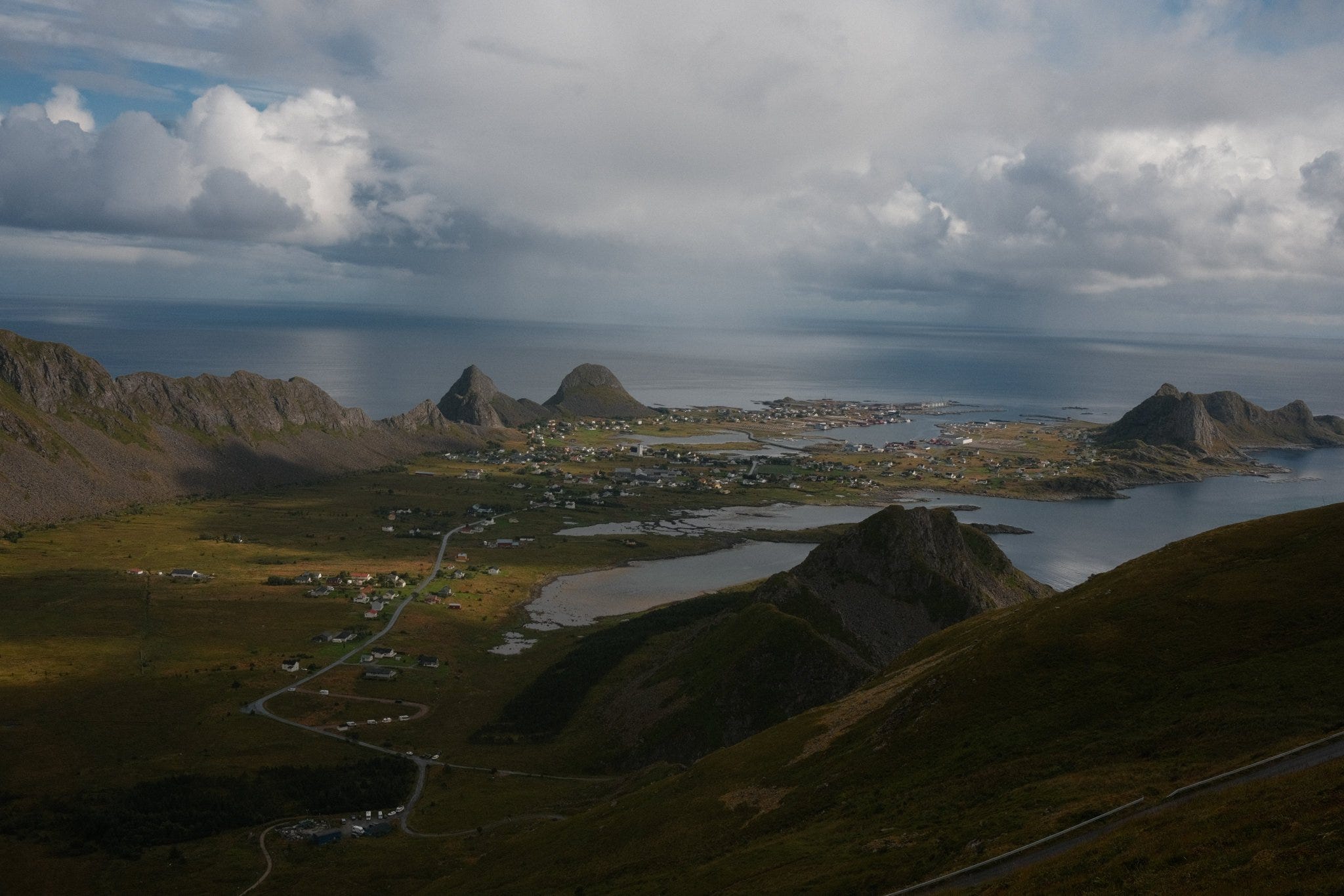
We push further on to Værøy, a small island at the outermost edge of the Lofoten chain. Fewer than 800 people live there. They survive by hunting birds and drying fish throughout the winter. The only way to the island is a ferry from Moskenes. The crossing takes about 90 minutes and our crossing experienced driving rain that would buck the ferry like a bronco as it sailed.
As you sit on the ferry you watch the main island shrink behind you and the open Atlantic resolve itself in front of you and you understand in a way that no map communicates how far away from anything you truly are.
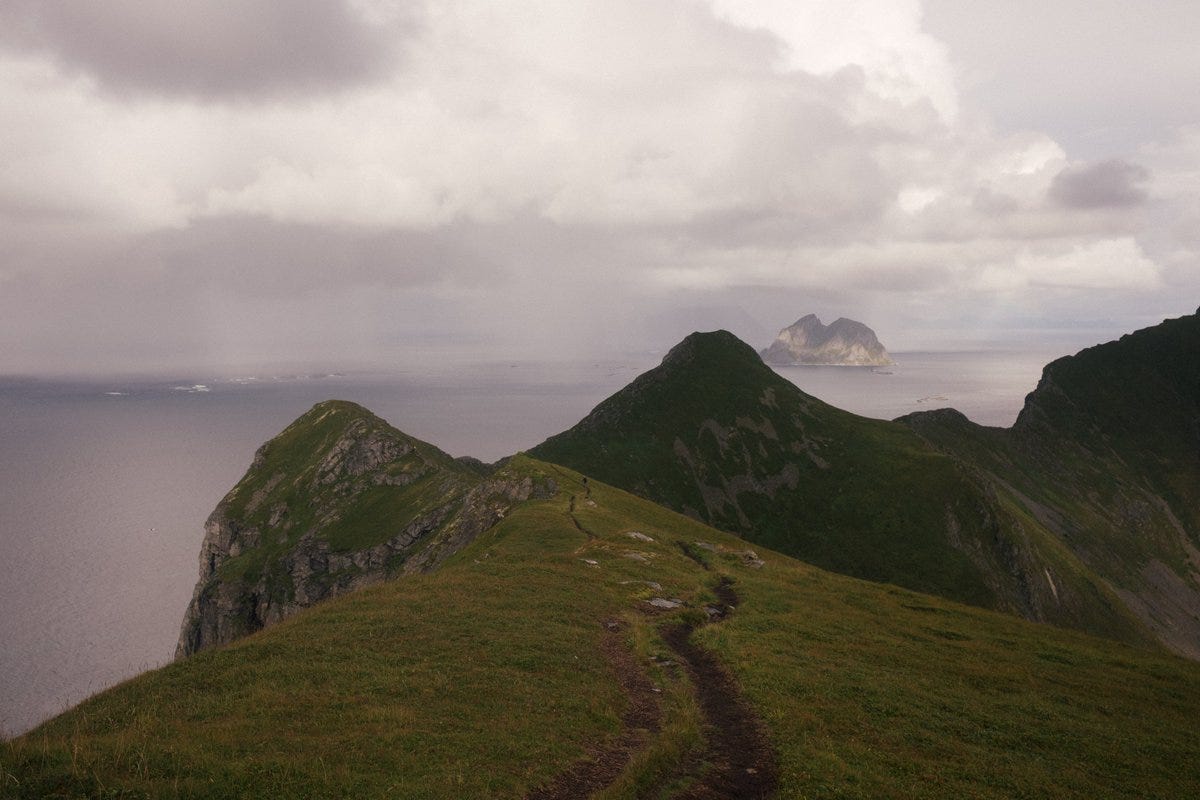
Værøy has a single mountainous ridge running through its center and flat farmland pressed between the mountains and the sea. There’s one cafe, maybe two churches, and a grocery store. There used to be an airport but the plane stopped coming after an accident in 1990 and they never resumed. The island is the northernmost point on earth without a meteorological winter. The Gulf Stream keeps the average temperature above freezing year-round but it keeps it spectacularly, furiously windy and the weather changes so fast that as we marched the rim walk the weather shifted from sun to driving rain to sun within minutes.
.
And it was on Værøy, hiking up to Haheia with the wind tearing across the ridge, with the wind tearing across the ridge and my clothing soaked through, and the Atlantic stretched endlessly below, that the thought arrived that I’ve been trying to write about ever since.
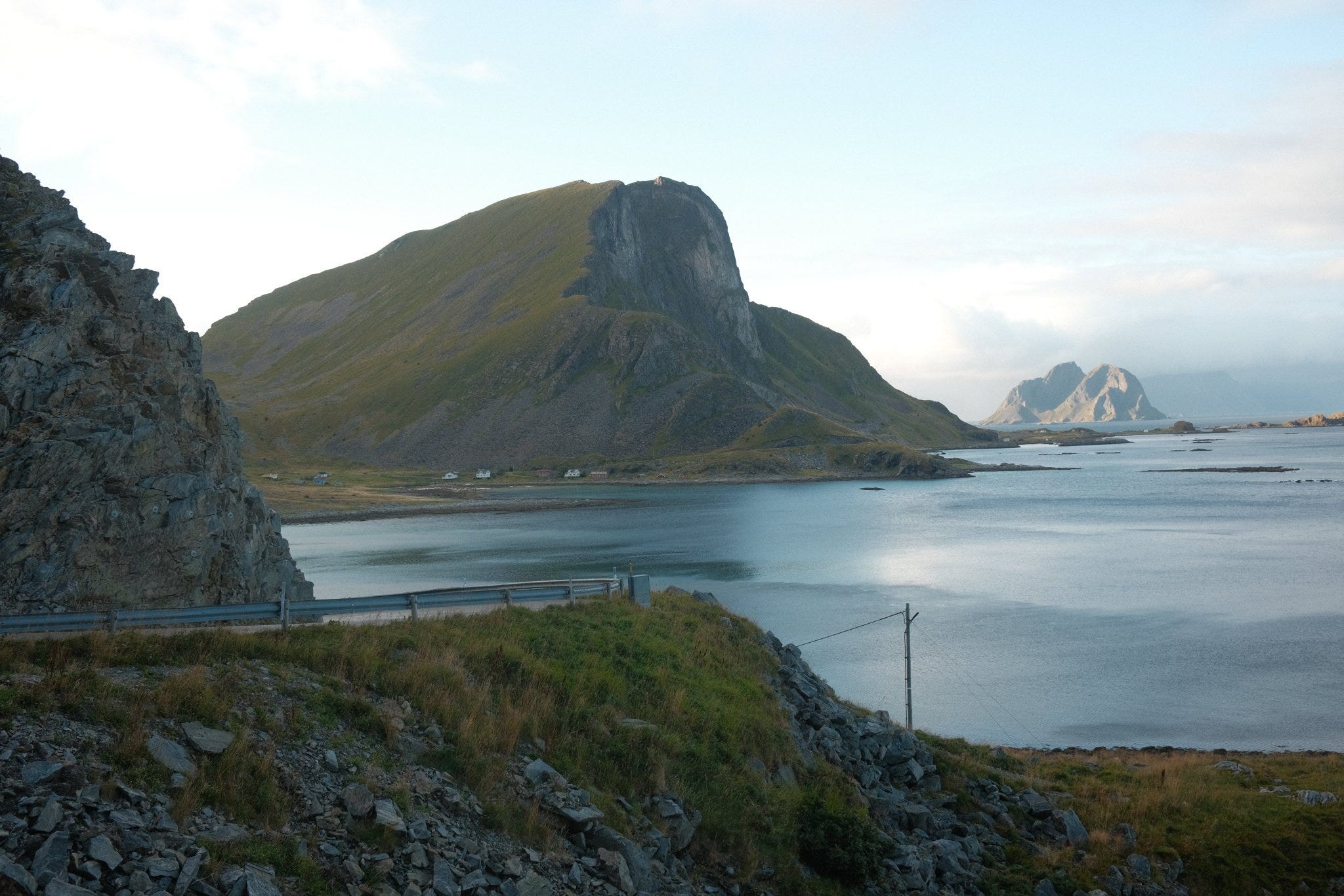
Norway is a thin place.
The Celts had this term for locations where the boundary between the earthly world and the eternal world was unusually permeable. In most of the world the veil was thick and opaque and you lived inside of an utterly material and demystified world, but in certain places -- headlands, islands, holy wells, mountaintops -- it grew thin and almost transparent and you could feel the presence of something on the other side. You couldn’t see it directly, you couldn’t interact with it, but you could feel it with a critical certainty that the rest of your rational mind felt deeply uncomfortable with.
.
I’ve felt this before in Dornoch in the north of Scotland, in Monhegan on the coast of Maine, but never so intimately as in Norway.
I should confess something here. I’m a red text Christian. I like my God immediate, personified, well explained, and well sourced. The specific, articulated God that sits down and tells you in plain language what he wants. I like the New Testament God. He makes sense, and he speaks plainly.
The God of Norway is not that God.
The God of Norway is the God of Genesis 1-2, the spirit that moves over the face of the deep before anything has been separated or named, before light had been divided from the darkness or the waters above from the waters below. It’s the God that precedes language. It’s the God who exists in the formless void, in the silence before the first command, who is not happy or unkind but simply terrifyingly there and everywhere. Sitting on that ridge in Lofoten with the Norwegian Sea stretched beyond you in every direction, grey and endless and alive with a power that has nothing to do with you, you understand why the world’s ancient first instinct was not to worship this God but to survive his wrath. The separation of the waters in Genesis is not a creation story but a survival one. Someone had to put a boundary between the sea and the sky so human beings could exist in that small little space between them. You get the feeling that here at the edge of civilization that boundary was barely achieved.
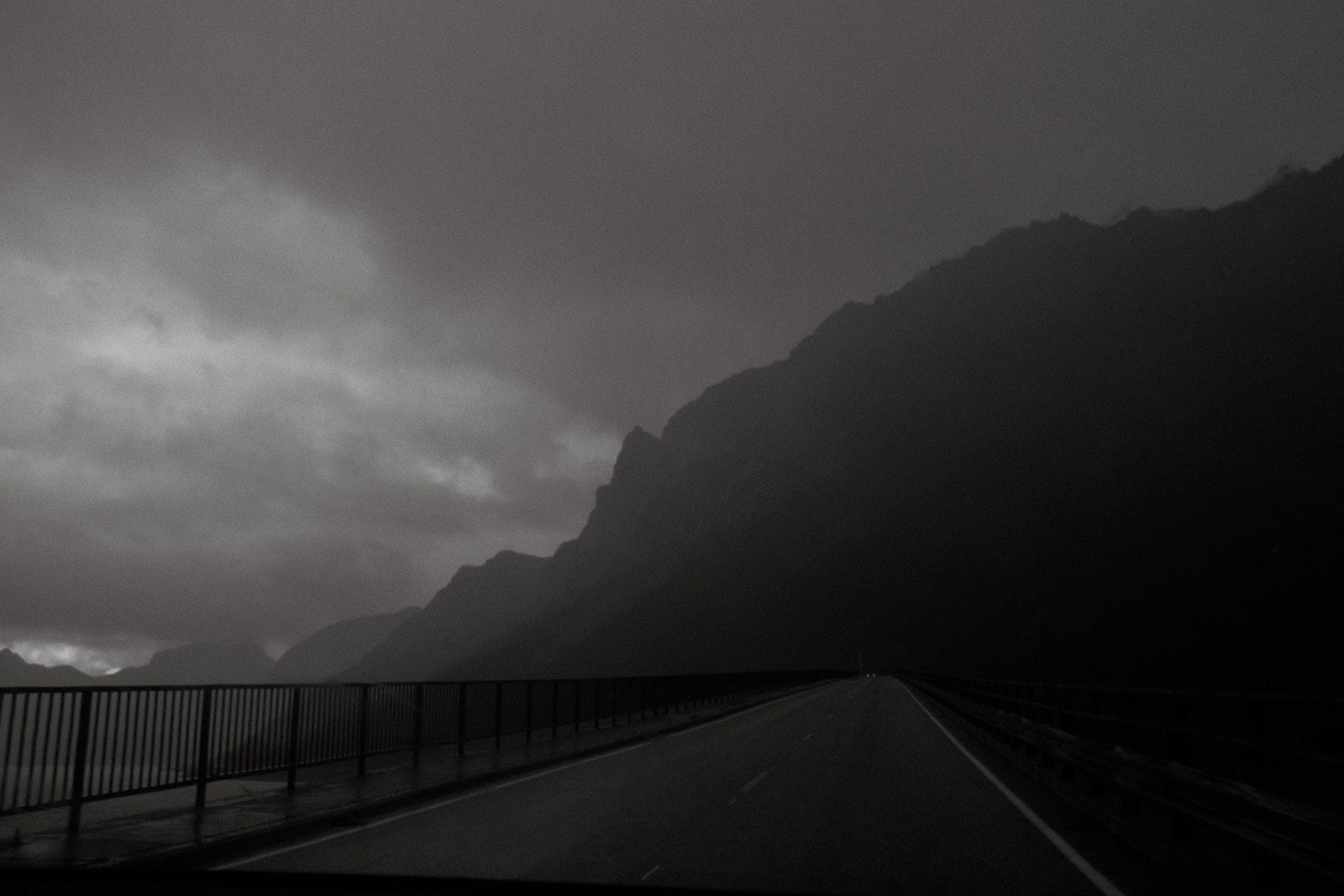
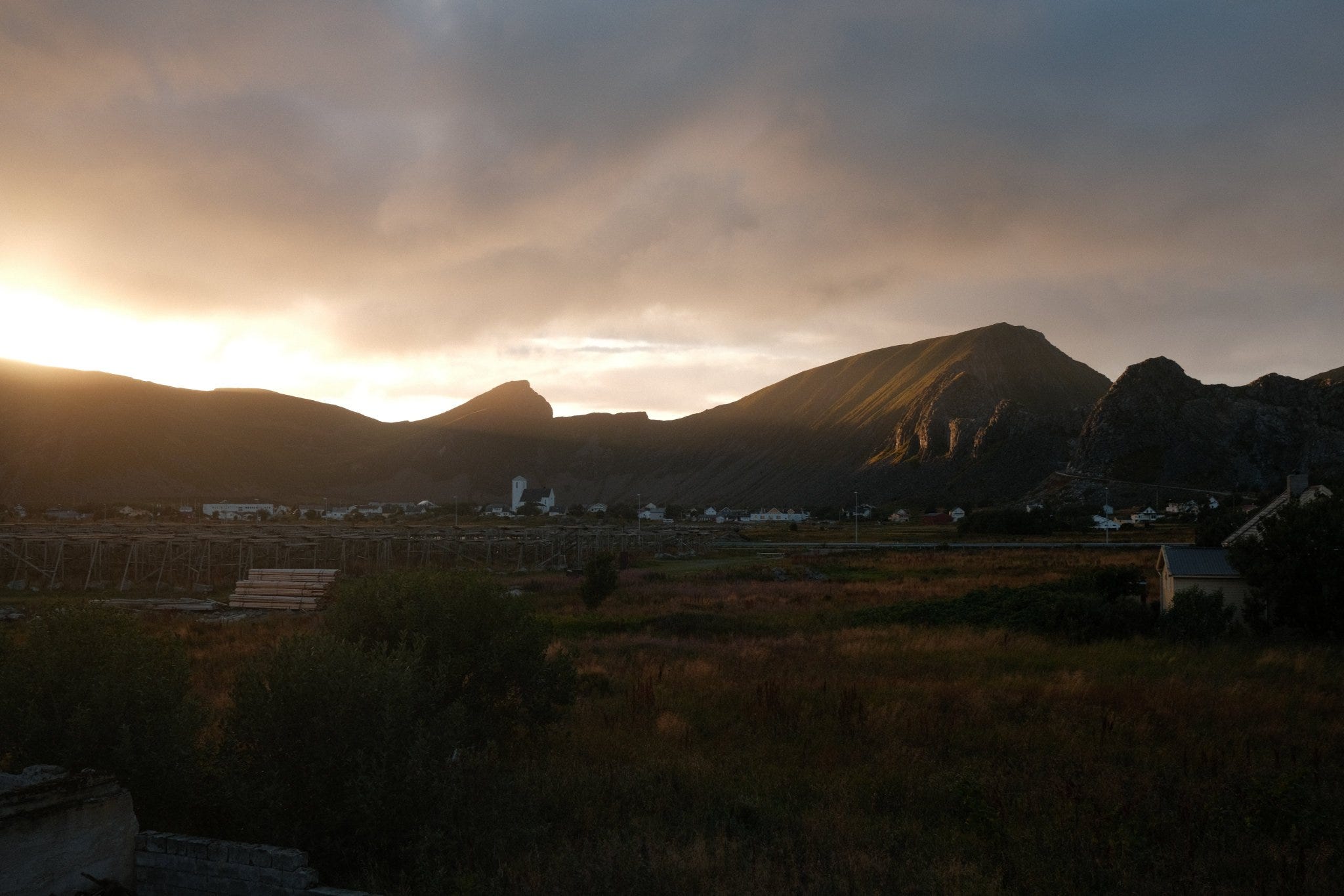
Norway is numinous in a way that I have encountered almost nowhere else. The fjords are part of it-- the vertical walls of rock that drop into water so deep the floor sits below sea level. The silence so total that you can hear the blood in your own ears. The light is certainly part of it. In the summer the sun never fully sets, it just traces along the horizon in a low golden arc. Shadows stretch to infinity and time itself becomes unreliable. You lose track of whether it’s 10 at night or 4 in the morning. Not because you’re disoriented in any real sense, but because the distinction doesn’t really mean anything. The clocks are running, but they’re not tied to anything.
The silence is the largest part of it and I don’t just mean quiet. I grew up as a Quaker. I’ve sat in silence for large portions of my life, but the silence I experienced in Norway is something different. The active presence of nothing. A silence so total that it has texture. A silence that is not the absence of sound but the presence of something that sound would interrupt. You stand on a ridge in Værøy and there’s no traffic, no construction, no aircraft, no music, no human noise of any kind and the wind itself doesn’t even feel like sound. It feels like a force much beyond you, and what fills the space is not an emptiness but an incredible blanket of something thick with its own stillness.
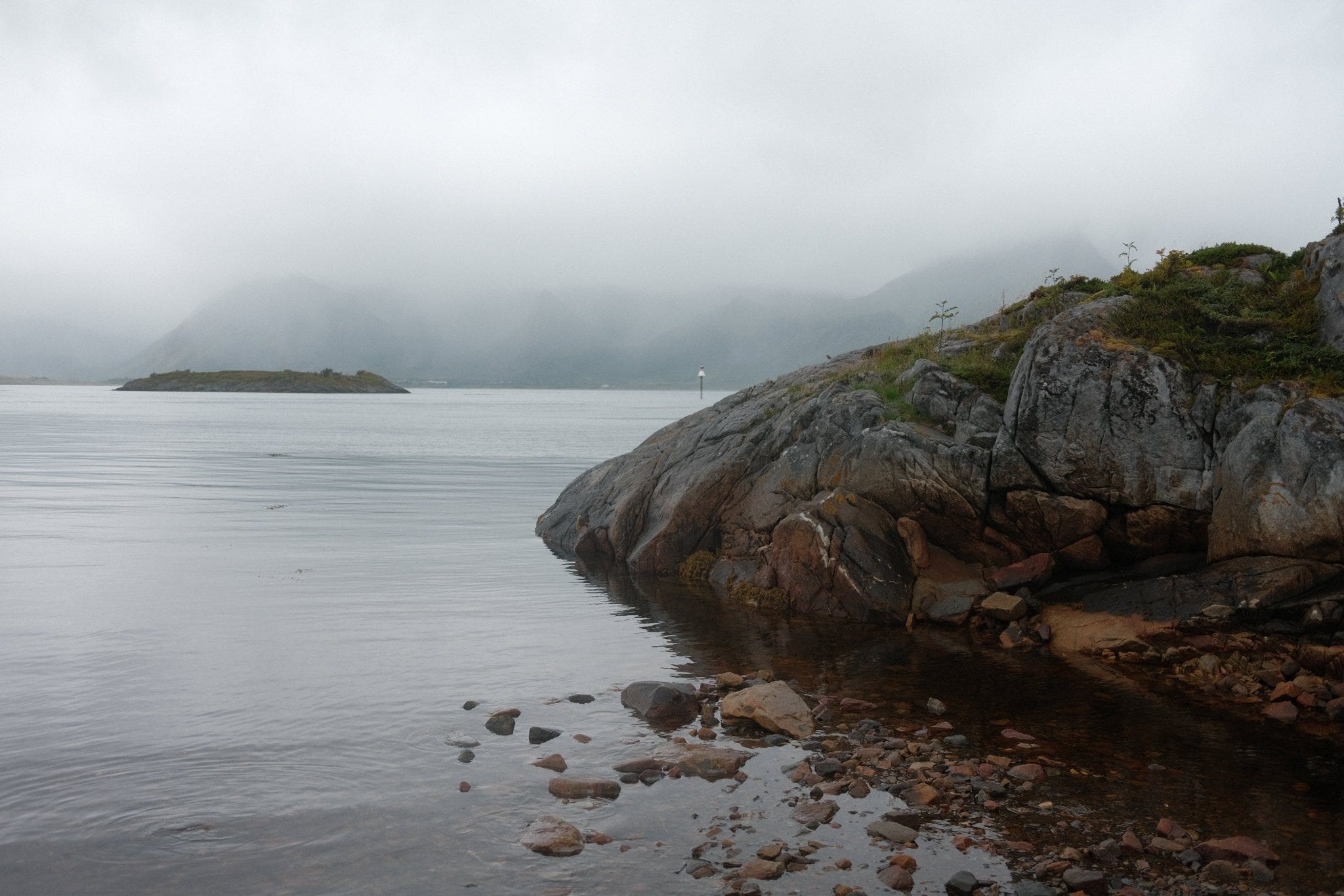
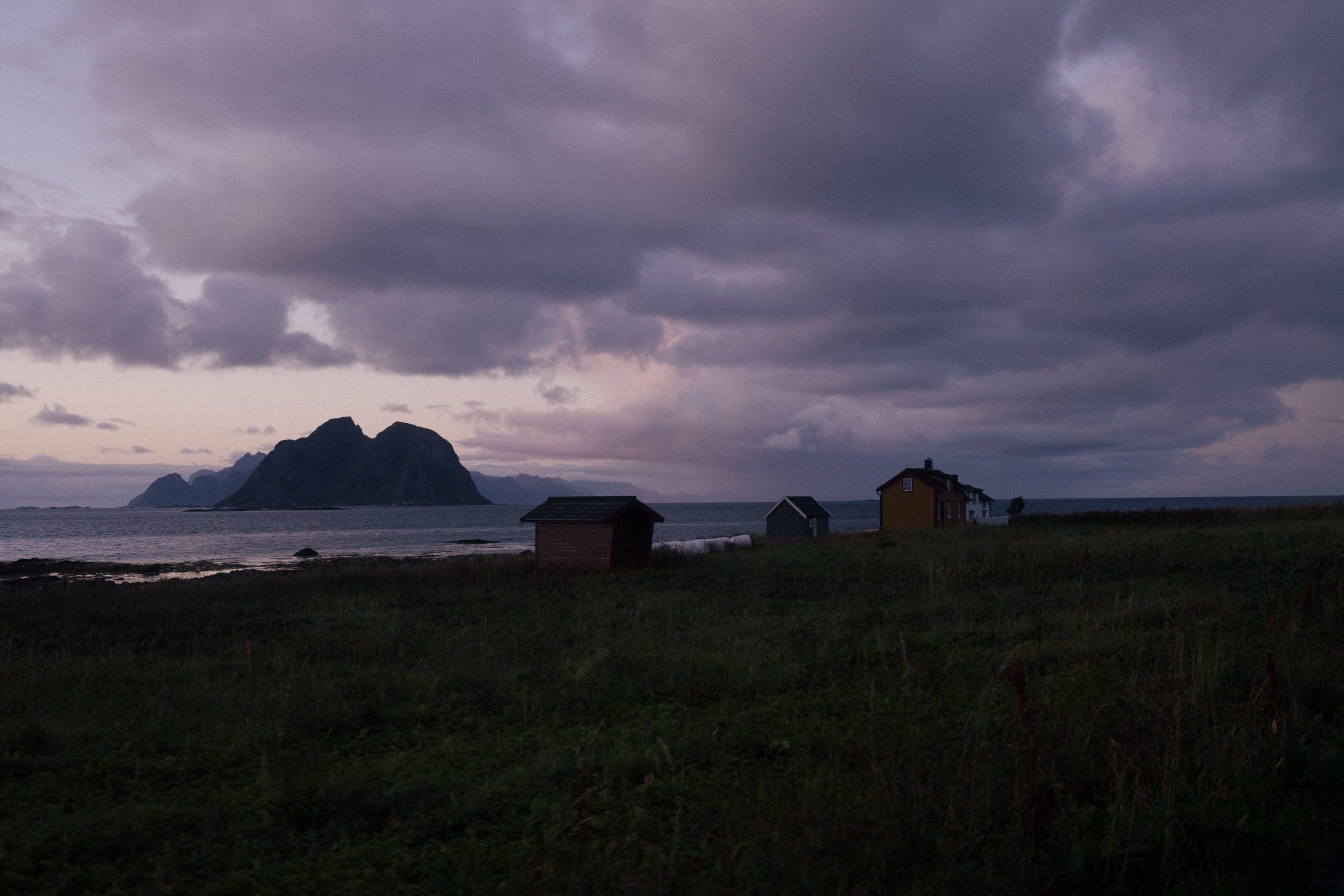
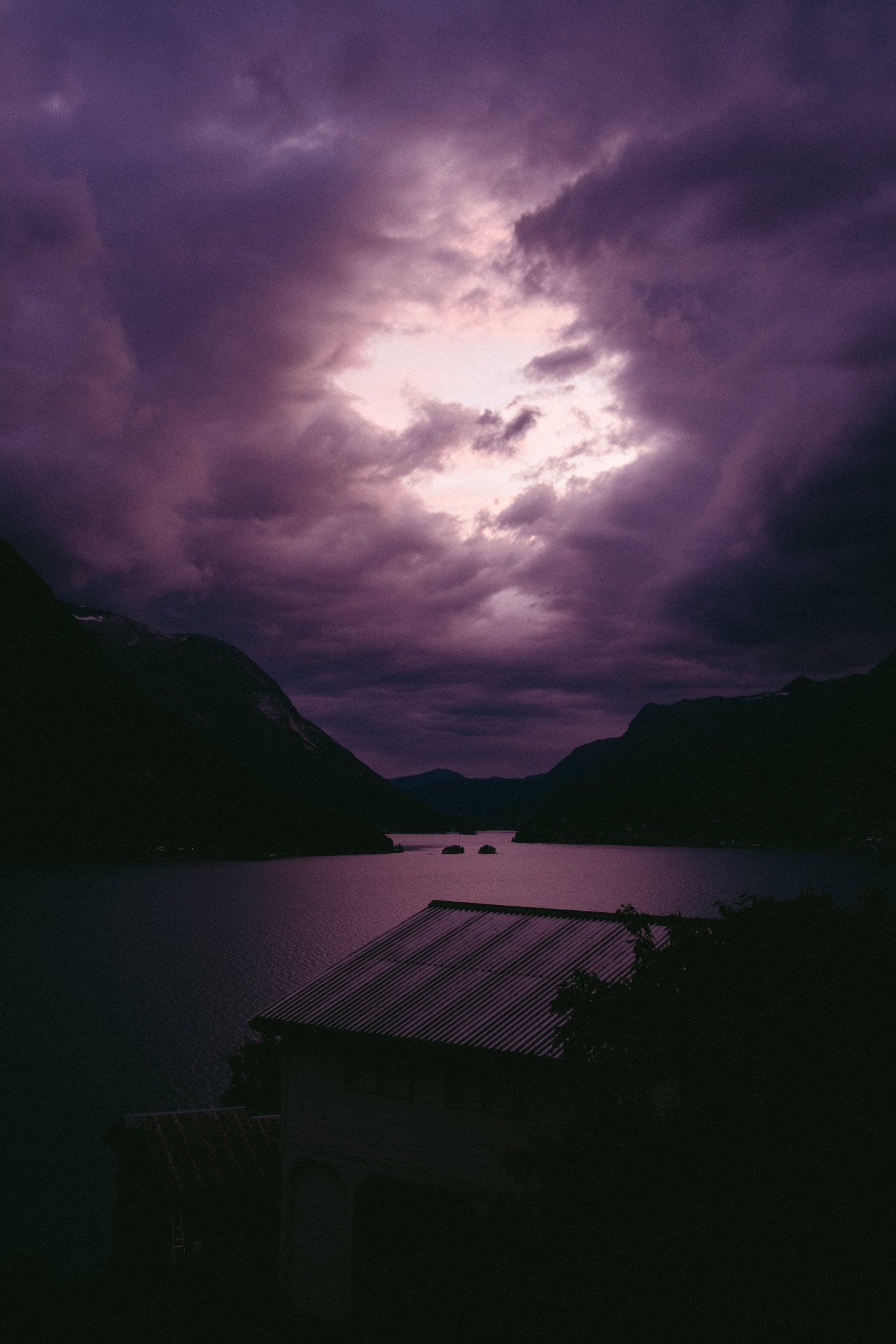
One night in Kleppstad, a tiny settlement in the northern part of Lofoten where a handful of houses are pressed between the mountains and the fjord, a storm came through. We had been lucky with the weather. August this far north is certainly the shoulder season and we had gotten more sun, even in fickle moments, than anyone would expect. But that night the sky closed like a door slams and the storm hit with a violence that felt deliberate. It came in surges. The wind would build for minutes, hours, rising in pitch until the windows were shaking and the house was groaning on its foundations. Then it would relent for a moment, just long enough for you to exhale, before building back up again. The rain was horizontal, the view -- and in Lofoten there was always a transcendent view of the mountains and the sea -- shrank to nothing. You were sitting there totally in a black box. The fjord disappeared entirely and the world contracted to the size of the room that you were sitting in. Then the sound of something vast and indifferent to your existence trying to get through the walls.
In the early Church there was a heresy from a man named Marcion, excommunicated from Rome in 144 AD, who believed the God of the Old Testament and the God of the New Testament were not the same being. The Church declared this heresy and rightly so, but sitting in that house at Kleppstad with the storm tearing through the roof I understood why a man in the ancient world would believe it.
It’s easy to believe in a kind and fatherly God when you live where man has conquered the earth, where the landscape has been tamed and paved and well-lit and the weather is an inconvenience that you barely check on your phone. But out here in the dark with the windows bowing inwards and the sea roaring against rocks you can’t see, you feel the other one, the old one, the God that does not feel a need to explain himself, who does not speak in red text, who moved across the face of the waters before anyone was there to move for. That God you can still feel in Norway and he lives in the sea. He sits in the sea and when the storm comes you remember that the veil between his world and yours is very thin and subject to his whims.
The Norwegians seem to know this about their own country and you can see it in the buildings.
Oslo and Bergen are the two big cities and in both of them the architecture does something that I haven’t seen much elsewhere in the world. The buildings are certainly tall and Oslo’s Barcode district along the waterfront is certainly a genuine skyline, something like a dozen high rises designed by fancy international firms.
But the dominant material is glass and it’s not glass as spectacle the way that Dubai uses glass to say look at this thing. It’s glass as transparency, glass as deference to the landscape. The buildings are conspicuously see-through as if the built environment is constantly trying to be permeable enough to apologize to what was here before it. You can stand inside the Oslo Opera House which slopes down into the fjord like a glacier carving throughout centuries. The walls are glass and the ceiling is glass and you can see the mountains and the water from every angle. The effect is not that you’re in a building at all. The effect is that someone has carved a thin piece of creation out of the landscape and is trying very hard not to let you remember it.
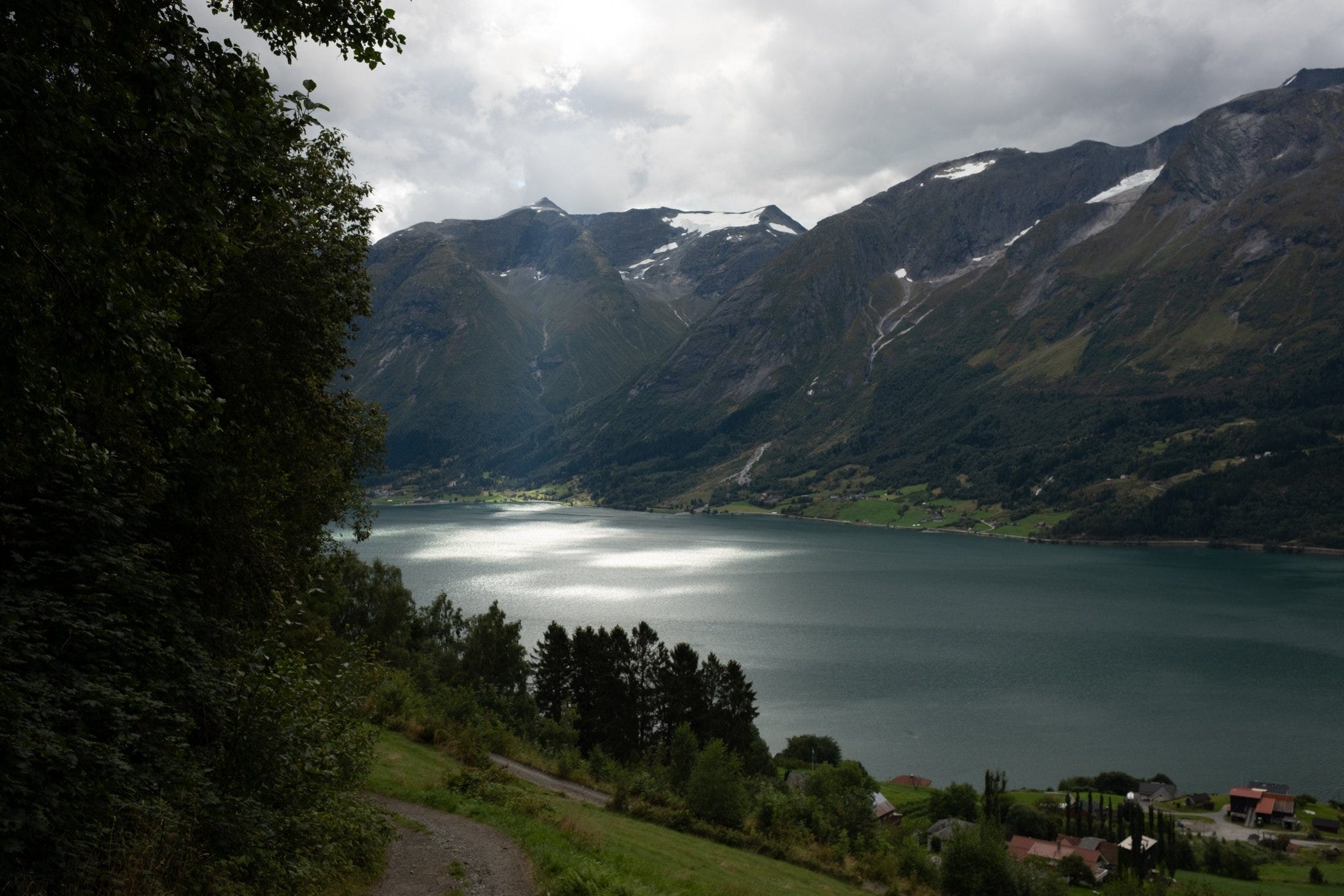
This is a society that has gotten staggeringly wealthy. The sovereign wealth fund is over $2 trillion, roughly $400,000 for every citizen. It’s the largest fund on earth. Instead of building monuments to this wealth, it built monuments that hide from the landscape it was afraid of obscuring. The Barcode buildings are tall and narrow and spaced apart so specifically that the sight lines from the old neighborhoods to the fjords are preserved. The gaps between the towers are mandated to be at least 12 meters wide so as not to create a wall between the city and the water, but to ensure the water and the winds that blow in from it are still visible, that they can still chill you to the bone. The fjord keeps speaking through those gaps and even though the nation’s greatest architectural gesture, its first skyline, was designed to be looked through, it is present.
The wealth of the nation is socialized through temperament. There is a national self-aversion that’s so profound it has a name. Janteloven, the Law of Jante, a cultural code first articulated in a work of fiction in 1933 but immediately recognized as something so universal that every Norwegian already knew it. You are not to think you are special, you are not to think you are better than us, you are not to think you can teach us anything. The sovereign wealth fund owns 1.5% of every listed stock on earth, it finances a quarter of the national budget, it makes $247 billion every single year, and yet Norway does not feel conspicuously rich because doing so violates Jante. It violates the silence.
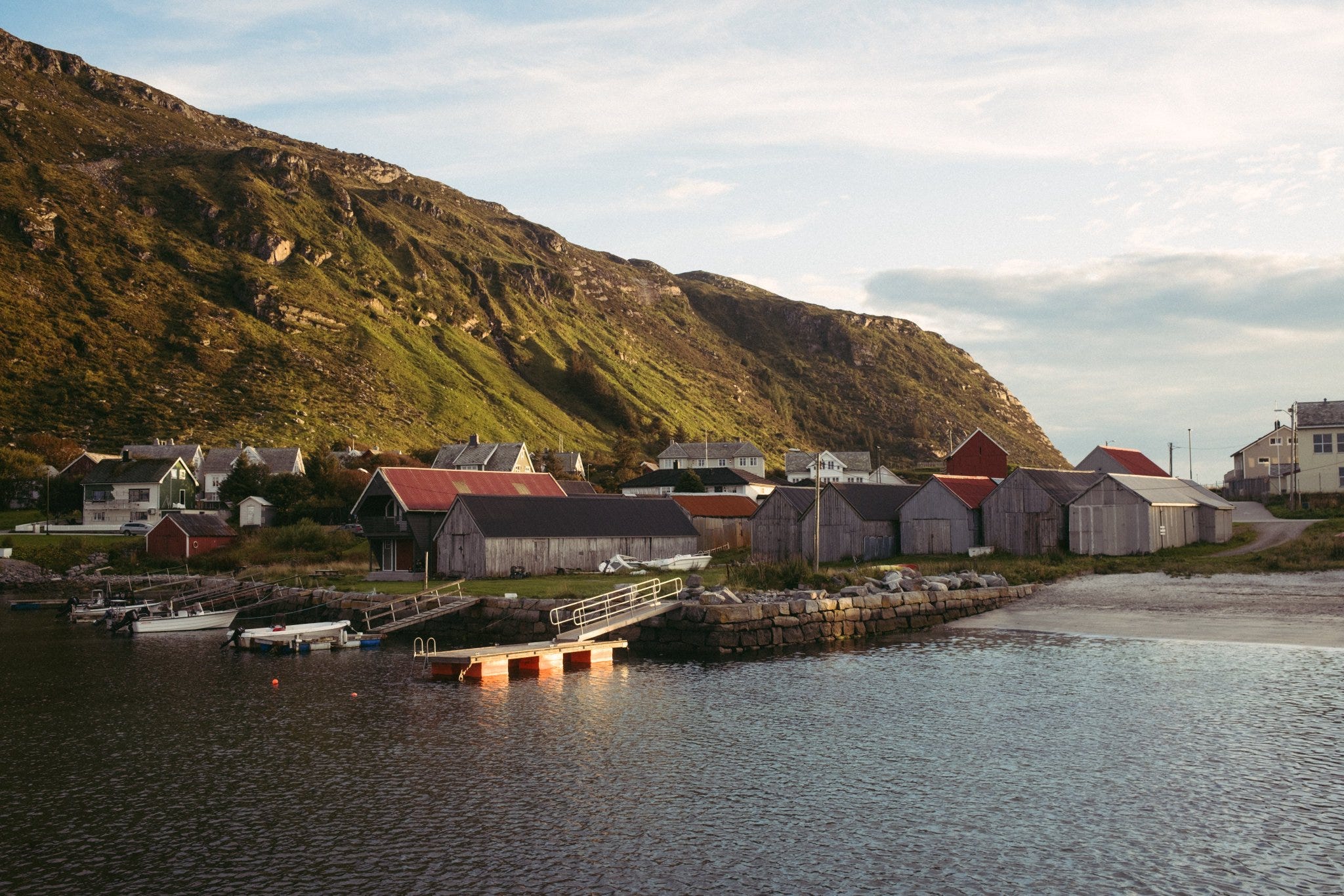
In our second house in Lofoten, we did not arrive until three in the morning. The tunnel on the mountain road had been closed for maintenance. This happens in Norway, where the infrastructure connecting settlements often passes through terrifyingly vast and long tunnels cutting through the interior of mountains and under seas, and occasionally the mountains need the night to themselves. So we sat outside the tunnel for an extra four hours until they drove us through. When we finally pulled up the lights were still on. Our host was waiting for us. He had stayed up the whole night because he didn’t want us to arrive after a long journey to a dark house.
We chatted with him for some time. He was a member of Smiths Venner, Smith’s Friends. A Christian sect founded in Norway in 1898 by a naval officer named Johan Oscar Smith. The church has no ordained clergy, no formal liturgy, and no written creed beyond the New Testament. Its members don’t drink, but they gather often to listen to sermons from their elders, broadcast from a conference center in Brunstad in the south of Norway. Their central theological conviction is that Christ did not die merely for the forgiveness of sin, but that he actually overcame the temptation to sin entirely and that believers can follow in this path and become, through daily moral effort, genuinely transformed through his grace. Sanctification, they call it. Not salvation as a moment, but holiness as a day-to-day practice and infrastructure for life. There are something like 20,000 members worldwide, most of them in Norway, most of them in rural communities along the coast and in the western fjords, where the long winters could play host to any kind of depravity or sin if not countered.
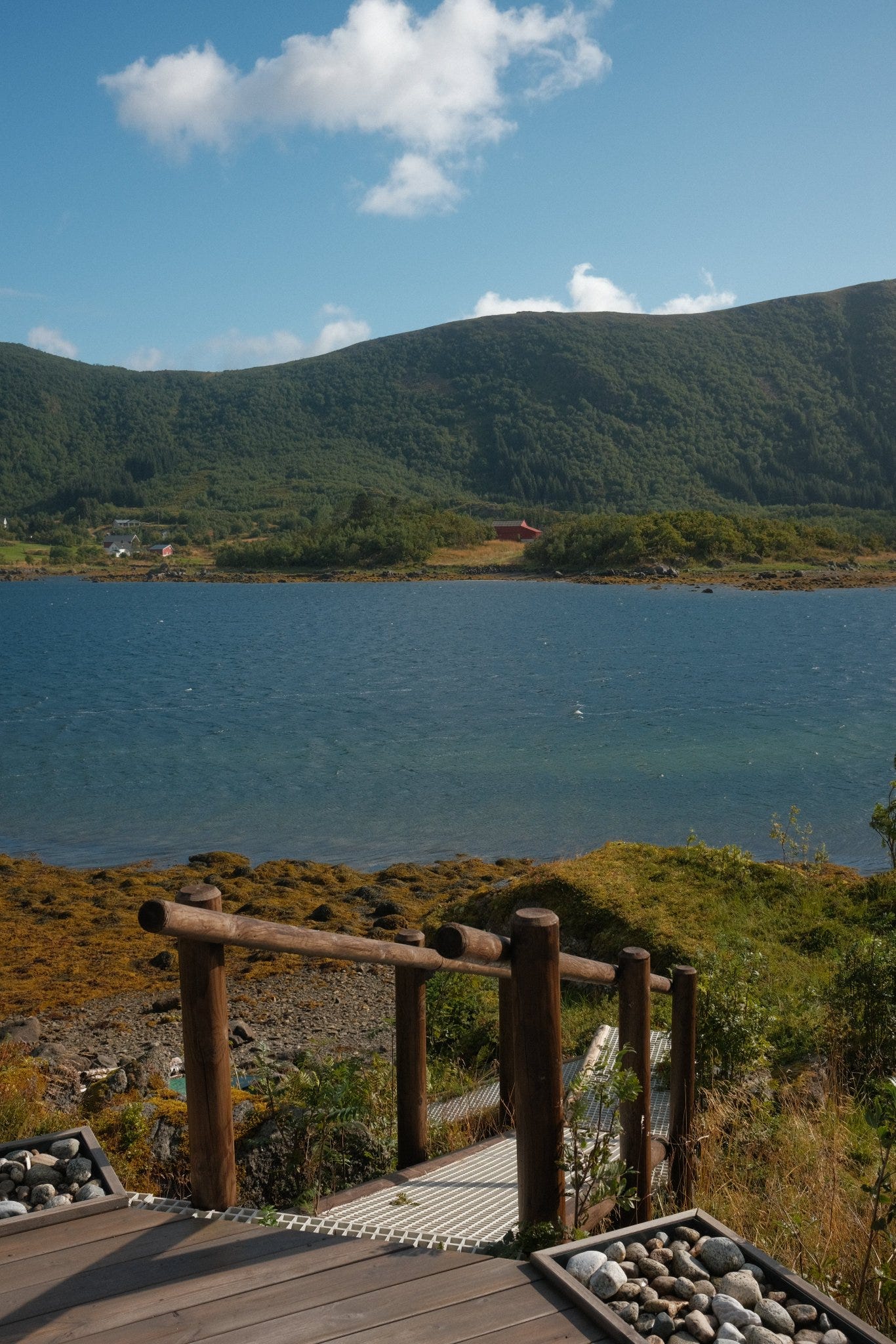
He built the house himself. It was beautiful and all cedar. He built a sauna and a steam room and a hot tub and a beautiful wood shop in the basement. Everything was done with care. He did not drink and he had many children and he had stayed up until three in the morning because the tunnel was closed and he wanted to make sure we were received. He was one of the kindest and most quietly content people I had ever met. He seemingly turned all of his energy, the energy that in any other Western society might have gone into career ambition or acquisition or the performance of significance, towards making a small piece of beauty in a Norwegian valley and sharing it with whoever cared to show up.
Halfway down the coast in Stryn, we found a different version of the same instinct. Stryn sits at the eastern end of Nordfjord where glacial lakes are so green they look lit from below and the hillsides are covered in apple orchards. Our host there had a little house in an apple grove on the shore of one of these lakes and when we arrived he walked us in and casually mentioned that his wife was up on her daily walk on the fjord. This walk was something like 6,000 feet of altitude gain and she did it in a couple hours every single day the way someone else might walk to the mailbox.
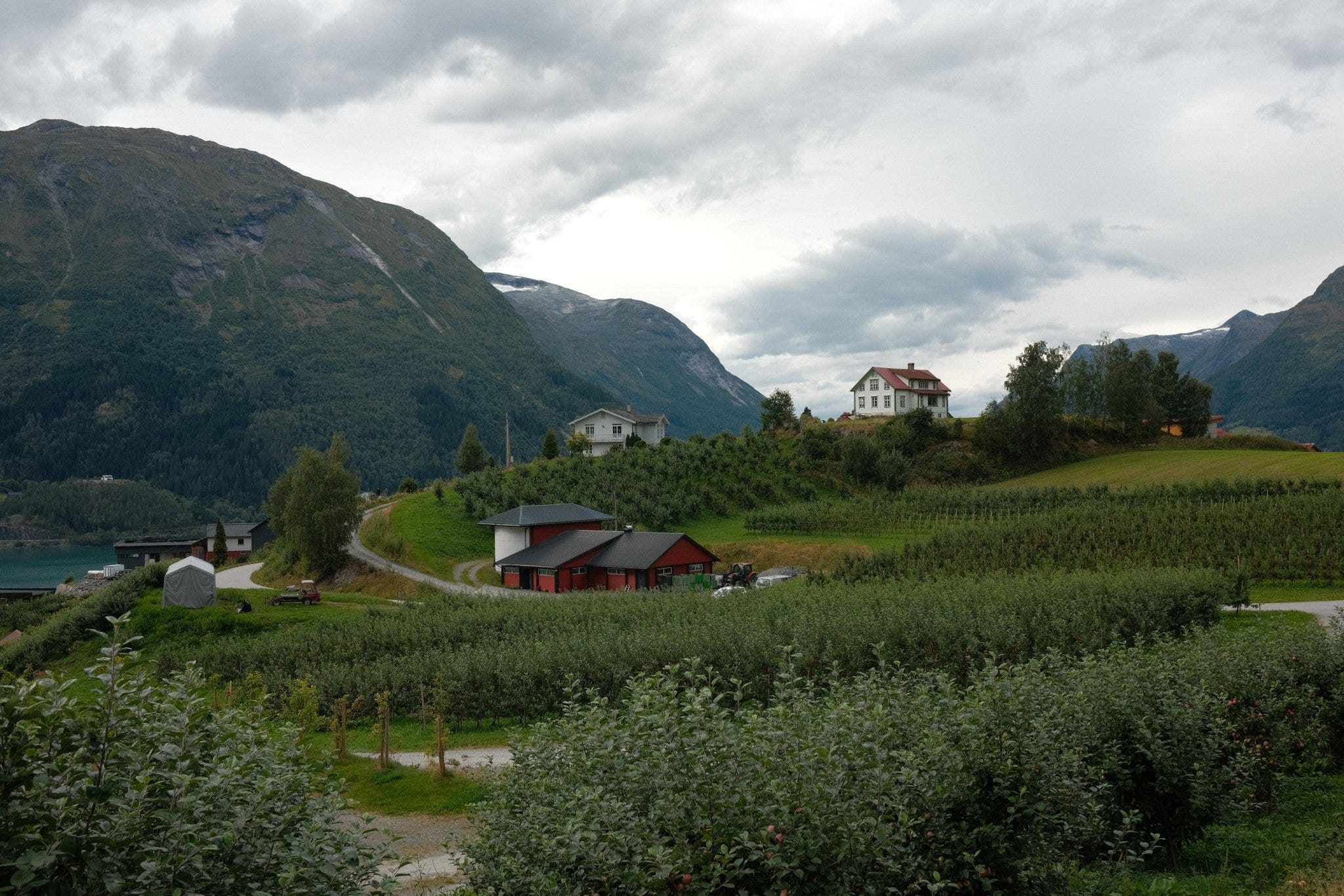
He had left his jams and figs and there was no note explaining his generosity. It was just simply there.
There’s something in that, in his wife’s daily walk, that captures something I kept encountering in Norway and could never quite articulate. It’s not that the Norwegians are fearless in the face of their brutal landscape, it’s not certainly that they’ve conquered it. It’s that they’ve calibrated themselves to it so completely that what would destroy a visitor for them becomes a part of daily life. The relationship with the land is not one of dominance or even reverence in any sentimental sense, but a true intimacy. The kind of intimacy that only comes with cohabitation with something that could kill you. They don’t talk about it and they don’t perform it. We never heard about his wife’s walk again, but she did it every single day.
Perhaps the deepest explanation of the Norwegian spirit is found in the stave churches.
28 of them are left. There were perhaps a thousand scattered across the valleys and the mountainsides and the fjords, built between the 11th and 14th centuries out of local pine rubbed thick with tar, using construction techniques borrowed from Viking shipbuilding. They are by any measure among the strangest and most beautiful buildings in Europe, and they look like nothing else I’ve ever seen. The roofs are steeply tiered and shingled and layered on top of each other in a way that makes the buildings seem to be growing upward, reaching and pulling themselves towards the sky. Dragon heads carved open-mouthed and fierce jut along the rooftop ridges in the positions where they would appear on the prow of a longship. The portals are carved with interrlacing serpents and vines and lions biting each other’s tails. The imagery is so dense and layered that scholars have spent a century arguing whether it’s pagan or Christian.
The answer is self-evidently both, and I guess that’s the point.
Stave churches were built during the precise period in which Norway was transitioning from Norse paganism to Christianity, and this transition was not clean. It was slow and syncretic and deeply strange. The churches were often built on sites that were already sacred to the old religion, places where the Norse had worshiped Odin and Thor and Freyja -- it was much easier to co-opt the holy ground than it was to argue people off of it. The builders carved dragons onto the rooftops and serpents onto the doorways because these symbols meant protection, and protection was essential whether you attributed it to Christ or the old gods, and in 11th century Norway the distinction between these two was not as clear as we’d like to think looking back on it.
Walk into a stave church and you are in a space that is neither fully pagan nor fully Christian. The interior is dim, almost dark, and held up by massive vertical timbers that feel less like columns and more like a forest itself. The air smells like pine tar and the walls carry runic graffiti from the Middle Ages. Ave Maria is scratched next to an invocation of the Norns, the female pagan spirits who were believed to have woven the fate of every human being. One inscription by a man named Thorir blamed the Norns for his problems. He wrote it on St. Olaf’s Mass. He was sitting on a Christian holy day in a Christian church complaining about the pagan deities.
A stave church is a structure that exists between worlds -- between the old gods and the new God, between a forest and a nave, between a dragon and a cross. It’s an architecture that has not resolved any contradiction and one that does not intend to. The portal at Urnes, the oldest surviving stave church, depicts serpents and a great lion locked in combat, and for decades scholars read this as Níðhöggr gnawing at the roots of Yggdrasil, the Norse world tree. More recently researchers have suggested the lion is Christ and the serpents are evil and the whole composition is Romanesque Christian imagery translated into a Norse visual language. What the researchers also tell us is that the serpents are transforming into lilies as they climb. They’re becoming something else as they rise.
The entire country is in between and that’s the feeling that I kept feeling mile after mile, fjord after fjord. Norway is a country of transition. The light is transitional -- neither day nor night in the summer, neither present nor gone. The weather transitions with a violence that feels personal. The culture is in transition between an ancient, almost pre-verbal relationship with landscape and the modern oil-wealth, occasionally not particularly well-integrated glass and concrete present of a modern European country. And the built environment, from the tarred stave churches in the valleys to the transparent towers on the Oslo waterfront, keeps finding new ways to express the same fundamental position. We are here but we’re trying to be permeable. We’re not trying to close the door between this world and whatever came before us.
This is what Knausgård has been writing about for 30 years.
Karl Ove Knausgård is probably the most significant Norwegian writer since Ibsen. His six-volume autobiography, Min Kamp -- My Struggle -- sold nearly half a million copies in a country of five million people. It is in many ways the national text of Norway. And the books are largely about nothing. Huge swathes of them are concerned with making breakfast for his children, buying cleaning products at the supermarket, attempting birthday parties that go poorly, and trying and failing to write. The level of detail is so granular and relentless it becomes almost hallucinatory.
But the books are really not about nothing. They’re about a specific quality of attention the country itself seems to demand. Knausgård stares at his life the way the landscape stares at you, with a patience and a waiting silence and an intensity that borders on aggression. He’s trying to capture something that exists in the space between moments, between events -- the stillness that sits underlying the surface of ordinary life. The thing you can only perceive when you stop moving long enough to see it resolve. His struggle, and the real meaning of his title, is the struggle to remain present in that silence, to not fill it with noise, not to narrate it away.
This is a specifically Norwegian problem. The extremes of the landscape produce people who, by necessity, are comfortable with enormous silence and solitude. The distances are so vast, the winters too long, and the light and environment too strange. You can’t live above the Arctic Circle and maintain the conversational metabolism of someone in Manhattan. The Norwegians are universally kind, dry, and understated to the point of comedy, and pathologically private. They will help you and not ask to be thanked. They will talk to you without asking to be interesting. They are people shaped by the extremes of a landscape that is unimaginably extreme. And the personality traits that result are odd and specific -- a tolerance for solitude and silence that would be disagreeable almost anywhere else, a relationship with nature that is less recreational than devotional, and a quiet that isn’t shyness but discipline.
The sixth and final volume contains at its center a 400-page essay on Hitler’s Mein Kampf. This is what the entire work has been pointing towards. Knausgård reads Hitler’s autobiography with the same granular, relentless attention he gives his day-to-day life. And what he finds is something that is hard to swallow. He doesn’t find evil as a philosophical category. He finds solitude. He finds a young man in Vienna who can’t connect to other human beings, who experiences the world at a remove, who fills silence with violent ideology because he can’t bear to sit in it alone.
This is not an apologetic for Hitler, It’s an argument that the same silence that produces the numinous -- the silence of the fjords, the silence in which God, or something like God, becomes briefly perceptible -- is also the silence that, if you cannot bear it, will fill itself with something monstrous. The silence does not care who fills it. What comes through depends entirely on who is sitting there and what they are asking for.
The stave church builders understood this intuitively. They never tried to resolve the tension between the old gods and the new God. They carved both into the buildings, serpents that became lilies, and left the dragons next to the cross, and trusted that the space could hold the contradictions. The glass towers in Oslo understand it too in their own way. They don’t dominate the landscape or try to replace what came before. They remain transparent to it, to let the fjord and the mountains and the old silence pass through them as if they were not there. And our host in Lofoten, who stayed up until three in the morning, understood this in the simplest way of all. He filled the silence with devotion to woodworking, with hospitality, with a house built with his own hands, and a light left on for strangers. It passed through his house the way it passed through the glass, and the way it passed through the stave churches, carrying whatever to the other side.
Maybe Marcion was wrong and maybe there is really only one God. Maybe the God of the storm at Kleppstad and the God of the red text are the same being and what changes is not the deity but the landscape you encounter him in. In a church, in a city, in a book, he is articulate and present. You can hold him in your hands and converse with him. But in Norway you meet him before the separation of the waters -- formless, vast, and moving across the deep. You understand that the red text was always just his way of being gentle with you, speaking in a register that you could bear.
This is what Knausgård is getting at, and in some way this is the core of what I understood to be the Norwegian spirit. It means living in silence every day of your life, and the central question of existence here, though they would never phrase it this way because phrasing it this way would certainly violate Jante, is: what will you do with it? What will you let speak? Or will you let it fill with something darker and older before you fill it yourself?
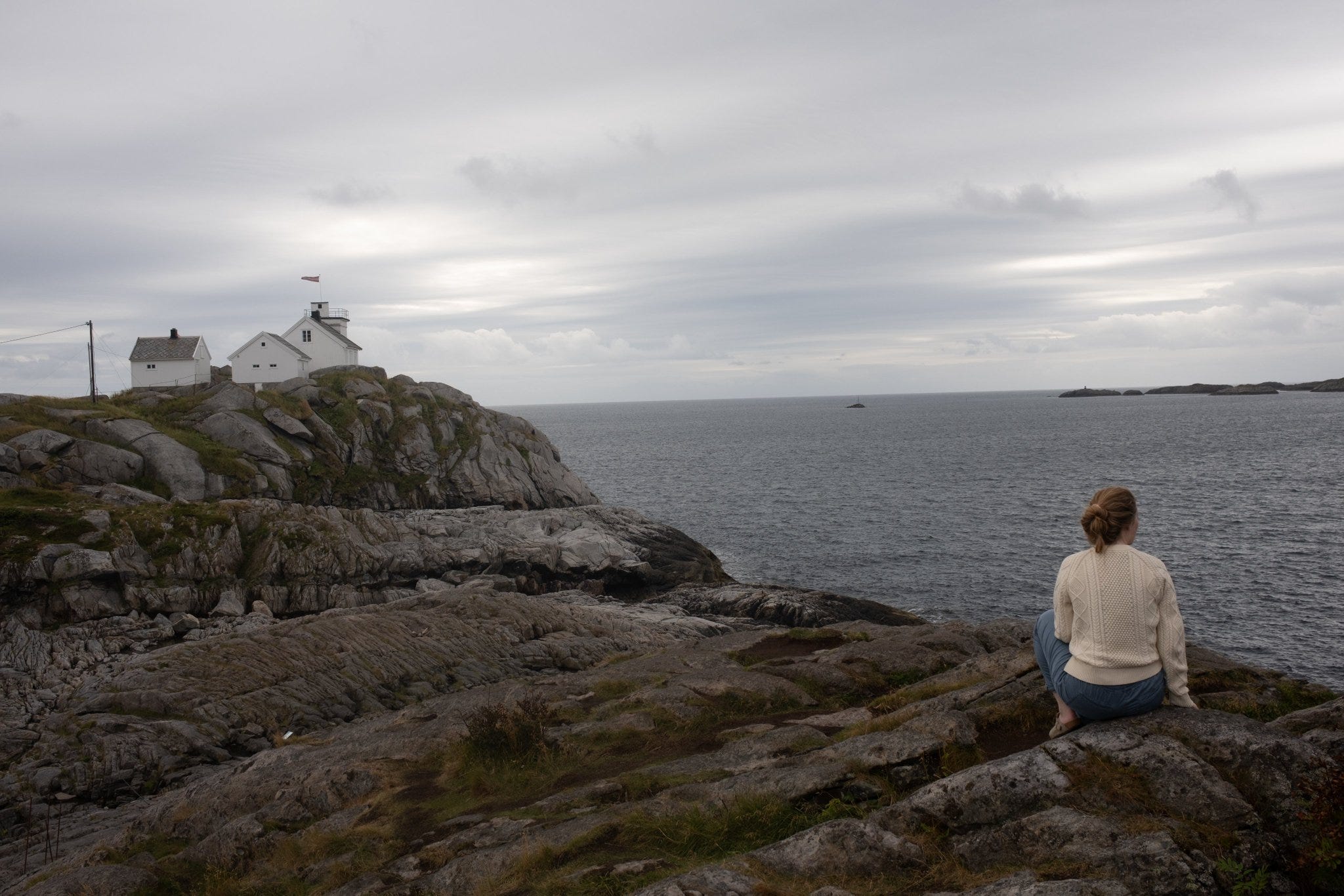
On my last night in Værøy, I wandered out of the house far past midnight. The sun had barely set and hung low across the horizon, enormous and amber behind the ridge, throwing light into the sky in a way that made it look like a cathedral ceiling. The sea looked like hammered bronze, and weird shadows danced across the wooden racks where fish would soon hang in the winter for their preservation. The mountains on the mainland some 30 kilometers across the strait were barely visible in silhouette. There was no sound. No wind, no water, some birds, not a voice, nothing.
I sat there for a long time and I didn’t think about our world or how it became that way or why things are that way and how they could change. I didn’t think about markets, I didn’t think about sovereigns, I didn’t think about the architecture of post-scarcity, I didn’t think about any of the trouble that was happening in my life on those islands.
I sat in the silence and the silence sat in me for a while and the veil was thin enough that I could feel something on the other side of it. Vast, patient, and seemingly indifferent to whether I had the language to describe it, but in that moment I felt like it held me.
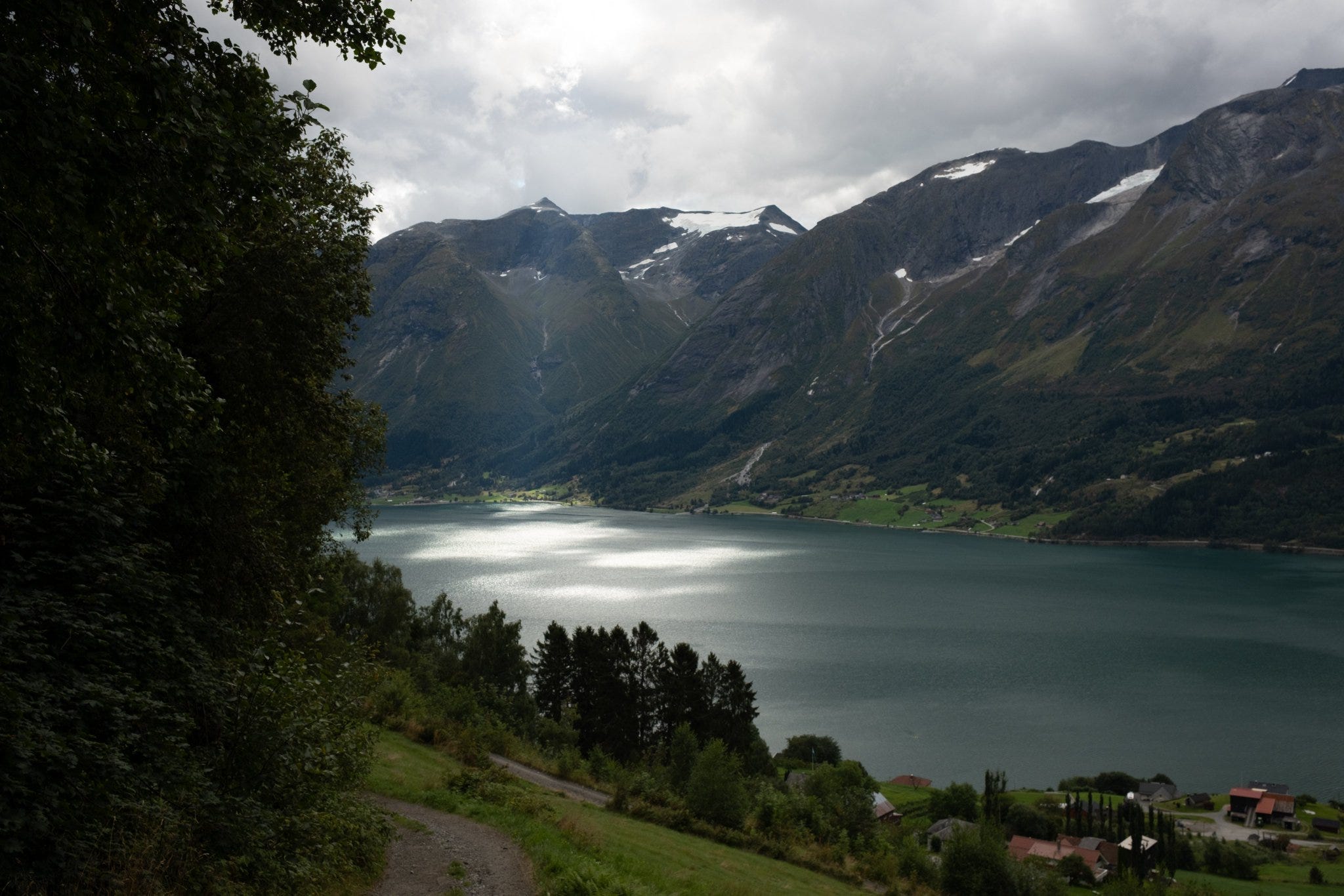
I still don’t have the words.
I’m still trying to find them.
I got a PHD in biblical studies. One of my distinguished professors gave this interpretation of Genesis 1:2. It is not the majority position, but I believe it is correct.
To put it in the broader cultural context, The Mesopotamian creation story begins with chaos. A raging old lady goddess, the sea goddess, the grandmother of the current gods, is endangering her descendants. Everyone is afraid to confront her, but Marduk volunteers on the condition that he will be the king of the gods if he prevails. You can write the rest of the story yourself. Marduk forms the material world out of her corpse.
The story in Genesis 1 has the same forces but is less anthropomorphized. In the OT the raging sea is the dominant metaphor for chaos. In OT times, the Israelites were not seafarers. They believed that the sea would swallow up anybody stupid enough to challenge its malice. (Book of Jonah and Psalm 107).
In this interpretation, the wind over the tempestuous sea is a hurricane. The God of Genesis 1 is not anthropomorphized at all--he is a disembodied voice.
Finally, "The earth was "tohu wabohu," These are rare Hebrew words whose meaning is uncertain. They could mean "roaring confusion" Just as well as mean “without form and void. It is more likely that these words amplify the storm imagery of the verse rather than introduce a whole new theme of emptiness and nothingness.
Our modern translations follow the Septuagint (an early Greek translation). But the knowledge of rare Hebrew vocabulary demonstrated by Septuagint is far from reliable.
I'd say in Norway you had a stark experience of the pre-creation world, the water chaos of Genesis 1.2. It is said that no one can really want God until they really need God, and in the middle of that raging chaos you encountered that need.
My favorite read this year, I'd known so little about the place and this was a fascinating deep dive. Thank you for posting.