
Reflections on Oman
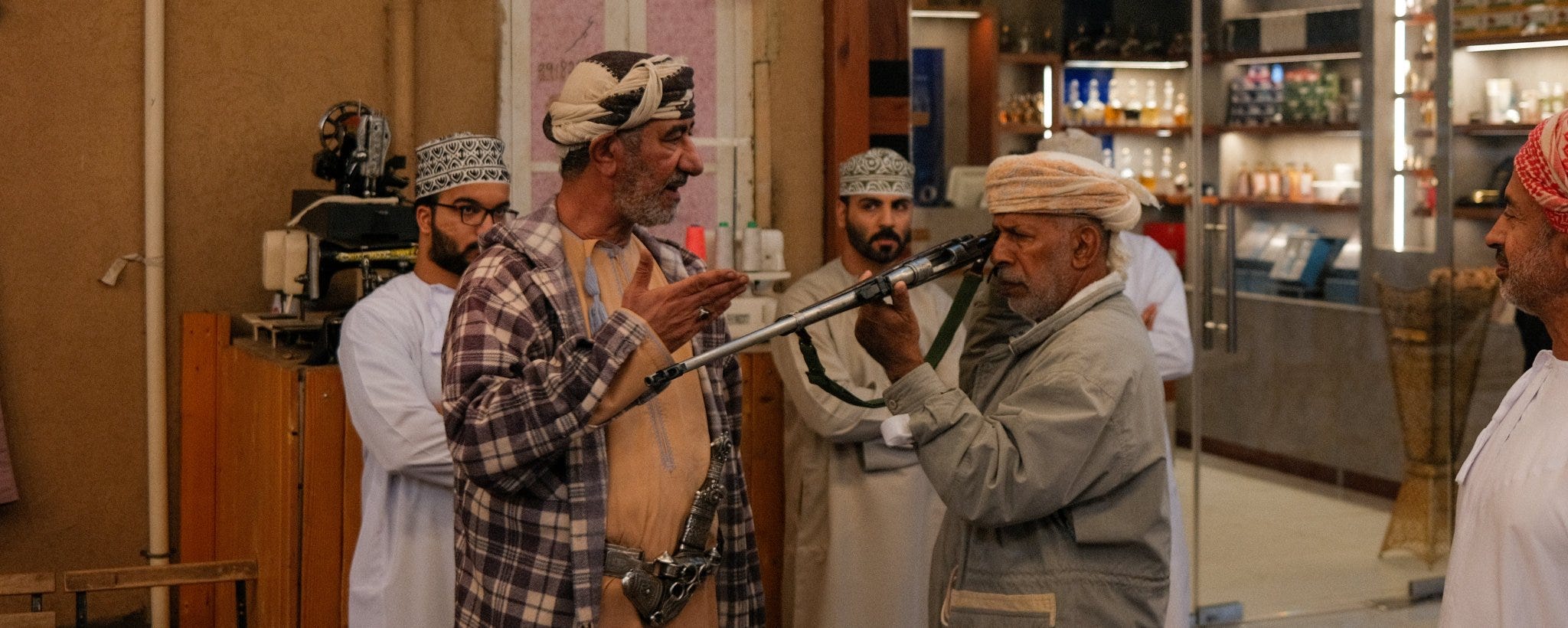
I spent 10 days in Oman in December.
I left with an unsettling feeling that I had seen a vision of the future that I wasn’t supposed to see. A country that had gotten extraordinarily wealthy but stayed coherent to its pre-industrial identity—a country that didn’t turn into a museum, didn’t paralyze itself in amber, but became a modern, functioning, wealthy nation that did not feel like it had been strip-mined of itself by the money.
I think it’s hard to imagine what happens to the West in a situation where transformative change brought on by technology—specifically language model induced economic transformation—doubles or triples the economy.
The optimists kind of vaguely hand-wave about abundance or cheap housing—post-scarcity, peptide-laden beautiful people spending infinite money with no more jobs
And the pessimists talk about a much bleaker future that looks much more like the automation and offshoring-based job destruction of the American heartland. But almost no one talks about what successful societies look like on the other side of an economic windfall, what it actually feels like to walk through a society on the other side of this, and whether it still holds together as a place
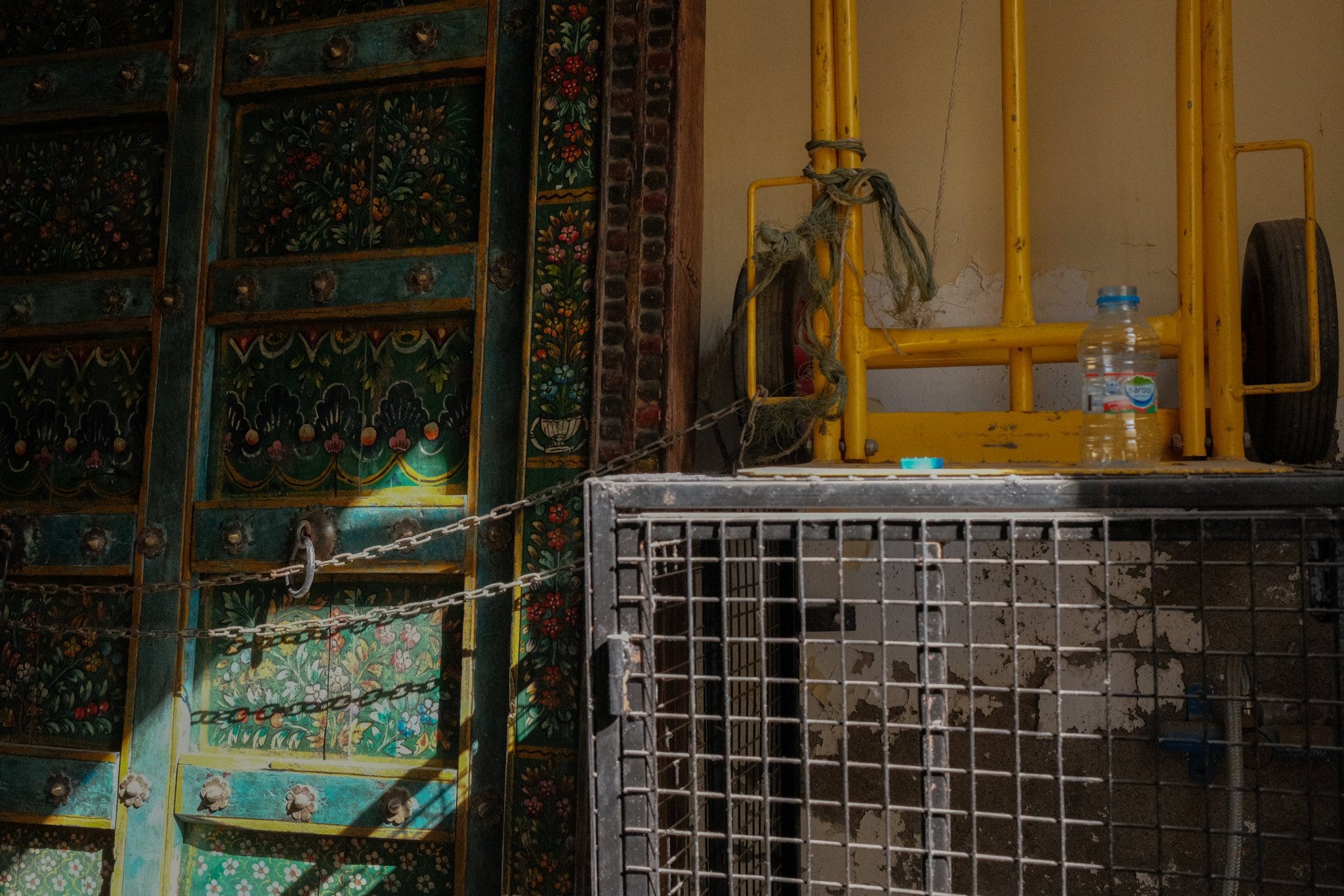
Oman is the closest thing I’ve found to an answer. And while that answer is not obvious and clean, it at least provides us some vision. What’s most interesting about the Omani answer is that it was engineered by a single man who made a series of difficult choices that no one in his position would ever make
In 1970, a 29-year-old British-educated officer named Qaboos bin Said overthrew his father in a palace coup in Salalah. The country that he inherited, by every measure, was barely a country. His father, Said bin Taimur, had kept Oman in a state of deliberate medieval isolation so total that it defies comprehension. At that point, there were something like three schools in the entire nation and ten kilometers of paved roads.
The gates of Muscat, the capital city, were locked at night and anyone walking outside after dark was required by law to carry a lantern. There were no newspapers, no television, almost no medicine. The old Sultan believed with a kind of perverse consistency that modernity itself was the enemy and the best thing he could do for his people was to prevent them from encountering it
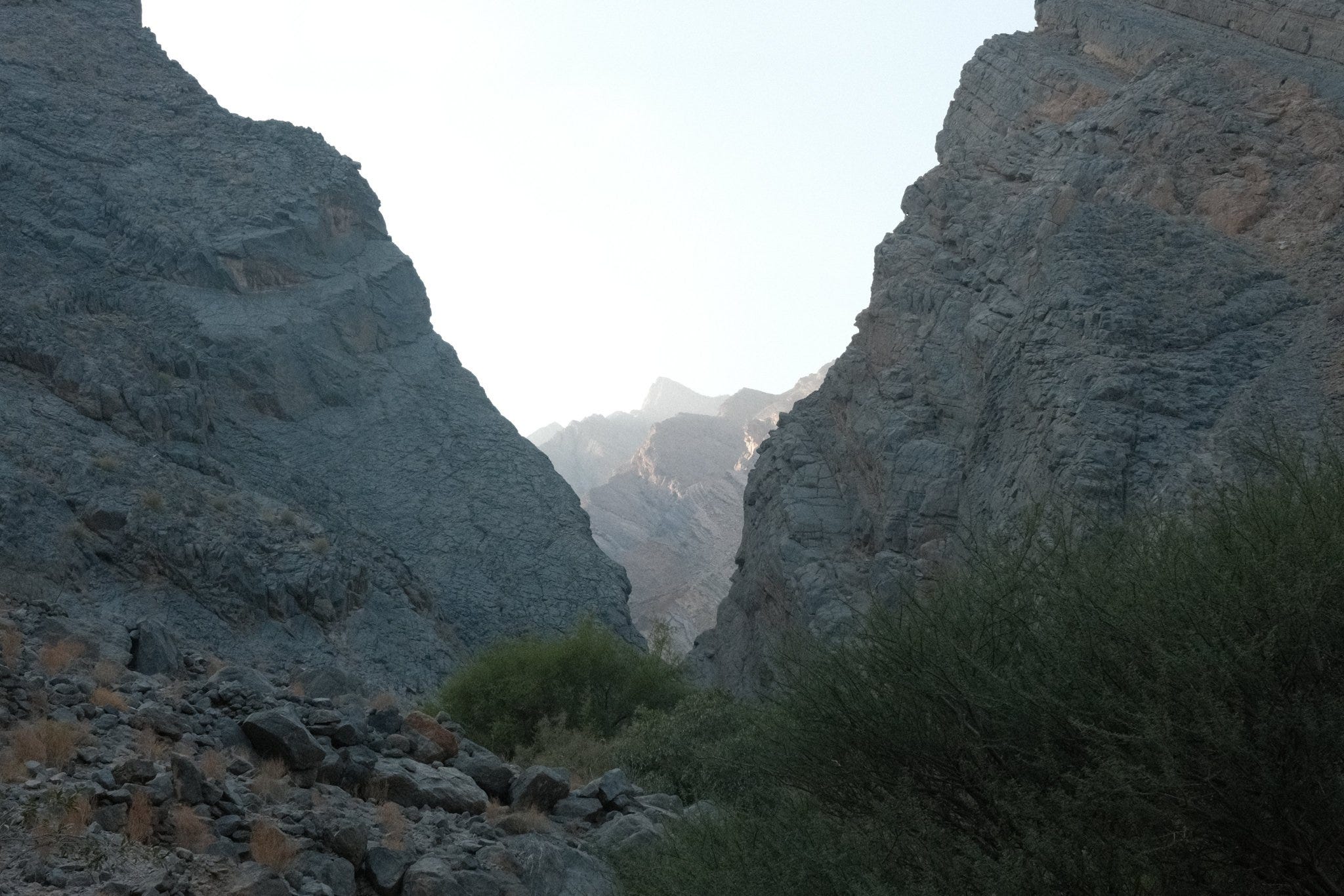
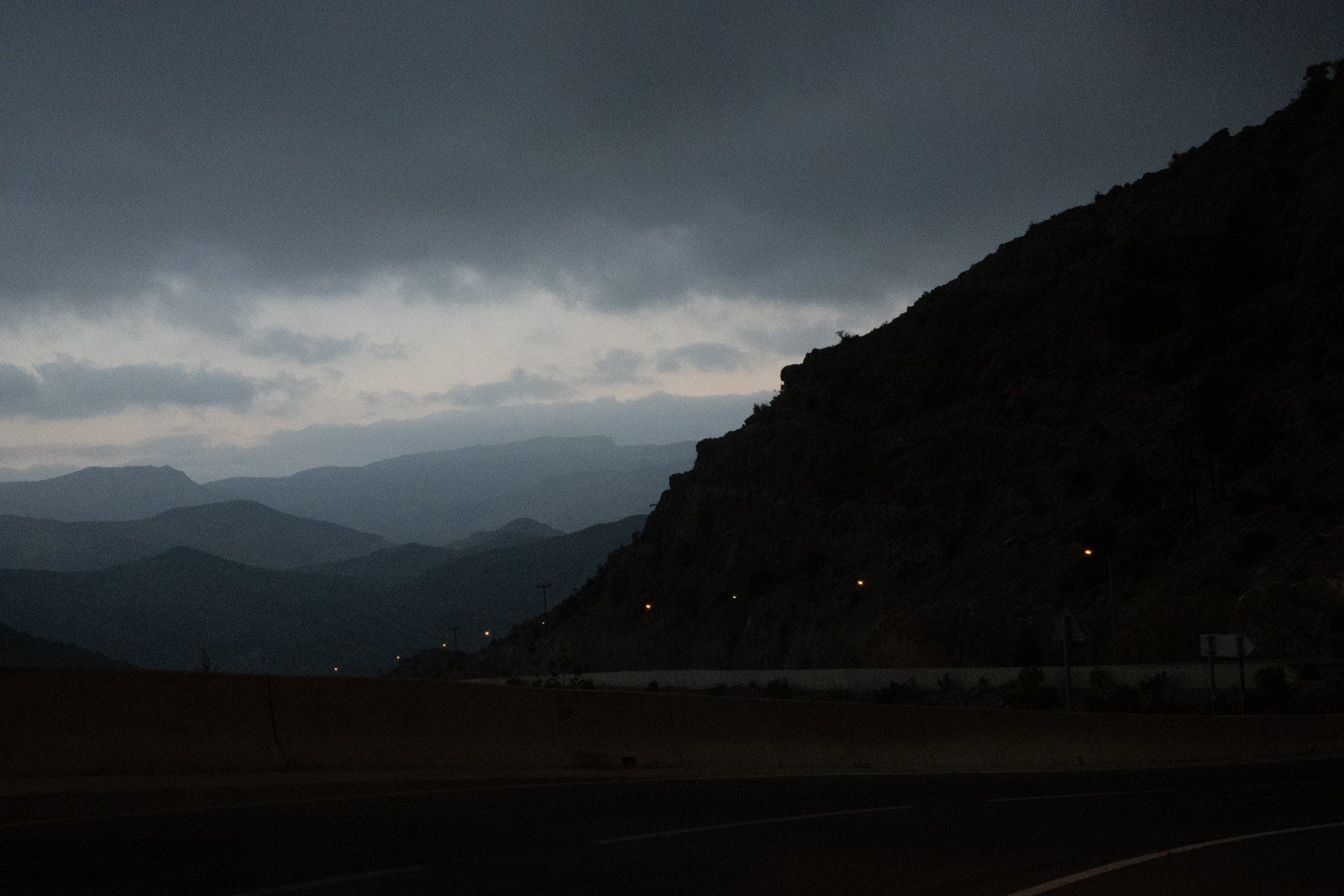
Qaboos opened the gates of the country as soon as he deposed his father. He built schools, he built hospitals, and he built terrifyingly vast highways—often four or five or six lanes across with almost no one on them. Building roads through the Hajar Mountains, there are still some of the most beautiful, terrifying vistas I’ve ever seen.
Within a decade, Oman had a functioning and relatively modern state, and within two decades, it had a modern economy underwritten by oil. But here’s where it diverges from almost every other story like it
Other countries that found themselves riding an economic windfall in the second half of the 20th century followed a broadly similar playbook with the money. They removed friction as fast as possible. They built tall, they built fast. In China’s case, infinite capital was deployed to build cities so new that no one had bothered to remember what was there before — entire skylines of supertalls filled with HVAC systems that could cool the Sahara, designed by prestigious Western firms competing to outdo each other in spectacle. The distance between a person and consumption driven as close to zero as possible
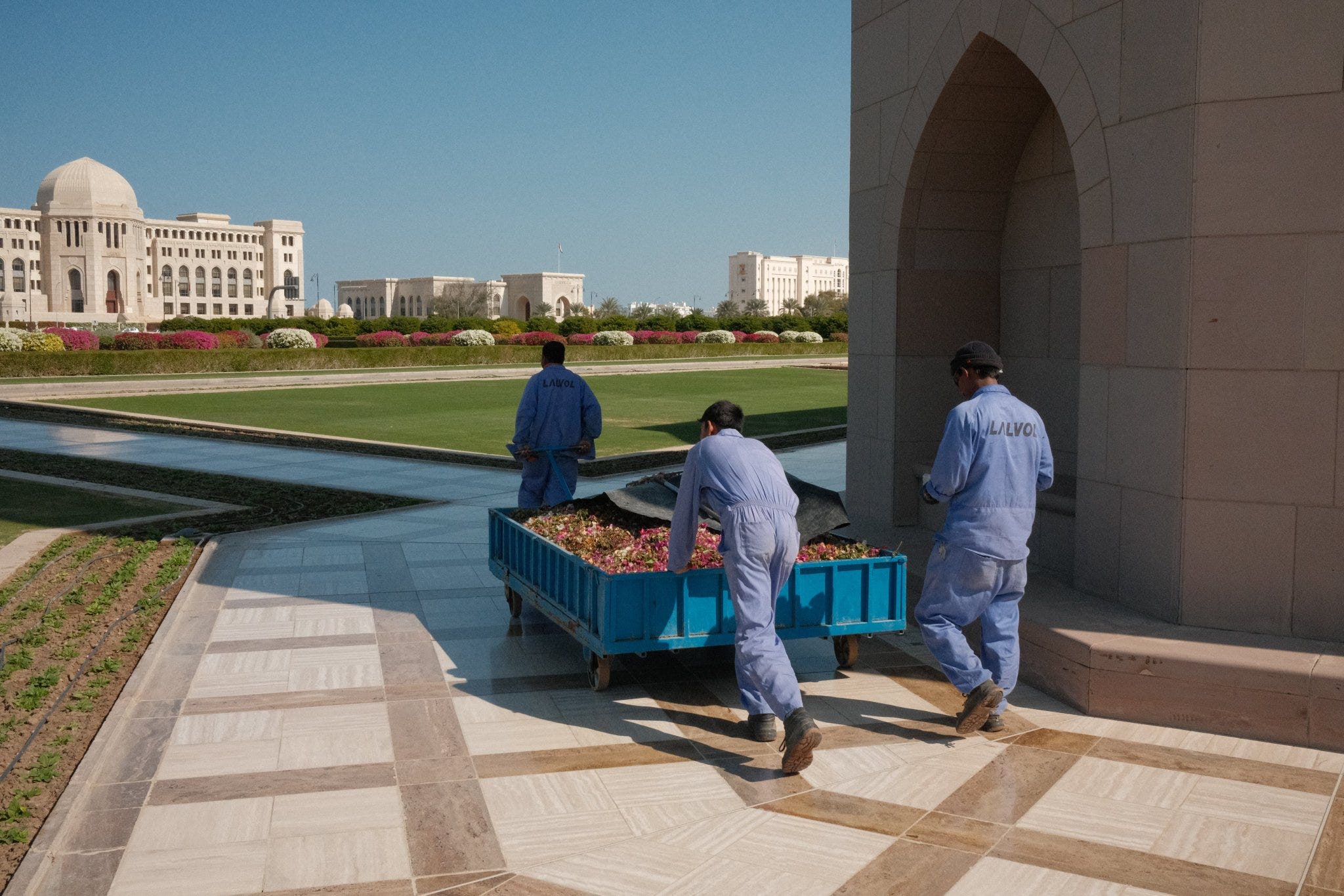
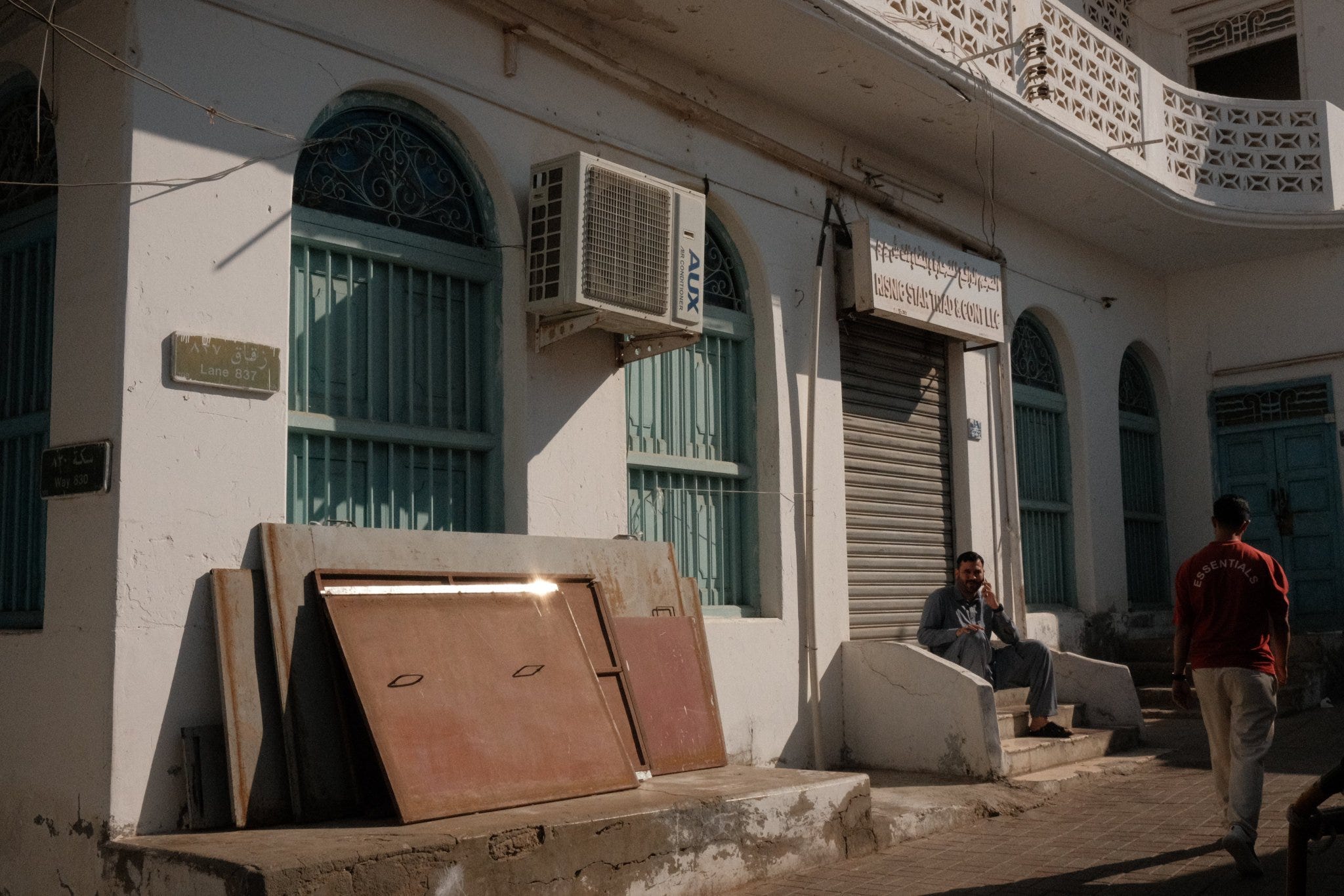
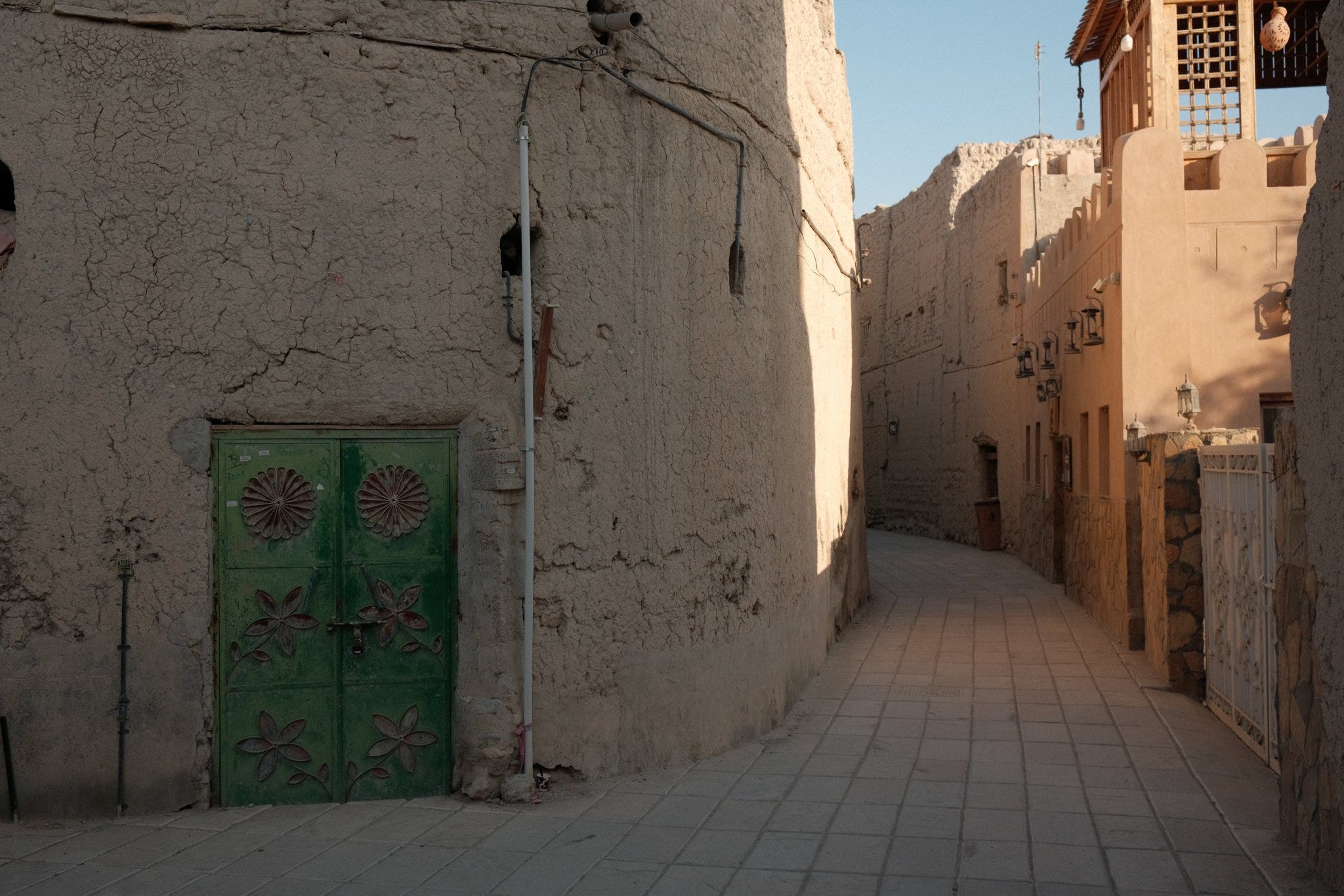
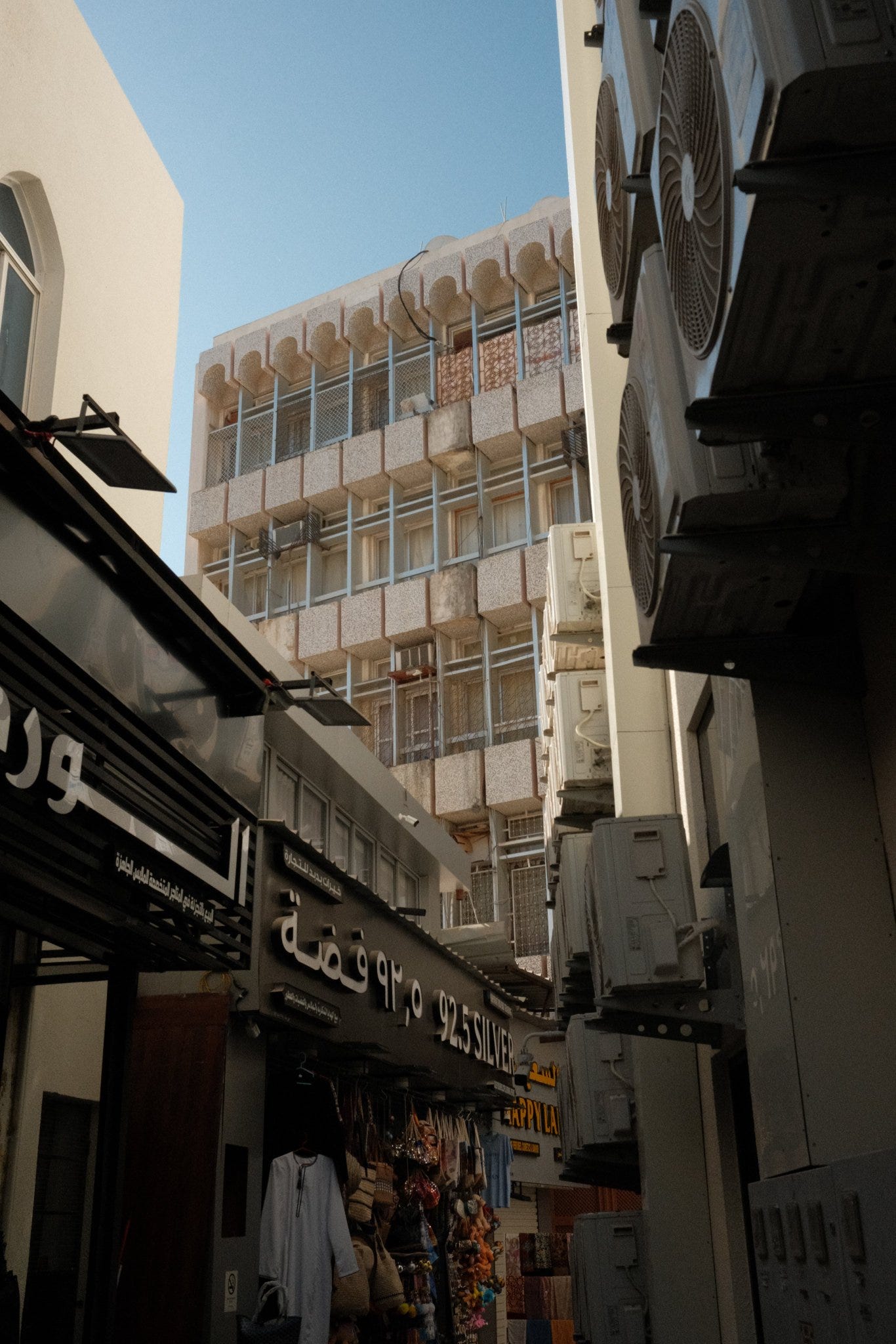
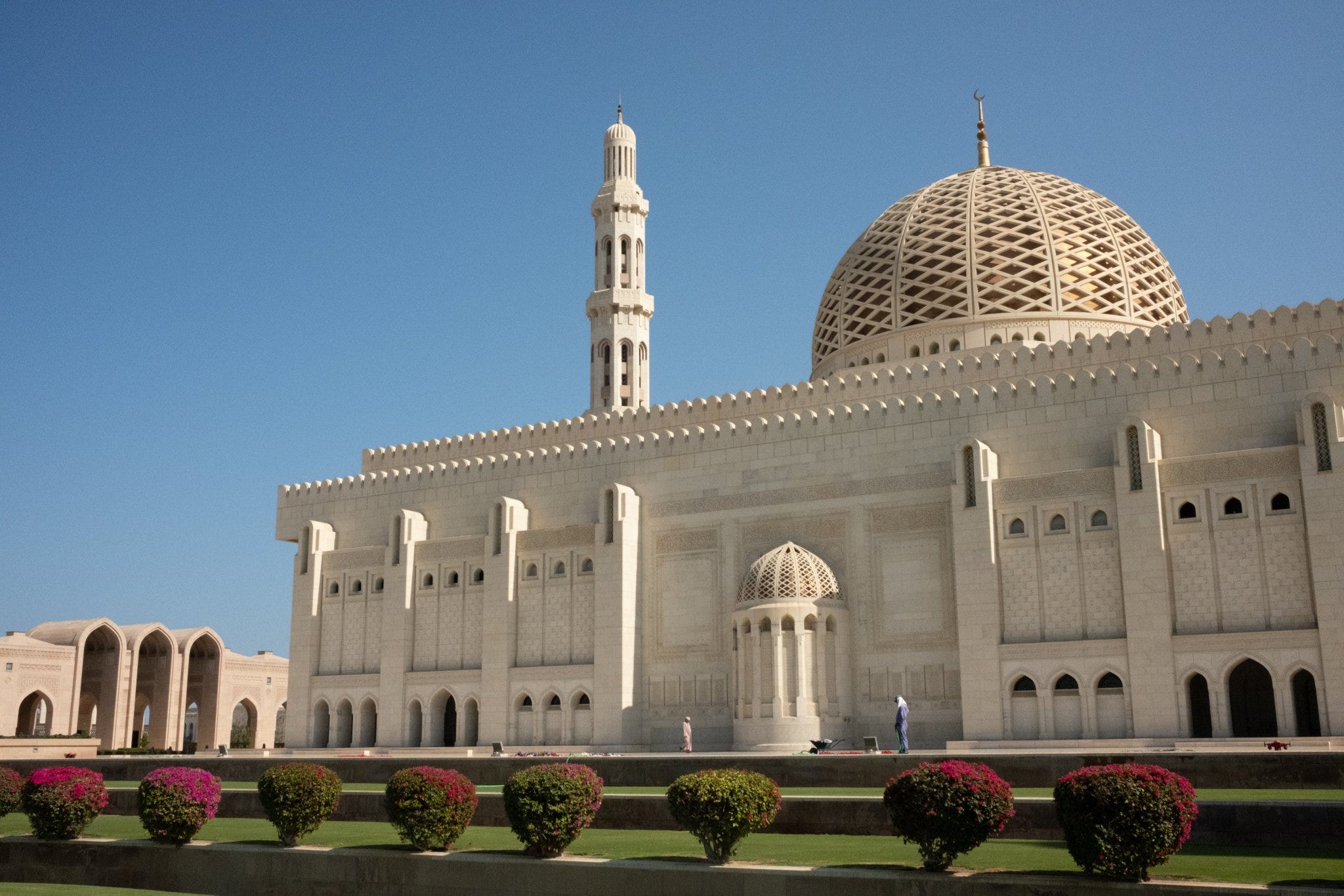
Qaboos had the money and chose differently. He enforced incredibly strict height limits on Muscat. He mandated that every building built in the country conform to something like a national architectural vocabulary—arches, plasterwork, specific proportions—and he enforced it with a rigidity that would make even a Parisian planning commission terrified. He kept the old souqs but cleaned them up
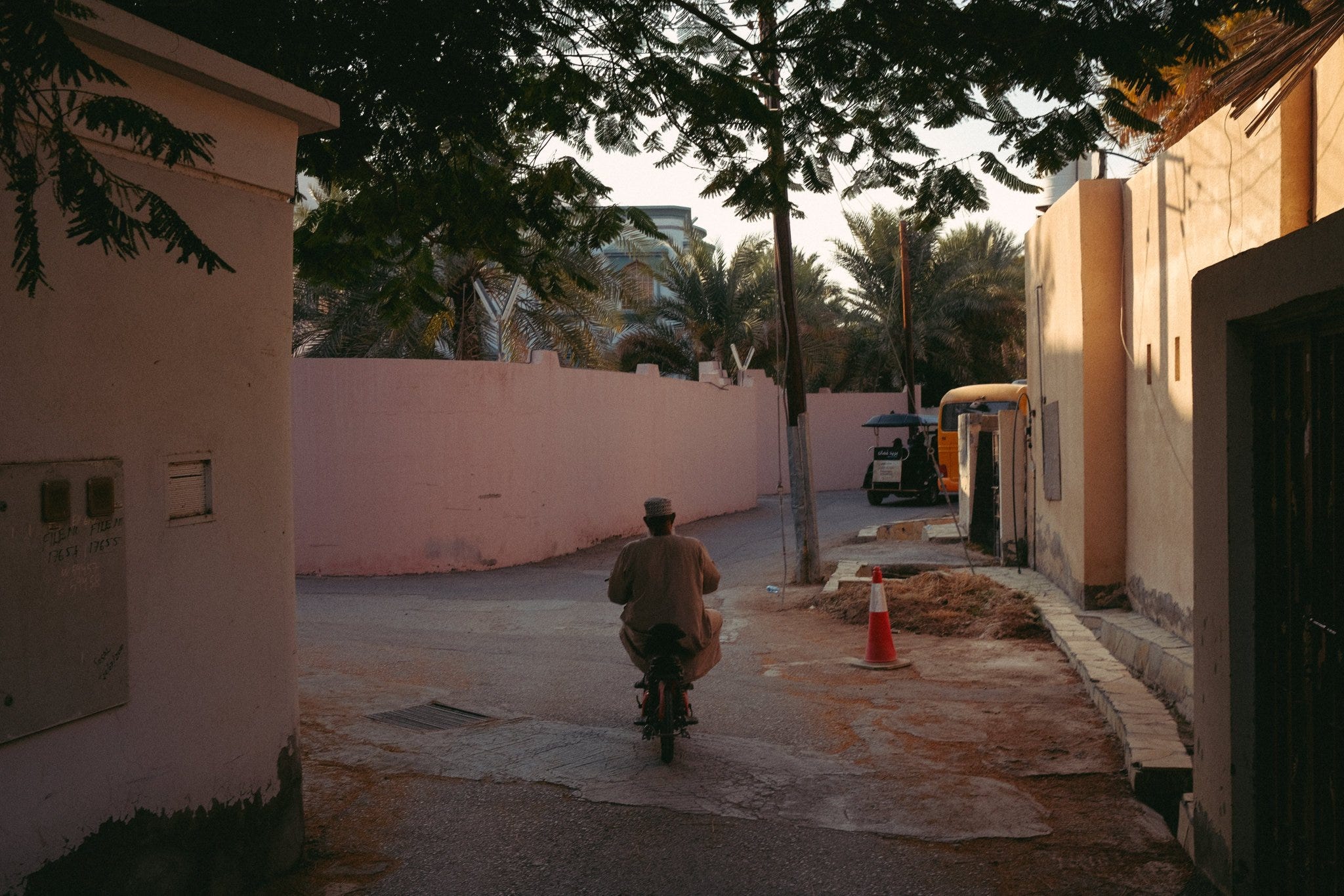
He preserved the frankincense groves in Dhofar and he built the Sultan Qaboos Grand Mosque as one of the largest in the world and then placed it in the city so that nothing could be taller than it. The result is a country that feels almost like nowhere else I’ve visited. Muscat hangs low and white and largely quiet.
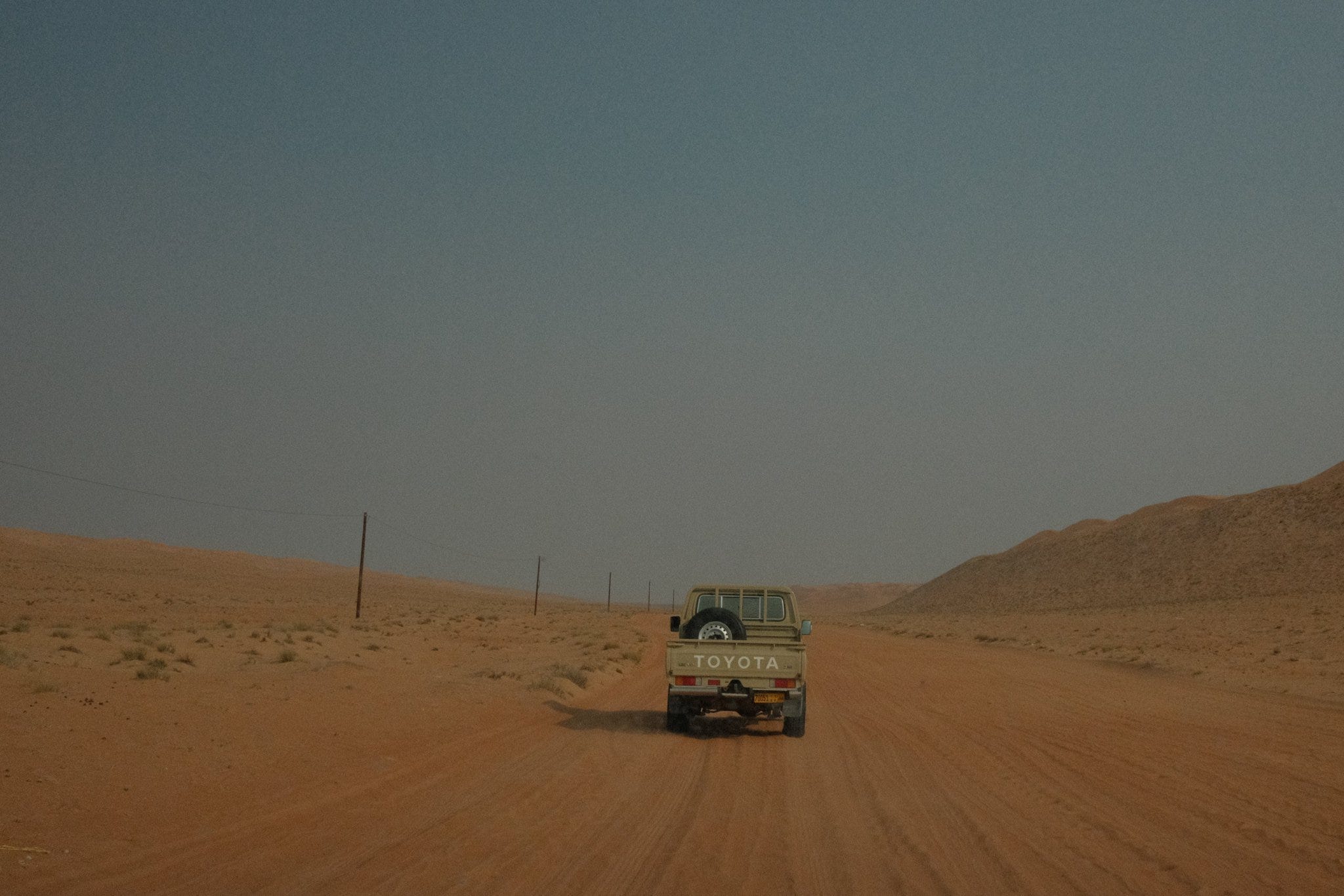
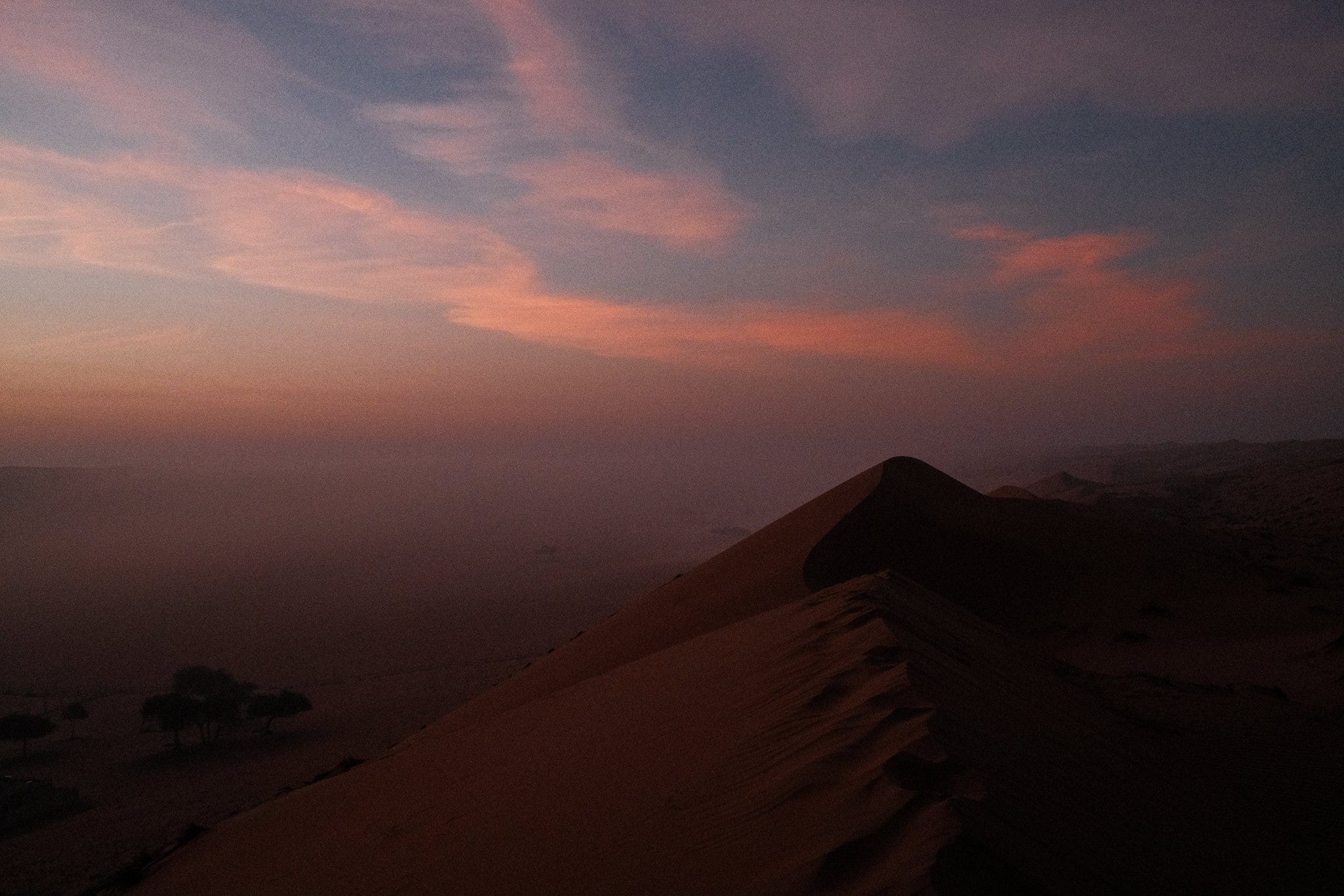
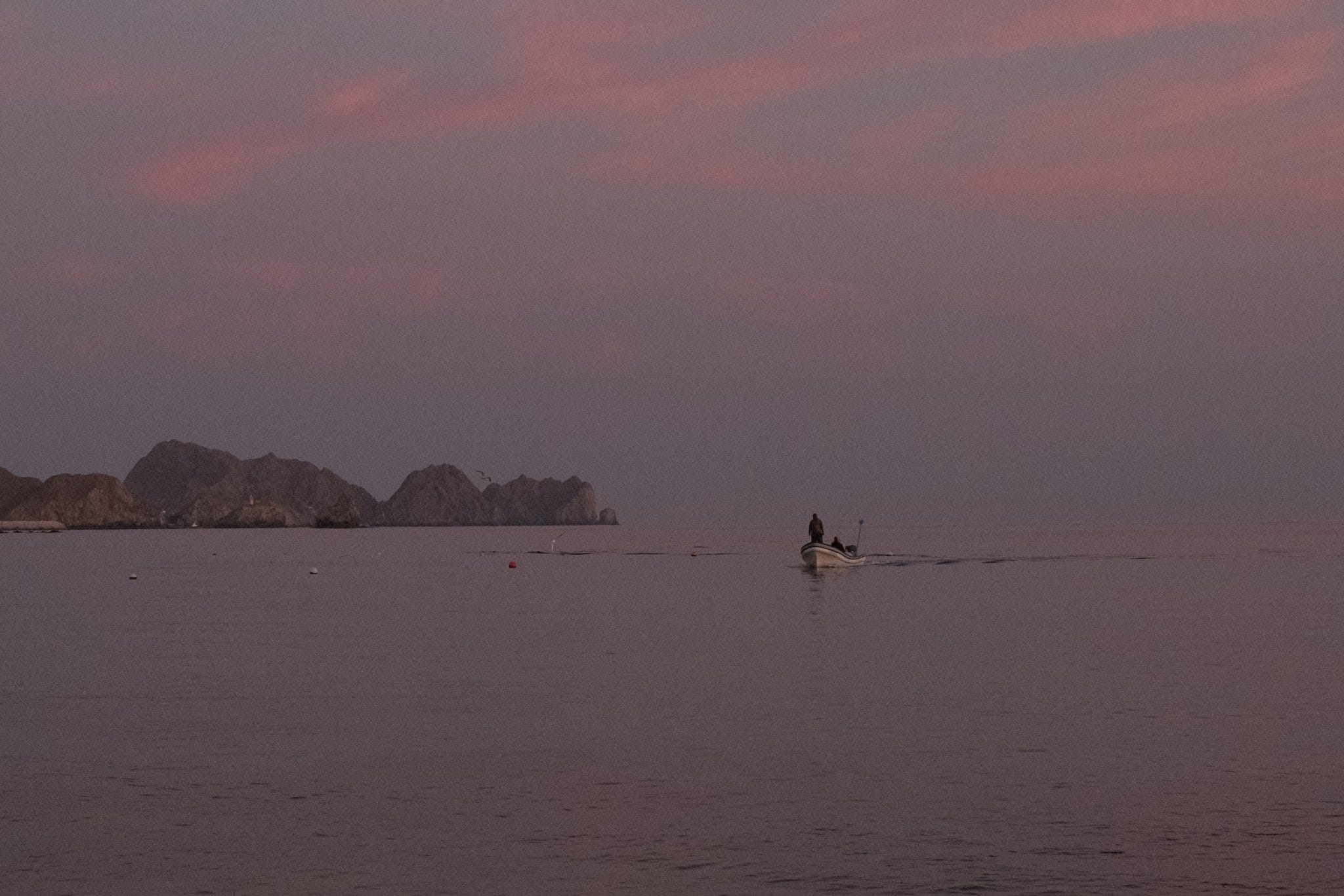
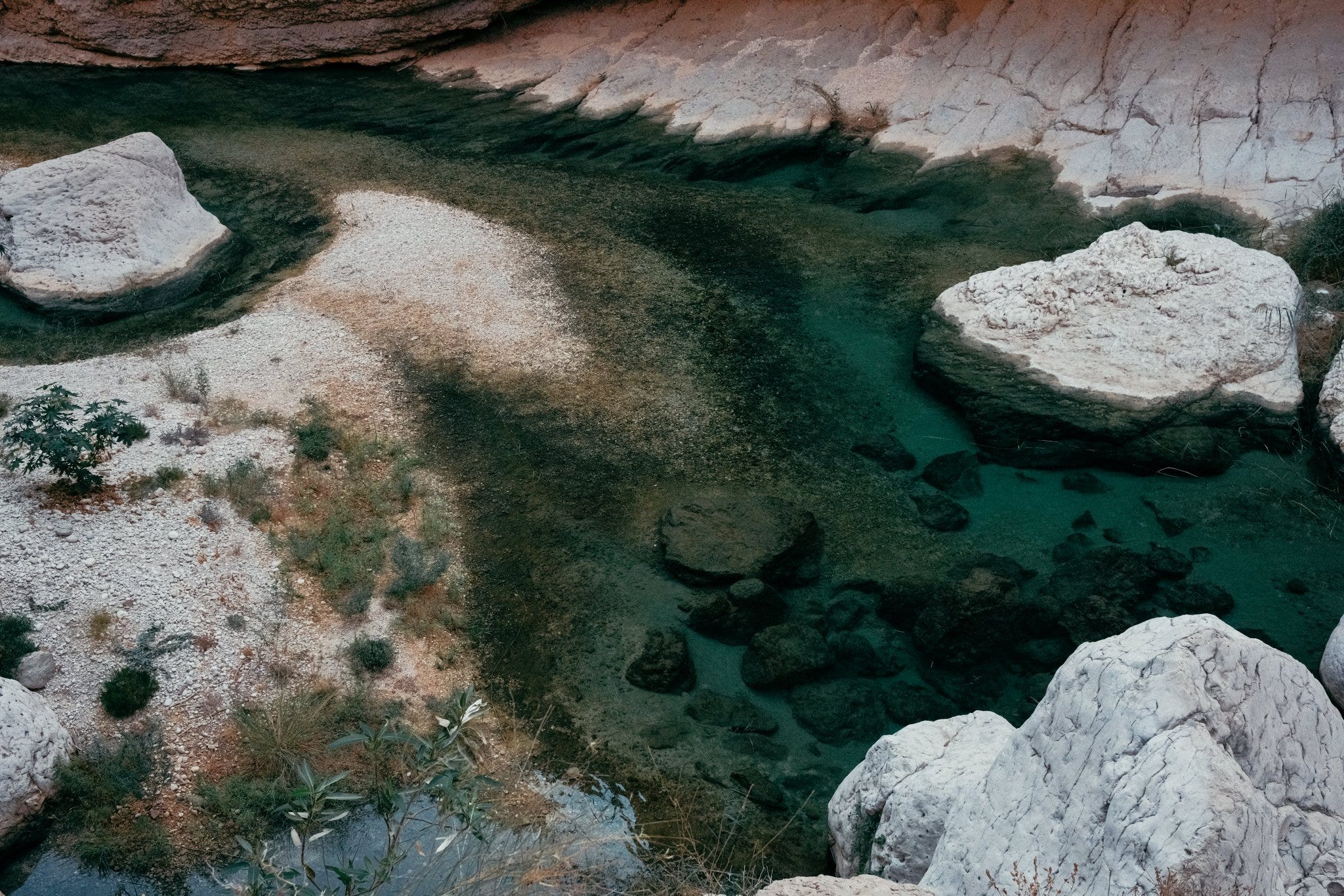
The mountains come down to the sea without curtains of glass between them. The wadis are intact and clean. The villages along the coast seem relatively untouched. You can drive an hour from the capital and still be in a landscape that has not been rearranged to accommodate a racing circuit or a theme park
Most staggeringly, you can be 85 miles into the Empty Quarter and still have 5G data. This was not a program of austerity. By all measures, Oman is healthy, wealthy, and doing quite well. But Qaboos acted as a singular sovereign to guide the country through this economic windfall and placed incredible constraints on its growth
Only a country that is rich enough to build a supertall skyline can afford not to, and the friction Qaboos imposed—the height limits, the architectural mandates, the refusal to enter the arms race of spectacle—was the only way that he could safely modernize his economy
What he prevented was what I’d call the Shenzhen condition — the specific and now almost universally recognizable pattern in which a rapidly wealthy society converts its windfall into a frictionless economy of consumption so total that the place itself disappears. It’s a pattern that began in China’s Special Economic Zones but has since become the default template for development worldwide — from new cities in Central Asia to innovation districts across East and Southeast Asia, all running the same ahistorical, gleaming playbook
In the West, we really have convinced ourselves there are only two options for our post-economic future. You can be Shenzhen or you can be Athens.
Shenzhen is the city that chose money over place so completely that it deleted itself. In 1979, it was a market town in Guangdong with centuries of Hakka and Cantonese history—fishing villages, ancestral halls, temple complexes, a regional culture as old and as layered as anything in southern China. Then Deng Xiaoping designated it a Special Economic Zone, and within a single generation the place was not just unrecognizable but functionally non-existent
The old town was not demolished in any deliberate sense. It was simply overwritten. The population went from thirty thousand to nearly eighteen million. The skyline erupted into a wall of glass and steel so total and so fast that no architectural vocabulary had time to form, no aesthetic identity could take root, and no one in the Party had any interest in letting one develop. What emerged is a city of extraordinary productive capacity that has almost no memory of itself.
The Hakka villages that survive are heritage sites surrounded by twelve-lane superhighways, preserved the way you preserve a single tree in a parking lot: not out of reverence but out of a vague bureaucratic embarrassment that someone noticed it was gone
Athens is the opposite failure, and I say this as someone who is at least Greek enough that I feel like I won’t offend anyone. Athens chose place over money so totally that the city itself is a mausoleum. The Acropolis is protected, the Neoclassical center is protected, everything is protected, but literally nothing is funded. The entire city is a UNESCO heritage site with nearly 40% youth unemployment—and it’s beautiful, staggeringly beautiful, in the way that a church with no congregation is beautiful. It’s perfectly preserved history with an economy in ruin, though I hear rapidly recovering, where the youth are leaving for Berlin and London because no matter how beautiful the history is, it doesn’t pay the rent
The Gulf is the most interesting counterpoint because it is the one region that is actively and self-consciously wrestling with this question in real time. The scale of investment across the region is enormous, but so is the ambition to anchor that investment in something culturally specific — to build not just economies but places that still belong to the people who live in them. Whether that ambition survives contact with the sheer volume of capital in play is one of the defining questions of the next two decades
I think when we think about rapid economic change in the West, we are negotiating between these two extremes. We either submit to the capital and let it flatten us entirely, or we resist the capital and become some kind of residual organism in a museum.
San Francisco might become Shenzhen, Rome might become Athens, and somehow London can’t decide and is becoming worse than either. The Gulf, to its credit, is trying to find a third path — though the pressures pulling toward Shenzhen are immense.
Oman is an example of a place that refused this binary. Qaboos took an incredible economic transformation and imposed heavy constraints on it. He modernized without becoming globally legible. He preserved the country and its culture and its people without mummifying it, and the country got rich and everything stayed intact
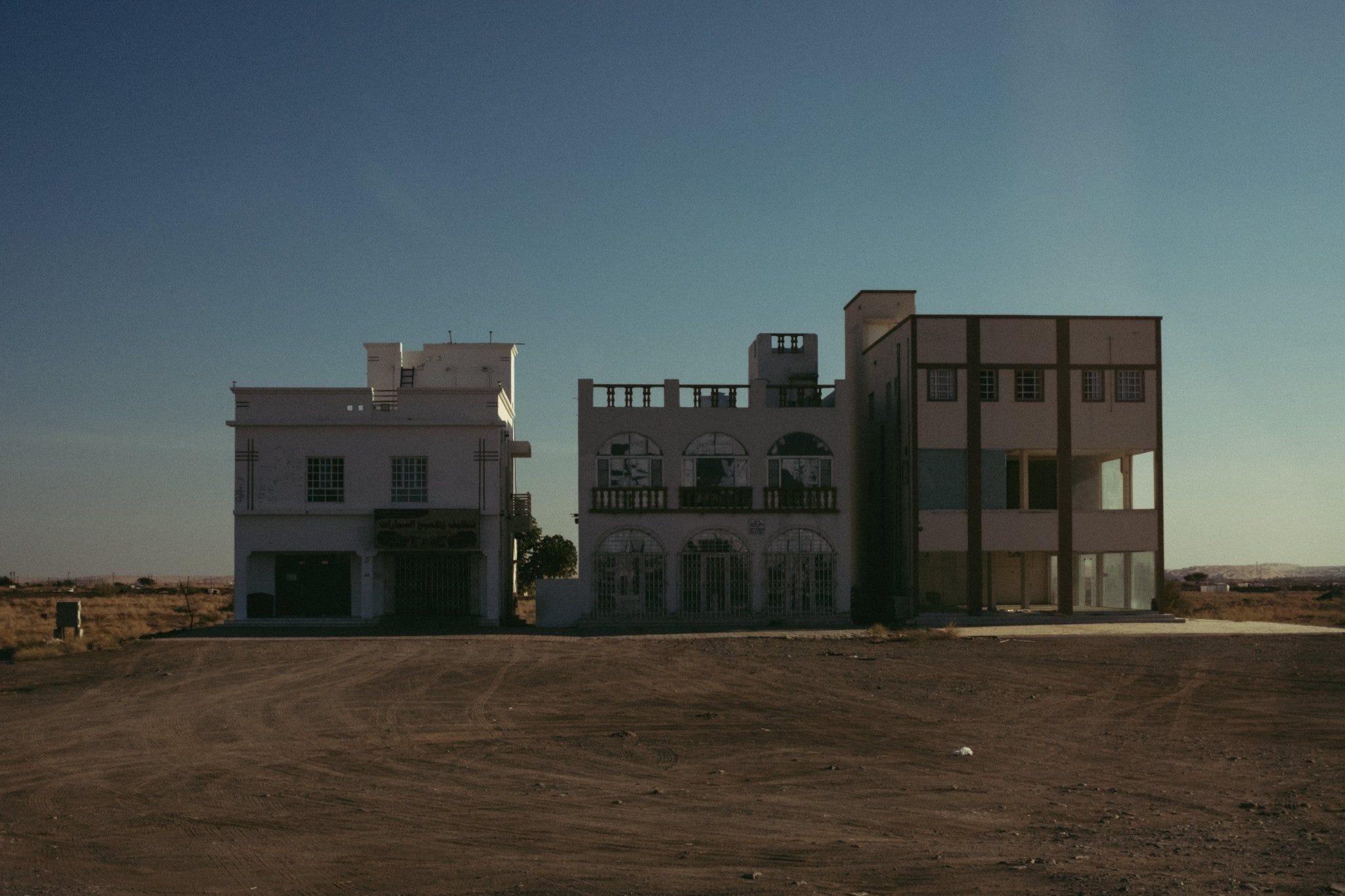
Qaboos died in 2020 with no children. The country he built now belongs to his cousin, Haitham, who by all accounts is a serious and competent man. It seems like an open question whether the constraints Qaboos enforced will remain. The money is still there—in fact it’s gotten bigger—and the developers would love to be there. The weather is beautiful and it’s a gorgeous place, but the skyline for now is still white, low, and quiet.
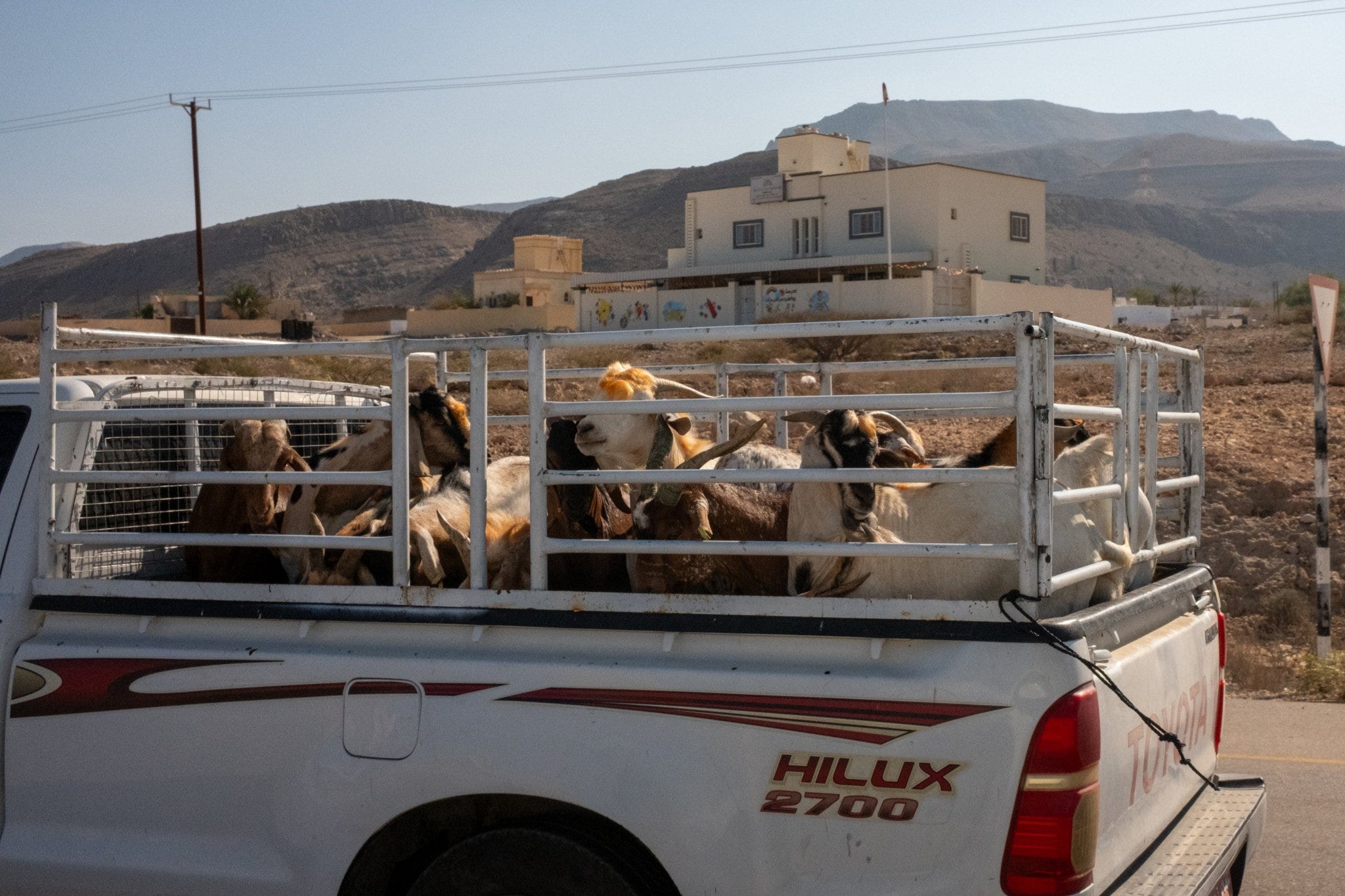
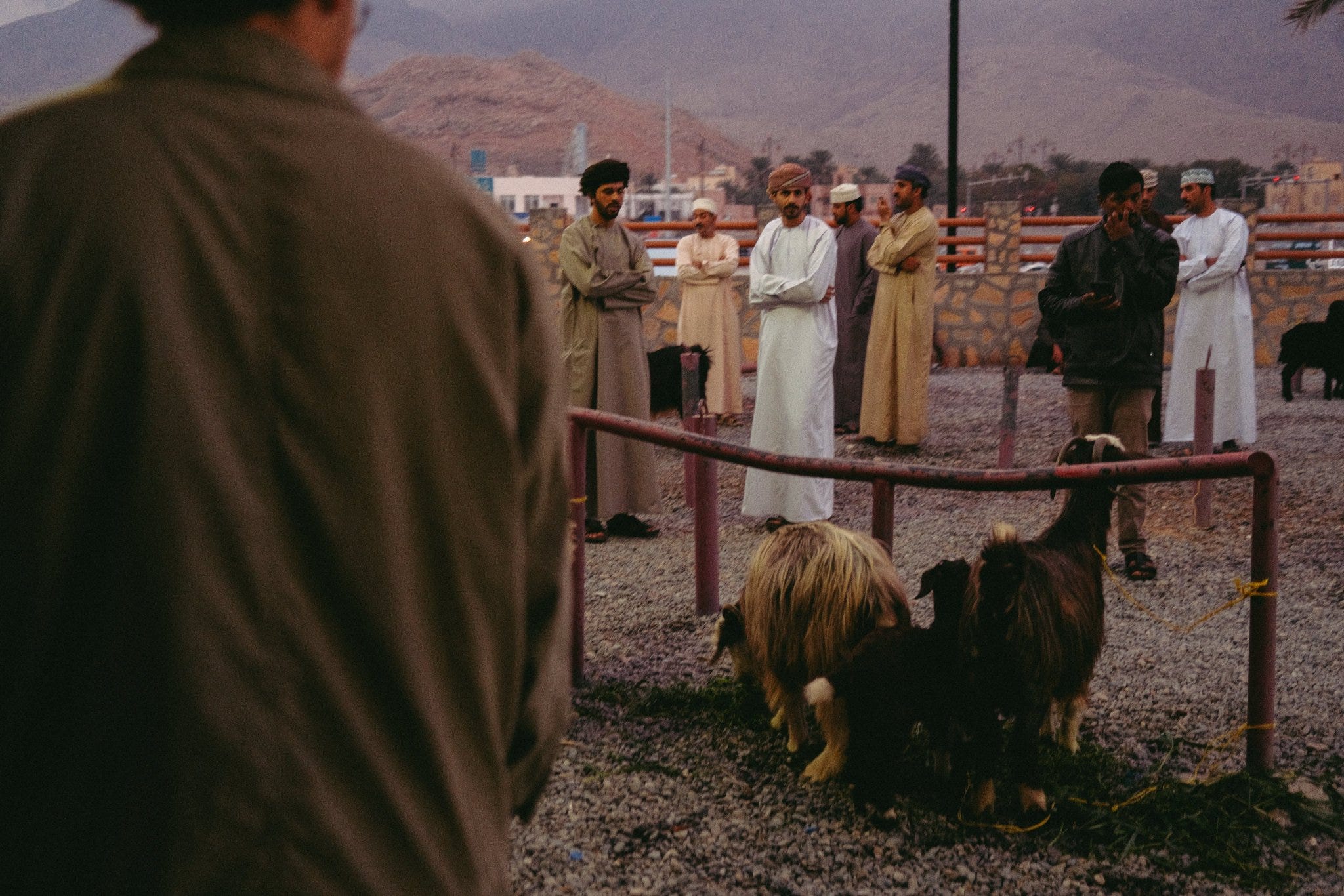
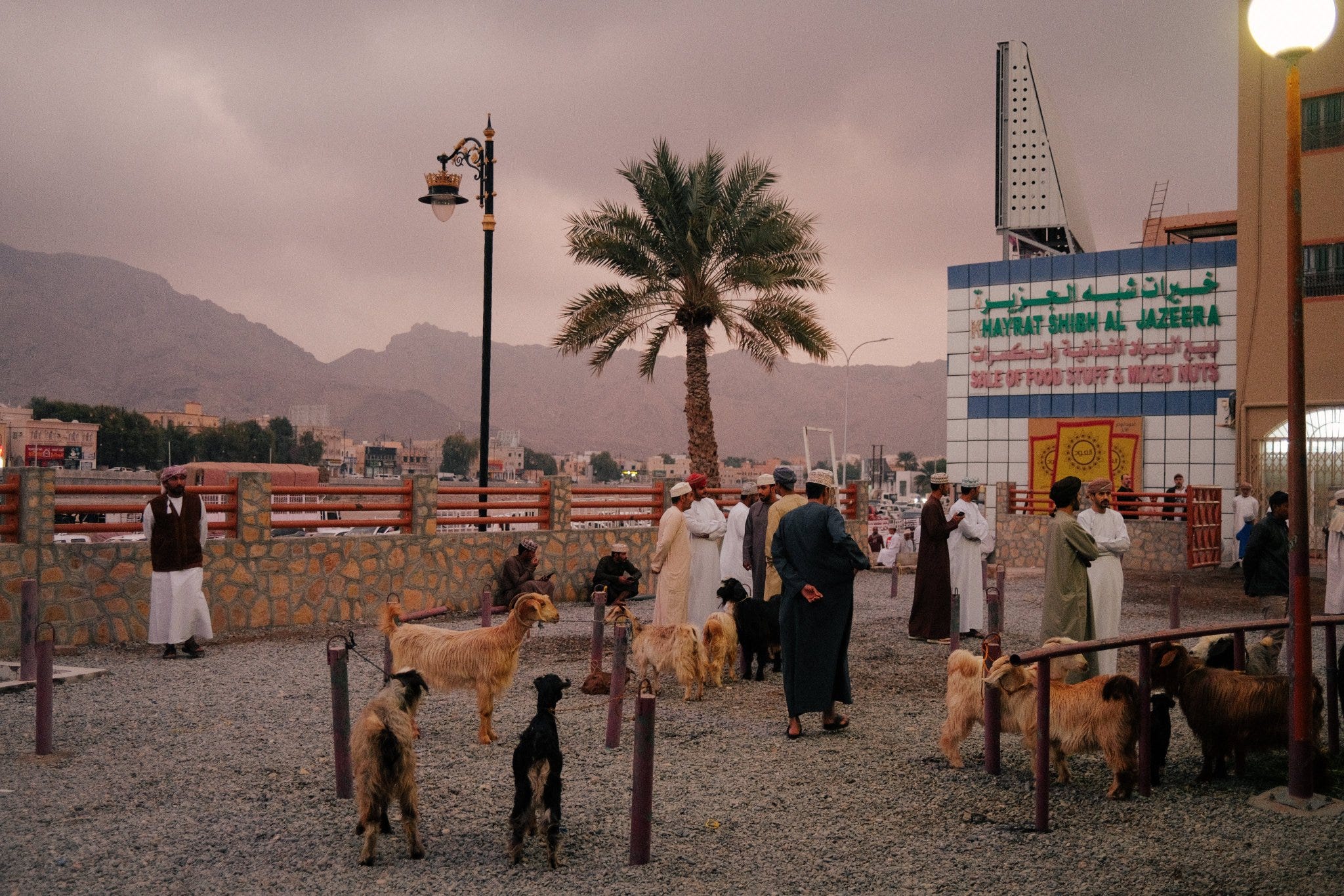
On my last morning in the country, I was in Nizwa, the ancient city that they’ve preserved and are slowly rebuilding. At 5am, I was at a goat market where locals, using 5G phones and touchless payment, negotiated the purchase of goats while still dressed in traditional garb. They transacted largely cashless with 5g phones. It was by all accounts a beautiful place
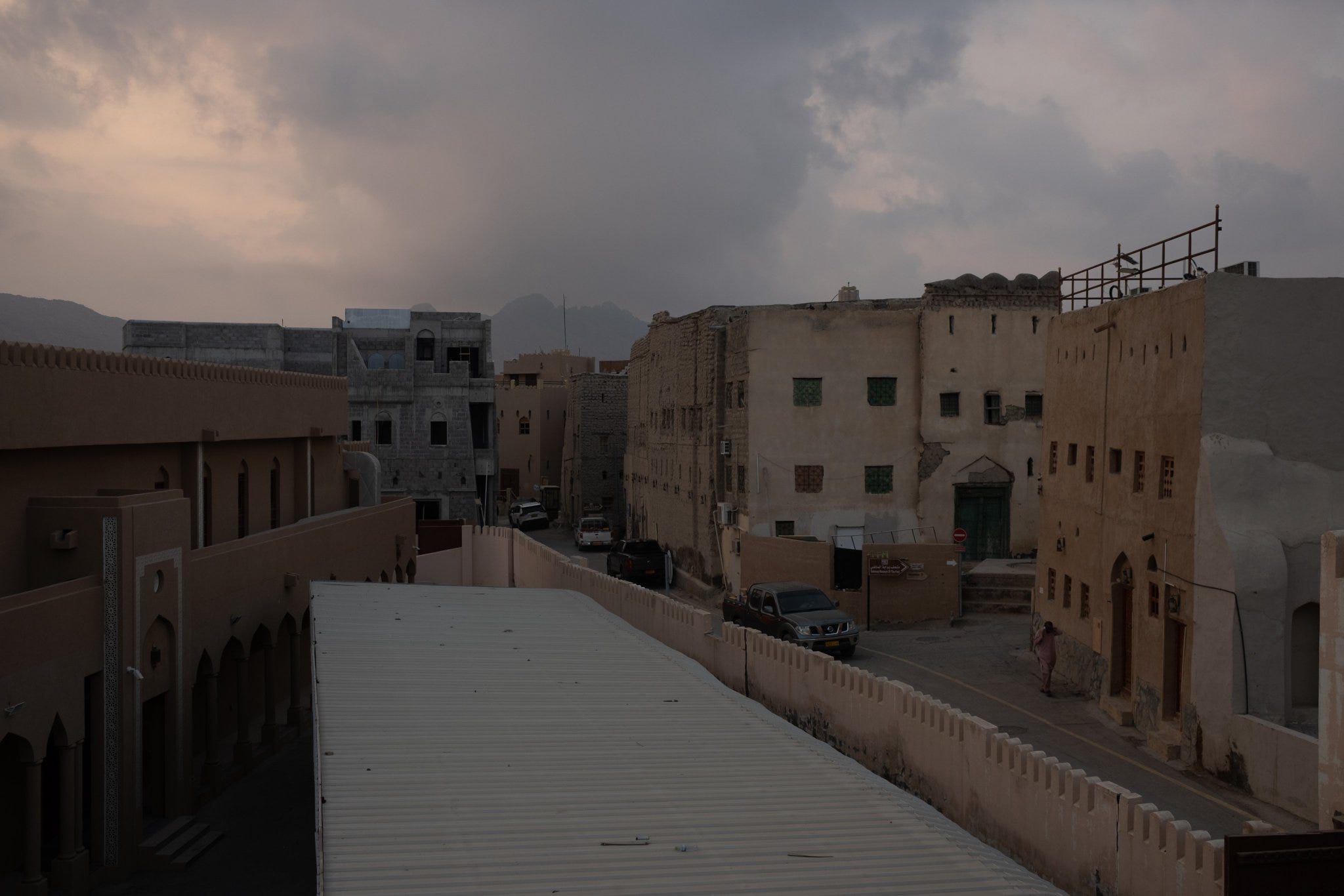
After the goat market, I sat on the roof and looked out at a city that was modern in almost every sense. The roads were good, although tight, there was 5G everywhere, and the locals were rich and happy. I felt none of the vertigo that exists in every other glittering trophy city.
If you believe that transformative AI is coming, we are about to receive a windfall that may dwarf any we’ve seen before. The gilded, fully automated luxury communism that some AI advocates envision is not the only option.
The question that Qaboos asked, the one I can’t stop thinking about since coming home, is: what do you refuse to build? How do you preserve your history in light of this transformative change in a way that feels authentic to your culture, to your people, and to the weight of our collective heritage.
Oman is proof that that is possible, but it’s also proof that it required a singular, unrepeatable will to pull it off.
I don’t know what the Western version of that looks like, but I now know that I’ve seen a country on the other side of a windfall that still felt like somewhere, and that’s more than I can say for most of the places that have been built by capital.
Excellent piece, having spent in time in both Shenzen and Oman, I appreciated your perspectives on both, including the concept of deleting itself.
Money + foresight + taste + unlimited power - sometimes it goes ok.
Also, I'd add that the restrictions he put in place are in many ways less burdensome than what we see in the huge tracts of single-family-only homes in the US.